
Genus Iris in Family Iridaceae
In botanical taxonomy, a genus (plural genera) is a rank used to group closely related species within a family. In the hierarchy, genus sits below family and above species.
Genera are defined by shared morphological, anatomical, and genetic characteristics (for example, features of flowers, fruits, seeds, or leaves) that indicate a close evolutionary relationship among the species they contain.
Each genus can include one or more species. Examples include Rosa (roses) and Solanum (nightshades, including tomato and eggplant).
Do you wish to read more about plant taxonomy? Click here!
Genus Description
Suggest a correction!Iris L. (Iridaceae) contains approximately 280–300 species distributed across the Northern Hemisphere from boreal to subtropical zones, occurring in a wide spectrum of habitats including marshes, meadow steppes, scrub, open woodlands, and alpine screes. The lectotype of the genus is Iris germanica L. (PoWO, 2024; WFO, 2024). The genus is defined by its perennial habit (rhizomatous or bulbous), leaves in basal fans, six perianth segments differentiated into three spreading “falls” and three erect “standards,” and a trifid style whose branches are petaloid and arch over the stamens to form a canopy over the nectar rewards (Goldblatt and Manning, 2008). Ovaries are inferior with axile placentation; fruits are trilobed capsules with angulate seeds that often bear a fleshy aril (Wilson, 2004). Subgenus Limniris (formerly Limniris and Limniris) includes primarily rhizomatous species such as the beardless irises, while Iris s.str. comprises rhizomatous taxa bearing a beard on the falls, and Scorpiris (Juno) comprises bulbous irises with a characteristic underground storage organ and swollen leaf bases (Wilson, 2004). Chromosome numbers are predominantly x = 7 across the genus, a pattern that recurs across several sections (Goldblatt, 1979; Goldblatt and Manning, 2008).
Diversity is greatest in the Mediterranean–Anatolian–Irano–Turanian region and the western Himalaya, with numerous narrow endemics in high mountains and Mediterranean “islands” of habitat (Wilson, 2004; AiO, 2023). Classic sections such as Iris L. (e.g., I. germanica), Limniris (e.g., I. pseudacorus), Scorpiris (e.g., I. persica), and Ophrys (e.g., I. spuria) have long been recognized, but molecular analyses resolve a core “reticulate iris” clade (Scorpiris plus Iris s.str.) that is sister to the broad Limniris clade (H through P) (Wilson, 2004). Genera such as Hermodactylus and Gynandriris are now often included in Iris, and the Ochnaceae prior name “Iris” is a homonym unrelated to the Iridaceae (Angiosperm Phylogeny Group, 2016; Wilson, 2004). Sexual reproduction predominates; pollinators include bees and butterflies, while birds and small mammals disperse seeds via the fleshy aril in some species; breeding systems and floral scent chemistry remain incompletely resolved across the complex (AiO, 2023).
Horticulture has produced thousands of cultivars, notably in the bearded, Japanese, and Siberian groups, and several species are cultivated for cut flowers; bulbous junos are important ornamentals (AiO, 2023). Iris germanica yields orris-root oil for perfumery, and I. germanica and related taxa yield a natural red-purple dye (Goldblatt and Manning, 2008). Weedy or invasive tendencies are minor; I. pseudacorus can spread in wetlands in parts of its introduced range (AiO, 2023). Conservation concerns concentrate on narrow endemics facing habitat loss, over-collection, and climate-driven range shifts; targeted field inventories and reproductive studies are priority needs (AiO, 2023).
-
Iris × brzhezitzky (Grossh.)
-
Iris × caeciliae (Grossh.)
-
Iris × flexicaulis (Small)
-
Iris × florentina (L.)
-
Iris × fulvala (Dykes)
-
Iris × germanica (L.)
-
Iris × koenigii (Sosn.)
-
Iris × nelsonii (Randolph)
-
Iris × neumayeri (Janch. ex Holub)
-
Iris × robusta (E.S.Anderson)
-
Iris × sancti\-cyri (J.Rousseau)
-
Iris × setosothungbergii (H.Koidz. ex T.Shimizu)
-
Iris × sinistra (Sosn.)
-
Iris × thompsonii (R.C.Foster)
-
Iris × vinicolor (Small)
-
Iris × violipurpurea (Small)
-
Iris acutiloba (C.A.Mey.)
3 -
Iris adriatica (Trinajstić ex Mitić)
-
Iris afghanica (Wendelbo)
-
Iris aitchisonii ((Baker) Boiss.)
-
Iris alberti (Regel)
-
Iris albomarginata (R.C.Foster)
-
Iris alexeenkoi (Grossh.)
-
Iris almaatensis (Pavlov)
-
Iris ampliflora (Y.E.Xiao, F.Y.Yu & X.F.Zhou)
-
Iris anguifuga (Y.T.Zhao & X.J.Xue)
-
Iris antilibanotica (Dinsm.)
-
Iris aphylla (L.)
-
Iris arenaria (Waldst. & Kit.)
-
Iris aschersonii (Foster)
-
Iris assadiana (Chaudhary, G.Kirkw. & C.Weymouth)
-
Iris atrofusca (Baker)
-
Iris atropurpurea (Baker)
-
Iris attica (Boiss. & Heldr.)
-
Iris aucheri ((Baker) Sealy)
-
Iris auranitica (Dinsm.)
-
Iris austrotschatkalica (Tojibaev, F.Karimov & Turgunov)
-
Iris avromanica (Rukšāns)
-
Iris bakeriana (Foster)
-
Iris baldshuanica (O.Fedtsch.)
-
Iris barbatula (Noltie & K.Y.Guan)
-
Iris barnumiae (Foster & Baker)
2 -
Iris basaltica (Dinsm.)
-
Iris benacensis (A.Kern. ex Stapf)
-
Iris bicapitata (Colas.)
-
Iris binata (Schur)
-
Iris bismarckiana (E.Dammann & Sprenger)
-
Iris bloudowii (Ledeb.)
-
Iris boissieri (Henriq.)
-
Iris bostrensis (Mouterde)
-
Iris bracteata (S.Watson)
-
Iris brevicaulis (Raf.)
-
Iris bucharica (Foster)
-
Iris bulleyana (Dykes)
-
Iris bungei (Maxim.)
-
Iris cabulica (Gilli)
-
Iris calabra ((N.Terracc.) Peruzzi)
-
Iris calcicola (Z.C.Lu, Z.P.Huang & Yan Liu)
-
Iris camillae (Grossh.)
-
Iris capnoides ((Vved.) T.Hall & Seisums)
-
Iris carterorum (B.Mathew & Wendelbo)
-
Iris cathayensis (Migo)
-
Iris caucasica (Hoffm.)
5 -
Iris cedreti (Dinsm. ex Chaudhary)
-
Iris chrysographes (Dykes)
-
Iris chrysopetala (Sennikov, F.O.Khass. & Pulatov)
-
Iris chrysophylla (Howell)
-
Iris clarkei (Baker ex Hook.f.)
-
Iris colchica (Kem.-Nath.)
-
Iris collettii (Hook.f.)
2 -
Iris confusa (Sealy)
-
Iris cristata (Aiton)
-
Iris crocea (Jacquem. ex R.C.Foster)
-
Iris cuniculiformis (Noltie & K.Y.Guan)
-
Iris curvifolia (Y.T.Zhao)
-
Iris cycloglossa (Wendelbo)
-
Iris dabashanensis (C.A.Wilson)
-
Iris damascena (Mouterde)
-
Iris danfordiae (Boiss.)
-
Iris darwasica (Regel)
-
Iris decora (Wall.)
-
Iris delavayi (Micheli)
-
Iris dichotoma (Pall.)
-
Iris doabensis (B.Mathew)
-
Iris dolichosiphon (Noltie)
2 -
Iris domestica ((L.) Goldblatt & Mabb.)
-
Iris douglasiana (Herb.)
-
Iris drepanophylla (Aitch. & Baker)
2 -
Iris edomensis (Sealy)
-
Iris ensata (Thunb.)
-
Iris farashae (Güner)
-
Iris farreri (Dykes)
-
Iris ferdowsii (Joharchi & Memariani)
-
Iris fernaldii (R.C.Foster)
-
Iris filifolia (Boiss.)
-
Iris florentina (L.)
-
Iris foetidissima (L.)
-
Iris formosana (Ohwi)
-
Iris forrestii (Dykes)
-
Iris fosteriana (Aitch. & Baker)
-
Iris fulva (Ker Gawl.)
-
Iris furcata (M.Bieb.)
-
Iris furseorum (T.Hall & Seisums)
-
Iris galatica (Siehe)
-
Iris gatesii (Foster)
-
Iris giganticaerulea (Small)
-
Iris glaucescens (Bunge)
-
Iris goniocarpa (Baker)
-
Iris gracilipes (A.Gray)
-
Iris graeberiana (Sealy)
-
Iris graminea (L.)
-
Iris grant-duffii (Baker)
-
Iris griffithii (Baker)
-
Iris grossheimii (Woronow ex Grossh.)
-
Iris halophila (Pall.)
2 -
Iris hartwegii (Baker)
-
Iris haussknechtii (Bornm. ex Baker)
-
Iris haynei (Baker)
-
Iris hellenica (Mermygkas, Kit Tan & Yannits.)
-
Iris henryi (Baker)
-
Iris heracleana ((J.Mart.Rodr. & M.B.Crespo) T.Hall)
-
Iris hermona (Dinsm.)
-
Iris heweri (Grey-Wilson & B.Mathew)
-
Iris hexagona (Walter)
-
Iris hippolyti ((Vved.) Kamelin)
-
Iris histrio (Rchb.f.)
-
Iris histrioides (Fost. ex Hayek)
-
Iris hoogiana (Dykes)
-
Iris hookeri (Penny ex Loudon)
-
Iris hookeriana (Foster)
-
Iris humilis (Georgi)
-
Iris hymenospatha (B.Mathew & Wendelbo)
2 -
Iris iberica (Steven)
-
Iris imbricata (Lindl.)
-
Iris inconspicua ((Vved.) T.Hall & Seisums)
-
Iris innominata (L.F.Hend.)
-
Iris ivanovae (Doronkin)
-
Iris jacquinii ((Schrank))
-
Iris japonica (Thunb.)
-
Iris juncea (Poir.)
-
Iris junonia (Schott & Kotschy ex Schott)
-
Iris junzifengensis (S.P.Chen, Xin Y.Chen & Liang Ma)
-
Iris kamelinii (Alexeeva)
-
Iris kashmiriana (Baker)
-
Iris kemaonensis (Wall. ex D.Don)
-
Iris ketzkhovelii (G.N.Matveev)
-
Iris khassanovii (Tojibaev & Turginov)
-
Iris kirkwoodiae (Chaudhary)
2 -
Iris kobasensis (Prodan)
-
Iris kobayashii (Kitag.)
-
Iris koenigii (Sosn.)
-
Iris kolpakowskiana (Regel)
2 -
Iris kopetdagensis (Vved.)
-
Iris koreana (Nakai)
-
Iris korolkowii (Regel)
-
Iris kurbanovii (F.O.Khass. & Rakhimova)
-
Iris kuschakewiczii (B.Fedtsch.)
-
Iris kuschkensis (Grey-Wilson & B.Mathew)
-
Iris lactea (Pall.)
3 -
Iris lacustris (Nutt.)
-
Iris laevigata (Fisch.)
-
Iris latifolia ((Mill.) Voss)
-
Iris latistyla (Y.T.Zhao)
-
Iris lazica (Albov)
-
Iris leptophylla (Lingelsh.)
-
Iris leptorrhiza (Vved.)
-
Iris lineata (Foster ex Regel)
-
Iris linifolia (O.Fedtsch.)
-
Iris linifoliiformis ((Khalk.) Tojibaev & Turginov)
-
Iris loczyi (Kanitz)
-
Iris lokiae (Alexeeva)
-
Iris longipetala (Herb.)
-
Iris longiscapa (Ledeb.)
-
Iris lortetii (Barbey ex Boiss.)
2 -
Iris ludwigii (Maxim.)
-
Iris lutescens (Lam.)
-
Iris lycotis (Woronow)
-
Iris macrosiphon (Torr.)
-
Iris maculata (Baker)
-
Iris magnifica (Vved.)
-
Iris mandshurica (Maxim.)
-
Iris maracandica ((Vved.) Wendelbo)
-
Iris mariae (Barbey)
-
Iris marivanica (Rukšāns)
-
Iris marsica (I.Ricci & Colas.)
-
Iris masia (Leichtlin ex Dykes)
-
Iris masiae (Dykes)
-
Iris meda (Stapf)
-
Iris microglossa (Wendelbo)
-
Iris milesii (Baker ex Foster)
-
Iris minutoaurea (Makino)
-
Iris missouriensis (Nutt.)
-
Iris munzii (R.C.Foster)
-
Iris mzchetica (Rodion.)
-
Iris nantouensis (S.S.Ying)
-
Iris narbutii (O.Fedtsch.)
-
Iris narcissiflora (Diels)
-
Iris narynensis (O.Fedtsch.)
-
Iris neoensata (Y.N.Lee)
-
Iris neosetosa (Y.N.Lee)
-
Iris nicolai (Vved.)
-
Iris nigricans (Dinsm.)
-
Iris notha (M.Bieb.)
-
Iris nusairiensis (Mouterde)
-
Iris odaesanensis (Y.N.Lee)
-
Iris odontostyla (B.Mathew & Wendelbo)
-
Iris orchioides (Carrière)
-
Iris orientalis (Mill.)
-
Iris orjenii (Bräuchler & Cikovac)
-
Iris oxypetala (Bunge)
-
Iris palaestina (Boiss.)
-
Iris pallida (Lam.)
3 -
Iris pamphylica (Hedge)
-
Iris paradoxa (Steven)
3 -
Iris paropamisensis (T.Hall & Seisums)
-
Iris parvula ((Vved.) Sennikov)
-
Iris perrieri (Simonet ex N.Service)
-
Iris persica (L.)
2 -
Iris peshmeniana (Güner & T.Hall)
-
Iris petrana (Dinsm.)
-
Iris petri (F.O.Khass., Rakhimova & Achilova)
-
Iris planifolia ((Mill.) T.Durand & Schinz)
-
Iris platyptera (B.Mathew & Wendelbo)
-
Iris polakii (Stapf)
-
Iris pontica (Zapał.)
-
Iris popovii (Vved.)
-
Iris porphyrochrysa (Wendelbo)
-
Iris postii (Mouterde)
-
Iris potaninii (Maxim.)
-
Iris prismatica (Pursh)
-
Iris proantha (Diels)
2 -
Iris probstii (C.A.Wilson)
-
Iris psammocola (Y.T.Zhao)
-
Iris pseudacorus (L.)
-
Iris pseudocapnoides (Rukšāns)
-
Iris pseudocaucasica (Grossh.)
2 -
Iris pseudomeda (Salimb. & H.Saeidi)
-
Iris pseudonotha (Galushko)
-
Iris pseudopumila (Tineo)
2 -
Iris pskemensis (Rukšāns)
-
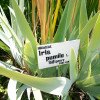
Iris pumila (L.)
1 -
Iris purdyi (Eastw.)
-
Iris qinghainica (Y.T.Zhao)
-
Iris ramsayi (T.Hall & B.Mathew)
-
Iris regis-uzziae (Feinbrun)
-
Iris reichenbachiana (Klatt)
-
Iris reichenbachii (Heuff.)
-
Iris relicta (Colas.)
-
Iris reticulata (M.Bieb.)
4 -
Iris revoluta (Colas.)
-
Iris rodionenkoi ((Lazkov & Naumenko) T.Hall)
-
Iris rosenbachiana (Regel)
-
Iris rossii (Baker)
-
Iris rudolphii (F.O.Khass., Esankulov & Achilova)
-
Iris ruthenica (Ker Gawl.)
2 -
Iris rutherfordii (J.Mart.Rodr., P.Vargas, Carine & Jury)
-
Iris sabina (N.Terracc.)
-
Iris sanguinea (Hornem.)
4 -
Iris sari (Schott ex Baker)
-
Iris savannarum (Small)
-
Iris scariosa (Willd. ex Link)
-
Iris schachtii (Markgr.)
-
Iris schelkownicowii ((Fomin) Fomin)
-
Iris schmakovii (Alexeeva)
-
Iris seminaturalis (Niketic, Tomovic & Siljak-Yak.)
-
Iris serotina (Willk.)
-
Iris setina (Colas.)
-
Iris setosa (Pall. ex Link)
3 -
Iris sibirica (L.)
-
Iris sintenisii (Janka)
2 -
Iris sisianica (Zubov & Bondarenko)
-
Iris songarica (Schrenk)
-
Iris sophenensis ((Foster) B.Mathew & Güner)
-
Iris speculatrix (Hance)
-
Iris sprengeri (Siehe)
-
Iris spuria (L.)
5 -
Iris staintonii (Hara)
-
Iris statellae (Tod.)
-
Iris stenophylla (Hausskn. ex Baker)
3 -
Iris stocksii (Boiss.)
-
Iris stolonifera (Maxim.)
-
Iris straussii (Leichtlin ex Micheli)
-
Iris suaveolens (Boiss. & Reut.)
-
Iris subdecolorata (Vved.)
-
Iris subdichotoma (Y.T.Zhao)
-
Iris susiana (L.)
-
Iris svetlanae ((Vved.) T.Hall & Seisums)
-
Iris swensoniana (Chaudhary, G.Kirkw. & C.Weymouth)
-
Iris tadshikorum (Vved.)
-
Iris taochia (Woronow ex Grossh.)
-
Iris tarhunensis (Pamp.)
-
Iris tectorum (Maxim.)
-
Iris tenax (Douglas ex Lindl.)
-
Iris tenuifolia (Pall.)
-
Iris tenuis (S.Watson)
-
Iris tenuissima (Dykes)
-
Iris thoroldii (Baker ex Hemsl.)
2 -
Iris tibetica ((Dykes) Bolt.)
-
Iris tigridia (Bunge)
2 -
Iris timofejewii (Woronow)
-
Iris tingitana (Boiss. & Reut.)
-
Iris tridentata (Pursh)
-
Iris tschandalasica (Urusov)
-
Iris tubergeniana (Foster)
-
Iris tuberosa (L.)
-
Iris typhifolia (Kitag.)
-
Iris unguicularis (Poir.)
5 -
Iris uniflora (Pall. ex Link)
-
Iris urmiensis (Jekyll & E.T.Cook)
-
Iris variegata (L.)
2 -
Iris vartanii (Foster)
-
Iris ventricosa (Pall.)
-
Iris verna (L.)
2 -
Iris versicolor (L.)
-
Iris vicaria (Vved.)
-
Iris vicariopsis (T.Hall)
-
Iris victoris (F.O.Khass., Khuzhan. & Rakhimova)
-
Iris virginica (L.)
-
Iris vorobievii (N.S.Pavlova)
-
Iris vvedenskyi (Nevski ex Woronow & Popov)
-
Iris wallisiae (T.Hall & Seisums)
-
Iris warleyensis (Foster)
-
Iris wattii (Baker ex Hook.f.)
-
Iris wendelboi (Grey-Wilson & B.Mathew)
-
Iris westii (Dinsm.)
-
Iris willmottiana (Foster)
-
Iris wilsonii (C.H.Wright)
-
Iris winkleri (Regel)
-
Iris winogradowii (Fomin)
-
Iris xanthochlora (Wendelbo)
-
Iris xiphium (L.)
-
Iris yebrudii (Dinsm. ex Chaudhary)
2 -
Iris yedisuensis (Yıld. & Kılıç)
-
Iris zagrica (B.Mathew & Zarrei)
2 -
Iris zaprjagajevii ((N.V.Abramov) T.Hall & Seisums)
-
Iris zetterlundii (Rukšāns)