
Genus Prunus in Family Rosaceae
In botanical taxonomy, a genus (plural genera) is a rank used to group closely related species within a family. In the hierarchy, genus sits below family and above species.
Genera are defined by shared morphological, anatomical, and genetic characteristics (for example, features of flowers, fruits, seeds, or leaves) that indicate a close evolutionary relationship among the species they contain.
Each genus can include one or more species. Examples include Rosa (roses) and Solanum (nightshades, including tomato and eggplant).
Do you wish to read more about plant taxonomy? Click here!
Genus Description
Suggest a correction!The genus Prunus L. (family Rosaceae) is a cosmopolitan group of trees and shrubs comprising roughly 400 species worldwide, with centers of diversity in East Asia, the temperate Northern Hemisphere, and parts of South America and Africa. Its core distribution spans temperate and montane forests and associated shrublands from sea level to mid-elevations; it also occurs in drier woodlands and the Mediterranean. The type species is Prunus spinosa (Heywood, 1968).
Diagnostic morphology includes simple, often serrate leaves; caducous stipules (or sometimes persistent in a few taxa); and flowers that are typically 5-merous with free or basally connate petals, numerous stamens, and a nectariferous hypanthium. Ovary position ranges from superior to half-inferior, with axile placentation and two ovules, usually resulting in a single drupe derived from the superior ovary. In Amygdalus and a few related taxa, the pedicels bear conspicuous bracteoles that persist on the fruit, a useful field character (Werner & Greuter, 2004). The diagnostic indumentum features distinguish several subgenera, but glandular and non-glandular hairs occur across the genus.
Diversity and range: Prunus attains its highest richness in eastern Asia (China, Japan, Korea), where many species are locally endemic, and in North America, with additional species in Europe, the Mediterranean, and Australasia. Typical habitats include mixed deciduous and coniferous forests, woodland edges, rocky slopes, and riparian corridors; many taxa occupy montane zones up to subalpine elevations. Biogeographic patterns include East Asian–North American disjunctions and localized radiations in island or mountain settings.
Intrinsic biology: Bees and syrphid flies are frequent pollinators of many taxa, but ornithophily occurs in certain Asian taxa such as P. maximowiczii (Zhang et al., 2018). Most species are entomophilous. Base chromosome number is x=8; ploidy varies among species and cultivars (Zhang et al., 2018). Many species are long-lived trees with winter deciduous leaves and early spring flowering, a phenology that shapes pollinator interactions and seedling establishment.
Taxonomy and phylogeny: Traditionally divided into subgenera (Prunus, Amygdalus, Cerasus, Armeniaca, Padus, Laurocerasus, Emplectocladus, Emplectocladus sensu Borkhausen; Borkhausen, 1797, 1800), the group is largely defined by fruit and leaf indumentum characters (Werner & Greuter, 2004). Recent phylogenies show broad overall support for Prunus, with a lack of consistently sampled, comprehensive morphological treatments across all major clades and unresolved placement of some lineages (Chin et al., 2014; Zhang et al., 2018). There is ongoing debate about sectional limits and the status of segregates such as Laurocerasus, a treatment favored by some floristic works but not widely applied elsewhere (WFO, 2024). POWO (2024) currently accepts Amygdalus, Cerasus, Laurocerasus, and Padus within Prunus, whereas other accounts retain them as separate genera.
Human relevance: Prunus is among the most economically important Rosaceae, contributing cultivated species for fruits (e.g., P. dulcis, P. armeniaca, P. persica, P. mume, P. salicina), timber, ornamentals, and rootstocks. Horticulture is global, with extensive breeding programs for edible cherries, plums, peaches, and almonds. Several species are widely planted as street and garden trees; some are naturalized but few are considered invasive.
Conservation and outlook: Threats vary across taxa but include habitat loss and overharvest in parts of the range, while horticultural cultivation supports many species ex situ. Targeted phylogenomic work and standardized morphological synthesis remain priorities to resolve remaining systematic uncertainties.
References: Chin et al., 2014; POWO, 2024; Werner & Greuter, 2004; WFO, 2024; Zhang et al., 2018.
-
Prunus × chichibuensis (H.Kubota & Moriya)
-
Prunus × cistena (N.E.Hansen ex Koehne)
-
Prunus × eminens (Beck)
-
Prunus × ferganica (O.A.Lincz.)
-
Prunus × fruticans (Weihe)
-
Prunus × furuseana (Ohwi)
-
Prunus × gondouinii ((Poit. & Turpin) Rehder)
-
Prunus × hisauchiana (Koidz. ex Hisauti)
-
Prunus × javorkae (Kárpáti)
-
Prunus × juddii (E.S.Anderson)
-
Prunus × kubotana (Kawas.)
-
Prunus × mitsuminensis (Moriya)
-
Prunus × miyasakana (H.Kubota)
-
Prunus × mohacsyana (Kárpáti)
-
Prunus × oneyamensis (Hayashi)
-
Prunus × orthosepala (Koehne)
-
Prunus × palmeri (Sarg.)
-
Prunus × shikokuensis ((Moriya) H.Kubota)
-
Prunus × simmleri (Palez.)
-
Prunus × slavinii (E.J.Palmer ex Rehder)
-
Prunus × stacei (Wójcicki)
-
Prunus × syodoi (Nakai)
-
Prunus × yedoensis (Matsum.)
-
Prunus × yuyamae (Sugimoto)
-
Prunus accumulans ((Koehne) C.L.Li & Aymard)
-
Prunus africana ((Hook.f.) Kalkman)
-
Prunus aitchisonii ((Korsh.) Kitam.)
-
Prunus alaica ((Pojark.) Gilli)
-
Prunus albicaulis (Koehne ex Bornm.)
-
Prunus americana (Marshall)
-
Prunus amplifolia (Pilg.)
-
Prunus amygdaloides (Schltr.)
-
Prunus amygdalus (Batsch)
-
Prunus andarobi (Seraf.)
-
Prunus andersonii (A.Gray)
-
Prunus angustifolia (Marshall)
-
Prunus annularis (Koehne)
-
Prunus antioquensis (Pérez-Zab.)
-
Prunus apetala ((Siebold & Zucc.) Franch. & Sav.)
3 -
Prunus aquifolioides (W.C.Chen)
-
Prunus arabica ((Olivier) Meikle)
-
Prunus arborea ((Blume) Kalkman)
6 -
Prunus argentea (Rehder)
-
Prunus armeniaca (L.)
4 -
Prunus austrosinensis (Huan C.Wang)
-
Prunus avium ((L.) L.)
-
Prunus axitliana (Standl.)
-
Prunus balansae ((Boiss.) Fritsch)
-
Prunus barbata (Koehne)
-
Prunus beccarii ((Ridl.) Kalkman)
-
Prunus bifrons (Fritsch)
2 -
Prunus brachybotrya (Zucc.)
-
Prunus brachypetala (Walp.)
2 -
Prunus brachypoda (Batalin)
2 -
Prunus brachystachya (Kalkman)
-
Prunus bracteopadus (Koehne)
-
Prunus brahuica (Aitch. & Hemsl.)
-
Prunus brasiliensis ((Cham. & Schltdl.) D.Dietr.)
-
Prunus brassii (Kalkman)
-
Prunus brigantina (Vill.)
-
Prunus brittoniana (Rusby)
-
Prunus browiczii ((Freitag) Eisenman)
-
Prunus brunnescens ((T.T.Yu & T.C.Ku) J.R.He)
-
Prunus bucharica (B.Fedtsch.)
-
Prunus buergeriana (Miq.)
-
Prunus buxifolia (Koehne)
-
Prunus campanulata (Maxim.)
-
Prunus canescens (Bois)
-
Prunus carduchorum ((Bornm.) Meikle)
2 -
Prunus caroliniana ((Mill.) Aiton)
-
Prunus cathayana ((D.L.Fu, B.R.Li & J.Hong Li) Y.H.Tong & N.H.Xia)
-
Prunus caudata (Franch.)
-
Prunus ceraseidos (Maxim.)
-
Prunus cerasia (C.I.Blanche ex Post)
-
Prunus cerasifera (Ehrh.)
-
Prunus cerasoides (D.Don)
-
Prunus cerasus (L.)
-
Prunus cercocarpifolia (Villarreal)
-
Prunus ceylanica (Miq.)
-
Prunus chamissoana (Koehne)
-
Prunus chiapensis (Standl. & L.O.Williams ex Ant.Molina)
-
Prunus chiliangensis (S.S.Ying)
-
Prunus chorasanica ((Pojark.) Rech.f.)
-
Prunus choreiana (Nakai ex Im)
-
Prunus clarofolia (Schneider)
-
Prunus clementis ((Merr.) Kalkman)
-
Prunus cocomilia (Ten.)
-
Prunus compacta (L.O.Williams)
-
Prunus compta ((Nakai) Tatew.)
-
Prunus conadenia (Koehne)
-
Prunus conradinae (Koehne)
-
Prunus cornuta ((Wall. ex Royle) Steud.)
-
Prunus cortapico (Kerber ex Koehne)
-
Prunus costata ((Hemsl.) Kalkman)
-
Prunus crassifolia ((Hauman) Kalkman)
-
Prunus crataegifolia (Hand.-Mazz.)
-
Prunus crataegifolius (Hand.-Mazz.)
-
Prunus cyclamina (Koehne)
2 -
Prunus darvasica (Temb.)
-
Prunus dasycarpa (Ehrh.)
-
Prunus davidiana (Franch.)
2 -
Prunus dawyckensis (Sealy)
-
Prunus debilis (Koehne)
-
Prunus detrita (J.F.Macbr.)
-
Prunus dictyoneura (Diels)
-
Prunus dinabandhuana (Mekrini & Biseshwori)
-
Prunus discadenia (Koehne)
-
Prunus discoidea ((T.T.Yu & C.L.Li) Z.Wei & Y.B.Chang)
-
Prunus discolor (Schneider)
-
Prunus dolichadenia (Cardot)
-
Prunus dolichobotrys ((Lauterb. & K.Schum.) Kalkman)
-
Prunus dolichophylla ((T.T.Yu & L.T.Lu) Y.H.Tong & N.H.Xia)
-
Prunus domestica (L.)
1 -
Prunus douglasii (Basualdo & Zardini)
-
Prunus eburnea ((Spach) Aitch.)
-
Prunus elaeagnifolia ((Spach) Fritsch)
-
Prunus emarginata ((Douglas) Eaton)
-
Prunus eremophila (Prigge)
-
Prunus erioclada ((Bornm.) ined.)
-
Prunus erythrocarpa ((Nevski) Gilli)
-
Prunus erythroxylon (Koehne)
-
Prunus falcata (Cuatrec.)
-
Prunus fasciculata ((Torr.) A.Gray)
2 -
Prunus fenzliana (Fritsch)
-
Prunus ferganensis ((Kost. & Rjab.) Y.Y.Yao)
-
Prunus ferganica (Lincz.)
-
Prunus ferruginea (Steud.)
-
Prunus fontanesiana ((Spach) C.K.Schneid.)
-
Prunus fordiana (Dunn)
2 -
Prunus fragrans ((Elmer) Kalkman)
-
Prunus fremontii (S.Watson)
-
Prunus fruticans (Weihe)
-
Prunus fruticosa (Pall.)
-
Prunus fujianensis ((Y.T.Chang) J.Wen)
-
Prunus gazelle-peninsulae ((Kaneh. & Hatus.) Kalkman)
-
Prunus geniculata (R.M.Harper)
-
Prunus gentryi (Standl.)
-
Prunus georgica ((Desf.) Eisenman)
-
Prunus ghahremanii ((Maroofi, Attar & Vafadar) Falat.)
-
Prunus glabrifolia (Kalkman)
-
Prunus glandulosa (Thunb.)
-
Prunus glauca ((Browicz) A.E.Murray)
-
Prunus gongshanensis (J.Wen)
-
Prunus gracilis (Engelm. & Gray)
-
Prunus grayana (Maxim.)
-
Prunus griffithii ((Boiss.) C.K.Schneid.)
2 -
Prunus grisea ((Blume ex Müll.Berol.) Kalkman)
3 -
Prunus guanaiensis (Rusby)
2 -
Prunus guatemalensis (I.M.Johnst.)
-
Prunus gyirongensis (Y.H.Tong & N.H.Xia)
-
Prunus hainanensis ((G.A.Fu & Y.S.Lin) H.Yu, N.H.Xia & H.G.Ye)
-
Prunus harae (H.Ohba & S.Akiyama)
-
Prunus hargraonensis ((Vassilcz.) Ghora & Panigrahi)
-
Prunus haussknechtii (Schneider)
-
Prunus havardii ((W.Wight) S.C.Mason)
-
Prunus hefengensis ((X.R.Wang & C.B.Shang) Y.H.Tong & N.H.Xia)
-
Prunus henryi (Koehne)
-
Prunus herthae (Diels)
-
Prunus himalaica (Kitam.)
-
Prunus himalayana (J.Wen)
-
Prunus hippophaeoides ((Bornm.) Bornm.)
-
Prunus hirtipes (Hemsl. ex F.B.Forbes & Hemsl.)
-
Prunus hisauchiana (Koidz. ex Hisauti)
-
Prunus hongiaoensis (Tagane & Yahara)
-
Prunus hongpingensis ((C.L.Li) Y.H.Tong & N.H.Xia)
-
Prunus hortulana (L.H.Bailey)
-
Prunus huantensis (Pilg.)
-
Prunus humilis (Bunge)
-
Prunus hypoleuca ((Koehne) J.Wen)
-
Prunus hypotricha (Rehder)
-
Prunus hypotrichodes (Cardot)
-
Prunus hypoxantha ((Koehne) J.Wen)
-
Prunus ilicifolia ((Nutt. ex Hook. & Arn.) D.Dietr.)
2 -
Prunus incana ((Pall.) Batsch)
-
Prunus incisa (Thunb.)
3 -
Prunus incisoserrata ((T.T.Yu & T.C.Ku) J.Wen)
-
Prunus insititia (L.)
-
Prunus insueta ((S.Serafimov) S.Serafimov)
-
Prunus integrifolia ((C.Presl) Walp.)
-
Prunus iranshahrii ((Khat.) Eisenman)
-
Prunus itosakura (Siebold)
-
Prunus jacquemontii (Hook.f.)
-
Prunus jajarkotensis (H.Hara)
-
Prunus jamasakura (Siebold ex Koidz.)
2 -
Prunus japonica (Thunb.)
2 -
Prunus javanica ((Teijsm. & Binn.) Miq.)
-
Prunus jenkinsii (Hook.f.)
-
Prunus jugata ((Browicz) A.E.Murray)
-
Prunus kaengkrachanensis (Nagam., Tagane & Suddee)
-
Prunus kamiaranensis ((Khat. & Assadi) Eisenman)
-
Prunus kansuensis (Rehder)
-
Prunus keredjensis ((Browicz) A.E.Murray)
-
Prunus kinabaluensis (Kalkman)
-
Prunus koelzii ((Browicz) A.E.Murray)
-
Prunus korshinskyi (Hand.-Mazz.)
-
Prunus kotschyi ((Boiss. & Hohen.) Meikle)
-
Prunus kuramica ((Korsh.) Kitam.)
-
Prunus kurdistanica ((Attar, Maroofi & Vafadar) Eisenman)
-
Prunus lamponga ((Miq.) Kalkman)
-
Prunus lancilimba ((Merr.) Kalkman)
-
Prunus lannesiana ((Carrière) E.H.Wilson)
-
Prunus laurocerasus (L.)
-
Prunus laxinervis (Kalkman)
-
Prunus ledebouriana ((Schlecht.) Y.Y.Yao)
-
Prunus leiocarpa ((Boiss.) Fritsch)
-
Prunus leucophylla (Blatt.)
-
Prunus leveilleana (Koehne)
-
Prunus ligustrina (Koehne)
-
Prunus limeixing ((J.Y.Zhang & Z.M.Wang) Y.H.Tong & N.H.Xia)
-
Prunus littlei (Pérez-Zab.)
-
Prunus longispinosa (Shahbaz & Abdulr.)
-
Prunus lundelliana (Standl.)
-
Prunus lusitanica (L.)
3 -
Prunus lycioides (C.K.Schneid.)
-
Prunus lyonii (Sudw.)
-
Prunus maackii (Rupr.)
-
Prunus mahaleb (L.)
2 -
Prunus malayana (Kalkman)
-
Prunus mandshurica ((Maxim.) Koehne)
-
Prunus maritima (Marshall)
-
Prunus marsupialis (Kalkman)
-
Prunus matudai (Lundell)
-
Prunus maximowiczii (Rupr.)
-
Prunus mazandaranica (Habibi, H.Maleki & Attar)
-
Prunus megacarpa (Pérez-Zab.)
-
Prunus menghaiensis ((T.T.Yu & L.T.Lu) Huan C.Wang)
-
Prunus mexicana (S.Watson)
-
Prunus microcarpa (C.A.Mey.)
-
Prunus microphylla (Hemsl.)
-
Prunus minutiflora (Engelm. ex A.Gray)
-
Prunus mira (Koehne)
-
Prunus mongolica (Maxim.)
-
Prunus moritziana (Koehne)
-
Prunus mozaffarianii ((Khat.) Eisenman)
-
Prunus mugus (Hand.-Mazz.)
-
Prunus mume (Siebold & Zucc.)
3 -
Prunus munsoniana (W.Wight & Hedrick in Hedrick)
-
Prunus muris (Cuatrec.)
-
Prunus murrayana (E.J.Palmer)
-
Prunus myrtifolia ((L.) Urb.)
-
Prunus nachichevanica (Kudr.)
-
Prunus nairica ((Fed. & Takht.) Eisenman)
-
Prunus napaulensis ((Ser.) Steud.)
-
Prunus nigra (Aiton)
-
Prunus nipponica (Matsum.)
3 -
Prunus nudiflora ((Koehne) Koidz.)
-
Prunus nutantiflora (D.G.Zhang & Z.H.Xiang)
-
Prunus oblonga (J.F.Macbr.)
-
Prunus obtusata (Koehne)
-
Prunus occidentalis (Sw.)
-
Prunus ocellata (Koehne)
-
Prunus ochoterenae (D.Ramírez)
-
Prunus oleifolia (Koehne)
2 -
Prunus oligantha (Kalkman)
-
Prunus omissa (Koehne)
-
Prunus oocarpa ((Stapf) Kalkman)
-
Prunus opaca (Walp.)
-
Prunus orazii ((Attar, Maroofi & Vafadar) Eisenman)
-
Prunus orthosepala (Koehne)
-
Prunus ovalis (Ruiz ex Koehne)
-
Prunus pabotii ((Browicz) Eisenman)
-
Prunus padus (L.)
2 -
Prunus palmeri (Sarg.)
-
Prunus pananensis (Z.L.Chen, W.J.Chen & X.F.Jin)
-
Prunus paradoxa ((Dehshiri & Mozaff.) Falat.)
-
Prunus parvifolia (Koehne)
-
Prunus patentipila (Hand.-Mazz.)
-
Prunus pearcei (Rusby)
-
Prunus pedunculata (Maxim.)
-
Prunus pensylvanica (L.f.)
-
Prunus persica ((L.) Batsch)
-
Prunus perulata (Koehne)
-
Prunus petunnikowii (Rehder)
-
Prunus phaeosticta (Maxim.)
-
Prunus pleiantha (Pilg.)
-
Prunus pleiocerasus (Koehne)
-
Prunus podperae (Nábělek)
-
Prunus pogonostyla (Maxim.)
2 -
Prunus polystachya ((Hook.f.) Kalkman)
-
Prunus polytricha (Koehne)
-
Prunus prostrata (Labill.)
-
Prunus pseudocerasus (Lindl.)
-
Prunus pseudoprostrata ((Pojark.) Rech.f.)
-
Prunus pulgarensis ((Elmer) Kalkman)
-
Prunus pullei ((Koehne) Kalkman)
-
Prunus pumila (L.)
3 -
Prunus pusilliflora (Cardot)
-
Prunus pygeoides (Koehne)
-
Prunus ramburei (Boiss.)
-
Prunus ramonensis ((Danin) Eisenman)
-
Prunus ravenii (Zardini & Basualdo)
-
Prunus rechingeri ((Browicz) A.E.Murray)
-
Prunus reflexa ((Gardner) Walp.)
-
Prunus rhamnoides (Koehne)
-
Prunus rhodia ((Browicz) Eisenman)
-
Prunus rigida (Koehne)
2 -
Prunus rivularis (Scheele)
-
Prunus rotunda (J.F.Macbr.)
-
Prunus rubiginosa ((Elmer) Kalkman)
-
Prunus rufa (Wall. ex Hook.f.)
2 -
Prunus rufoides (C.K.Schneid.)
-
Prunus ruiziana (Koehne)
-
Prunus runemarkii (Eisenman)
-
Prunus sacra (Miyoshi)
-
Prunus salasii (Standl.)
-
Prunus salicina (Lindl.)
4 -
Prunus samydoides (Schltdl.)
-
Prunus sargentii (Rehder)
-
Prunus saviczii ((Pachom.) Eisenman)
-
Prunus schlechteri ((Koehne) Kalkman)
-
Prunus schneideriana (Koehne)
-
Prunus sclerophylla (Kalkman)
-
Prunus scoparia (Schneider)
-
Prunus sefinensis ((Bornm.) A.E.Murray)
-
Prunus serotina (Ehrh.)
4 -
Prunus serrula (Franch.)
-
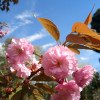
Prunus serrulata (Lindl.)
-
Prunus setulosa (Batalin)
-
Prunus sibirica (L.)
-
Prunus sieboldii ((Carrière) Koidz.)
-
Prunus simonii (Carrière)
-
Prunus singalilaensis (H.Ohba & S.Akiyama)
-
Prunus spartioides ((Spach) C.K.Schneid.)
-
Prunus speciosa ((Koidz.) Nakai)
-
Prunus spicata (Kalkman)
-
Prunus spinosa (L.)
-
Prunus spinosissima (Franch.)
-
Prunus spinulosa (Siebold & Zucc.)
-
Prunus ssiori (F.Schmidt)
-
Prunus stellipila (Koehne)
-
Prunus stipulacea (Maxim.)
-
Prunus stipulata (J.F.Macbr.)
-
Prunus strobilifera (Cuatrec.)
-
Prunus subcordata (Benth.)
-
Prunus subcoriacea ((Chodat & Hassl.) Koehne)
-
Prunus subcorymbosa (Ruiz ex Koehne)
-
Prunus subglabra ((Merr.) Kalkman)
-
Prunus subhirtella (Miq.)
-
Prunus sunhangii (D.G.Zhang & T.Deng)
-
Prunus susakensis ((Vassilcz.) Eisenman)
-
Prunus susquehanae (Willd.)
-
Prunus syriaca (Borkh.)
-
Prunus szechuanica (Batalin)
-
Prunus tadzhikistanica (V.I.Zapryagaeva)
-
Prunus takesimensis (Nakai)
-
Prunus tangutica (Koehne)
-
Prunus taplejungnica (H.Ohba & S.Akiyama)
-
Prunus tartarea (Lundell)
-
Prunus tatsienensis (Batalin)
-
Prunus tenella (Batsch)
2 -
Prunus tetradenia (Koehne)
-
Prunus texana (D.Dietr.)
-
Prunus tomentosa (Thunb.)
-
Prunus topkegolensis (H.Ohba & S.Akiyama)
-
Prunus transarisanensis (Hayata)
-
Prunus trichamygdalus (Hand.-Mazz.)
-
Prunus trichantha (Koehne)
-
Prunus trichostoma (Koehne)
-
Prunus triloba (Lindl.)
-
Prunus tschonoskii (Koehne)
-
Prunus tuberculata (Koehne)
-
Prunus tucumanensis (Lillo)
-
Prunus turcomanica ((Pojark.) Gilli)
-
Prunus turfosa (Kalkman)
-
Prunus turneriana ((F.M.Bailey) Kalkman)
-
Prunus ulei (Koehne)
-
Prunus ulmifolia (Franch.)
-
Prunus umbellata (Elliott)
-
Prunus undulata (Buch.-Ham. ex D.Don)
-
Prunus urartu ((Tamamsch.) Eisenman)
-
Prunus urotaenia (Koehne)
-
Prunus urumiensis ((Bornm.) A.E.Murray)
-
Prunus uzbekistanica ((Sabirov) Eisenman)
-
Prunus vachuschtii (Bregadze)
-
Prunus vavilovii ((Popov) A.E.Murray)
-
Prunus veitchii (Koehne)
-
Prunus velutina (Batalin)
-
Prunus verrucosa (Franch.)
-
Prunus versteeghii (Kalkman)
-
Prunus virginiana (L.)
2 -
Prunus walkeri ((Wight) Kalkman)
-
Prunus wallaceana (Kalkman)
-
Prunus wangii (Q.L.Gan, Z.Y.Li & S.Z.Xu)
-
Prunus webbii ((Spach) Fritsch)
-
Prunus wendelboi ((Freitag) Eisenman)
-
Prunus wilsonii (Diels ex Koehne)
-
Prunus xianjuxing ((J.Y.Zhang & X.Z.Wu) Y.H.Tong & N.H.Xia)
-
Prunus xingshanensis (Huan C.Wang)
-
Prunus yaoiana ((W.L.Cheng) Y.H.Tong & N.H.Xia)
-
Prunus yasujensis ((Khat.) Eisenman)
-
Prunus yazdiana ((Mozaff.) Falat.)
-
Prunus yedoensis (Matsum.)
-
Prunus yunkaishanensis (B.H.Wu, W.Y.Zhao & W.B.Liao)
-
Prunus yunnanensis (Franch.)
2 -
Prunus zabulica ((Seraf.) Eisenman)
-
Prunus zhengheensis ((J.Y.Zhang & M.N.Lu) Y.H.Tong & N.H.Xia)
-
Prunus zinggii (Standl.)
-
Prunus zippeliana (Miq.)