
Genus Acer in Subfamily Hippocastanoideae
In botanical taxonomy, a genus (plural genera) is a rank used to group closely related species within a family. In the hierarchy, genus sits below family and above species.
Genera are defined by shared morphological, anatomical, and genetic characteristics (for example, features of flowers, fruits, seeds, or leaves) that indicate a close evolutionary relationship among the species they contain.
Each genus can include one or more species. Examples include Rosa (roses) and Solanum (nightshades, including tomato and eggplant).
Do you wish to read more about plant taxonomy? Click here!
Genus Description
Suggest a correction!The maples (genus Acer, L.) belong to the family Sapindaceae as recognized in the APG IV system (APG IV, 2016). The genus includes about 129 species (POWO, 2024) and is distributed across the temperate Northern Hemisphere, with major concentrations in East Asia, secondary centres in eastern North America and Europe (WFO, 2024). The type species, Acer pseudoplatanus L., anchors the generic name. The plants are typically trees or shrubs with opposite, simple leaves that are palmately lobed in most taxa (3–9 lobes), although entire or trifoliolate forms occur; stipules are absent. Inflorescences are terminal or axillary racemes, panicles, or solitary; flowers are unisexual, five‑merous, with a pistillode in male flowers, nectaries on the sepals, and a superior, bicarpellate ovary with basal placentation. The fruit is a paired samara with winged achenes, the wings diverging at angles that aid wind dispersal. The base chromosome number is x = 13, and most diploids are 2n = 26, while polyploids of 2n = 52 are frequent (Murray & Swaminath, 2021).
The centre of species richness is the Sino‑Japanese region, especially mountains of southwestern China, the Himalaya, and Taiwan, with many endemics in montane forests up to ca. 3000 m; a smaller set occurs in eastern North America (A. rubrum, A. saccharum) and a few in temperate Europe (WFO, 2024). Habitats range from lowland deciduous woods to subalpine woodlands and, in Southeast Asia, tropical montane cloud forests.
Pollination is mainly entomophilous (bees, flies, beetles), occasionally wind‑mediated in open sites; winged samaras facilitate anemochory, and flowering often precedes leaf emergence.
Acer is traditionally split into seven sections (Palmata, Macrophylla, Rubra, Indivisa, Integrifolia, Cissifolia, Negundo). Phylogenomics (Zhang et al., 2020) confirms monophyly and largely aligns with these sections, but shows the former subgenus Negundo nested within Acer, contrary to earlier treatments that treated it as a separate genus. Alternative circumscriptions that segregate Negundo still exist, yet molecular data support the broader concept (APG IV, 2016; WFO, 2024). Some Asian lineages remain unresolved and are under revision (POWO, 2024).
Human relevance is largely horticultural and economic: A. palmatum and related taxa are prized ornamentals; A. saccharum yields valuable timber and maple syrup; some species, notably A. negundo, have become invasive in parts of Europe and North America.
Conservation concerns centre on habitat loss and climate change, with multiple Asian species assessed as threatened by the IUCN. Continued phylogenetic clarification, taxonomic refinement and protection of montane refugia are essential for the long‑term persistence of the genus.
-
Acer × bornmuelleri (Borbás)
-
Acer × coriaceum (Bosc ex Tausch.)
-
Acer × freemanii (A.E.Murray)
-
Acer × jakelyanum (Rottenst.)
-
Acer × koenighoferae (Rottenst.)
-
Acer × martini (Jord.)
-
Acer × schwerinii (Pax)
-
Acer acuminatum (Wall. ex D.Don)
-
Acer albopurpurascens (Hayata)
-
Acer amamiense (T.Yamaz.)
-
Acer amplum (Rehder)
3 -
Acer argutum (Maxim.)
-
Acer barbinerve (Maxim. ex Miq.)
-
Acer brachystephyanum (T.Z.Hsu)
-
Acer brevipes (Gagnep.)
-
Acer buergerianum (Miq.)
3 -
Acer caesium (Wall. ex Brandis)
1 -
Acer calcaratum (Gagnep.)
-
Acer caloneurum (C.Y.Wu & T.Z.Hsu)
-
Acer campbellii (Hook.f. & Thomson ex Hiern)
4 -
Acer campestre (L.)
2 -
Acer capillipes (Maxim.)
-
Acer cappadocicum (Gled.)
3 -
Acer carpinifolium (Siebold & Zucc.)
-
Acer caudatifolium (Hayata)
-
Acer caudatum (Wall.)
2 -
Acer chapaense (Gagnep.)
-
Acer chiangdaoense (Santisuk)
-
Acer cinerascentiforme (Pojark.)
-
Acer circinatum (Pursh)
-
Acer cissifolium ((Siebold & Zucc.) K.Koch)
-
Acer confertifolium (Merr. & F.P.Metcalf)
-
Acer cordatum (Pax)
1 -
Acer coriaceifolium (H.Lév.)
-
Acer crassum (Hu & W.C.Cheng)
-
Acer crataegifolium (Siebold & Zucc.)
-
Acer davidii (Franch.)
1 -
Acer diabolicum (Blume ex K.Koch)
-
Acer discolor (Maxim.)
-
Acer distylum (Siebold & Zucc.)
-
Acer duplicatoserratum (Hayata)
-
Acer elegantulum (W.P.Fang & P.L.Chiu)
-
Acer emeiense (T.Z.Hsu)
-
Acer erianthum (Schwer.)
-
Acer erythranthum (Gagnep.)
-
Acer eucalyptoides (W.P.Fang & Y.T.Wu)
-
Acer fabri (Hance)
-
Acer fengii (A.E.Murray)
-
Acer fenzelianum (Hand.-Mazz.)
-
Acer foveolatum (C.Y.Wu)
-
Acer glabrum (Torr.)
4 -
Acer gracilifolium (W.P.Fang & C.C.Fu)
-
Acer granatense (Boiss.)
-
Acer griseum ((Franch.) Pax)
-
Acer guanense (W.P.Fang)
-
Acer guizhouense (Y.K.Li)
-
Acer hainanense (F.Chun & W.P.Fang)
-
Acer heldreichii (Orph. ex Boiss.)
1 -
Acer henryi (Pax)
-
Acer huangpingense (T.Z.Hsu)
-
Acer hyrcanum (Fisch. & C.A.Mey.)
6 -
Acer insulare (Makino)
-
Acer japonicum (Thunb.)
-
Acer laevigatum (Wall.)
1 -
Acer laurinum (Hassk.)
-
Acer lauyuense (W.P.Fang ex C.C.Fu)
-
Acer legonsanicum (Y.K.Li)
-
Acer leipoense (W.P.Fang & Soong)
1 -
Acer leptophyllum (W.P.Fang)
-
Acer lichuanense (C.D.Chu & G.G.Tang)
-
Acer longipedicellatum (C.Y.Wu)
-
Acer longipes (Franch. ex Rehder)
1 -
Acer lucidum (F.P.Metcalf)
-
Acer macrophyllum (Pursh)
-
Acer mandshuricum (Maxim.)
-
Acer mapienense (W.P.Fang)
-
Acer maximowiczianum (Miq.)
-
Acer mazandaranicum (Amini, H.Zare & Assadi)
-
Acer medogense (T.Z.Hsu & Z.K.Zhou)
-
Acer miaoshanicum (W.P.Fang)
-
Acer micranthum (Siebold & Zucc.)
-
Acer mirabile (Hand.-Mazz.)
-
Acer miyabei (Maxim.)
1 -
Acer monspessulanum (L.)
5 -
Acer morifolium (Koidz.)
-
Acer nayongense (W.P.Fang)
-
Acer negundo (L.)
6 -
Acer nipponicum (H.Hara)
-
Acer oblongum (Wall. ex DC.)
1 -
Acer obtusifolium (Sm.)
-
Acer okamotoi (Nakai)
-
Acer oligocarpum (W.P.Fang & L.C.Hu)
-
Acer olivaceum (W.P.Fang & P.L.Chiu)
-
Acer oliverianum (Pax)
1 -
Acer opalus (Mill.)
1 -
Acer orthocampestre (G.W.Grimm & Denk)
-
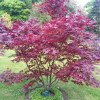
Acer palmatum (Thunb.)
3 -
Acer pauciflorum (W.P.Fang)
-
Acer paxii (Franch.)
-
Acer pectinatum (Wall. ex G.Nicholson)
4 -
Acer pehpeiense (W.P.Fang & H.Y.Su)
-
Acer pensylvanicum (L.)
-
Acer pentaphyllum (Diels)
-
Acer pentapomicum (J.L.Stewart)
-
Acer pictum (Thunb.)
8 -
Acer pilosum (Maxim.)
-
Acer pinnatinervium (Merr.)
-
Acer platanoides (L.)
1 -
Acer pluridens (T.Z.Hsu & H.Sun)
-
Acer poliophyllum (W.P.Fang & Y.T.Wu)
-
Acer pseudoplatanus (L.)
-
Acer pseudosieboldianum ((Pax) Kom.)
1 -
Acer pseudowilsonii (Y.S.Chen)
-
Acer pubipalmatum (W.P.Fang)
-
Acer pycnanthum (K.Koch)
-
Acer robustum (Pax)
-
Acer rubescens (Hayata)
-
Acer rubronervium (Y.K.Li)
-
Acer rubrum (L.)
-
Acer rufinerve (Siebold & Zucc.)
-
Acer saccharinum (L.)
-
Acer saccharum (Marshall)
8 -
Acer schneiderianum (Pax & K.Hoffm.)
-
Acer sempervirens (L.)
-
Acer serrulatum (Hayata)
-
Acer shangszeense (W.P.Fang & Soong)
-
Acer shenkanense (W.P.Fang ex C.C.Fu)
-
Acer shensiense (W.P.Fang & L.C.Hu)
-
Acer shenzhenensis (R.H.Miao & X.M.Wang)
-
Acer shihweii (F.Chun & W.P.Fang)
-
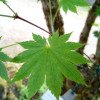
Acer shirasawanum (Koidz.)
-
Acer sichourense ((W.P.Fang & M.Y.Fang) W.P.Fang)
-
Acer sieboldianum (Miq.)
-
Acer sikkimense (Miq.)
1 -
Acer sinense (Pax)
-
Acer sino-oblongum (F.P.Metcalf)
-
Acer sinopurpurascens (W.C.Cheng)
-
Acer spicatum (Lam.)
-
Acer stachyophyllum (Hiern)
1 -
Acer sterculiaceum (Wall.)
2 -
Acer sutchuenense (Franch.)
-
Acer sycopseoides (Chun)
-
Acer tataricum (L.)
4 -
Acer tegmentosum (Maxim.)
-
Acer tenellum (Pax)
-
Acer tenuifolium ((Koidz.) Koidz.)
-
Acer tibetense (W.P.Fang)
-
Acer tonkinense (Lecomte)
2 -
Acer trialatum (L.L.Deng, K.Y.Wei & G.S.Fan)
-
Acer tricaudatum (W.P.Fang & C.C.Fu)
-
Acer triflorum (Kom.)
-
Acer truncatum (Bunge)
-
Acer tschonoskii (Maxim.)
2 -
Acer turcomanicum (Pojark. & Pojark.)
-
Acer tutcheri (Duthie)
1 -
Acer undulatum (Pojark.)
-
Acer varbossanium ((K.Malý) Simonk.)
-
Acer velutinum (Boiss.)
-
Acer wangchii (W.P.Fang)
-
Acer wardii (W.W.Sm.)
-
Acer wilsonii (Rehder)
-
Acer wuyishanicum (W.P.Fang & C.M.Tan)
-
Acer wuyuanense (W.P.Fang & Y.T.Wu)
-
Acer yangbiense (Y.S.Chen & Q.E.Yang)
-
Acer yaoshanicum (W.P.Fang)
-
Acer yinkunii (W.P.Fang)
-
Acer yui (W.P.Fang)