
Genus Amaranthus in Family Amaranthaceae
In botanical taxonomy, a genus (plural genera) is a rank used to group closely related species within a family. In the hierarchy, genus sits below family and above species.
Genera are defined by shared morphological, anatomical, and genetic characteristics (for example, features of flowers, fruits, seeds, or leaves) that indicate a close evolutionary relationship among the species they contain.
Each genus can include one or more species. Examples include Rosa (roses) and Solanum (nightshades, including tomato and eggplant).
Do you wish to read more about plant taxonomy? Click here!
Genus Description
Suggest a correction!Amaranthus L. (family Amaranthaceae) includes about 70 species and is native to tropical, subtropical and temperate regions across the Americas, Africa and Asia, occupying disturbed soils, savannas, cultivated fields and ruderal habitats. The type species, Amaranthus caudatus L., was designated by Linnaeus and remains the nominal representative (POWO, 2024).
Plants are mostly herbaceous annuals, rarely short‑lived perennials, with simple, opposite or alternate leaves that are usually glabrous, stipules absent. Inflorescences are dense terminal spikes or panicles; flowers are unisexual, male flowers have five membranous perianth segments and five stamens, females have a superior ovary with a single basal ovule. The fruit is a thin utricle bearing one glossy black seed (Stace, 2010).
Species richness peaks in the Americas, with over 30 taxa from the Andean highlands and Mesoamerica, and a secondary center in tropical Africa and Asia. Many taxa are endemics of western North America, Mexico, and the Andes, while several (e.g., A. retroflexus, A. spinosus) have become cosmopolitan weeds in temperate zones (WFO, 2024). The genus occupies habitats from low‑land fields to high‑altitude grasslands up to 3 500 m, often colonising disturbed soils.
Reproduction is predominantly anemophilous, although occasional insect visitation has been observed. Seeds are light and dispersed by wind or water, and they may also be ingested by birds or mammals, facilitating long‑distance movement. The most common chromosome count is 2n = 32, indicating a base number x = 8; polyploidy is rare (Stace, 2010).
Molecular phylogenies recover two clades that correspond to subgenus Amaranthus (the cultivated grain species) and subgenus Albersia (sometimes separated as Albersia blitum) (Sanchez‑DelPiero et al., 2019; Hernández‑Ledesma et al., 2021). The genus belongs to tribe Amarantheae, subfamily Amaranthoideae, in the order Caryophyllales. Recent revisions have synonymised several taxa, and alternative treatments, such as splitting A. spinosus and A. retroflexus into separate genera, persist in the World Flora Online framework (WFO, 2024).
Several species are cultivated pseudocereals, notably A. cruentus, A. caudatus and A. hypochondriacus, providing protein‑rich grain for food security. Ornamental cultivars of A. tricolor and A. caudatus are prized for their vivid foliage. In contrast, A. retroflexus and A. spinosus are aggressive weeds with wide non‑native distributions (Sanchez‑DelPiero et al., 2019).
Conservation concerns are limited, but habitat loss threatens several narrow endemics, and the spread of invasive genotypes of weedy species poses management challenges. Ongoing genetic studies of cultivated and wild lineages will be essential for sustainable utilisation and stewardship (Hernández‑Ledesma et al., 2021).
-
Amaranthus × adulterinus (Thell.)
-
Amaranthus × budensis (Priszter)
-
Amaranthus × ozanonii (Priszter)
-
Amaranthus × soproniensis (Priszter & Kárpáti)
-
Amaranthus × texensis (Henrickson)
-
Amaranthus acanthobracteatus (Henrickson)
-
Amaranthus acanthochiton (Sauer)
-
Amaranthus albus (L.)
-
Amaranthus anderssonii (J.T.Howell)
-
Amaranthus arenicola (I.M.Johnst.)
-
Amaranthus asplundii (Thell.)
-
Amaranthus atropurpureus (Roxb.)
-
Amaranthus aureus (F.Dietr.)
-
Amaranthus australis ((A.Gray) Sauer)
-
Amaranthus bahiensis (Mart.)
-
Amaranthus bigelowii (Uline & W.L.Bray)
-
Amaranthus blitoides (S.Watson)
-
Amaranthus blitum (L.)
3 -
Amaranthus brandegeei (Standl.)
-
Amaranthus brasiliensis (Moq.)
-
Amaranthus brownii (Christoph. & Caum)
-
Amaranthus californicus ((Moq.) S.Watson)
-
Amaranthus campestris (Willd.)
-
Amaranthus cannabinus ((L.) Sauer)
-
Amaranthus capensis (Thell.)
-
Amaranthus caracasanus (Kunth)
-
Amaranthus cardenasianus (Hunz.)
-
Amaranthus caturus (Roxb.)
-
Amaranthus caudatus (L.)
-
Amaranthus celosioides (Kunth)
-
Amaranthus centralis (J.Palmer & Mowatt)
-
Amaranthus chihuahensis (S.Watson)
-
Amaranthus clementii (Domin)
-
Amaranthus cochleitepalus (Domin)
-
Amaranthus commutatus (Kerner)
-
Amaranthus congestus (C.C.Towns.)
-
Amaranthus crassipes (Schltdl.)
1 -
Amaranthus crispus ((Lesp. & Thévenau) A.Braun ex J.M.Coult. & S.Watson)
-
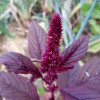
Amaranthus cruentus (L.)
-
Amaranthus cuspidifolius (Domin)
-
Amaranthus deflexus (L.)
-
Amaranthus dinteri (Schinz)
-
Amaranthus dubius (Mart. ex Thell.)
-
Amaranthus fimbriatus ((Torr.) Benth. ex S.Watson)
-
Amaranthus floridanus ((S.Watson) Sauer)
-
Amaranthus furcatus (J.T.Howell)
-
Amaranthus globosa (L.)
-
Amaranthus graecizans (L.)
1 -
Amaranthus grandiflorus ((J.M.Black) J.M.Black)
-
Amaranthus greggii (S.Watson)
-
Amaranthus haughtii (Standl.)
-
Amaranthus hunzikeri (N.Bayón)
-
Amaranthus hybridus (L.)
1 -
Amaranthus hypochondriacus (L.)
1 -
Amaranthus induratus (C.A.Gardner ex J.Palmer & Mowatt)
-
Amaranthus interruptus (R.Br.)
-
Amaranthus kloosianus (Hunz.)
-
Amaranthus leptostachyus (Benth.)
-
Amaranthus lepturus (S.F.Blake)
-
Amaranthus lombardoi (Hunz.)
-
Amaranthus looseri (Suess.)
-
Amaranthus macrocarpus (Benth.)
-
Amaranthus minimus (Standl.)
-
Amaranthus mitchellii (Benth.)
-
Amaranthus muricatus ((Moq.) Hieron.)
-
Amaranthus pallidiflorus (F.Muell.)
-
Amaranthus palmeri (S.Watson)
-
Amaranthus paolii (Chiov.)
-
Amaranthus paraguayensis (D.Parodi)
-
Amaranthus parvulus (Peter)
-
Amaranthus persimilis (Hunz.)
-
Amaranthus peruvianus ((S.Schauer) Standl.)
-
Amaranthus polygamus (L.)
-
Amaranthus polygonoides (L.)
-
Amaranthus polystachyus (Willd.)
-
Amaranthus powellii (S.Watson)
1 -
Amaranthus praetermissus (Brenan)
-
Amaranthus pringlei (S.Watson)
-
Amaranthus pumilus (Raf.)
-
Amaranthus retroflexus (L.)
-
Amaranthus rosengurttii (Hunz.)
-
Amaranthus roxburghianus (H.W.Kung)
-
Amaranthus scandens (L.f.)
-
Amaranthus scariosus (Benth.)
-
Amaranthus schinzianus (Thell.)
-
Amaranthus scleranthoides (Andersson)
-
Amaranthus scleropoides (Uline & W.L.Bray)
-
Amaranthus sparganicephalus (Thell.)
-
Amaranthus spinosus (L.)
-
Amaranthus squamulatus ((Andersson) B.L.Rob.)
-
Amaranthus standleyanus (Parodi ex Covas)
-
Amaranthus tamariscinus (Nutt.)
-
Amaranthus tamaulipensis (Henrickson)
-
Amaranthus tenuifolius (Willd.)
-
Amaranthus thellungianus (Nevski ex Vassilcz.)
-
Amaranthus thunbergii (Moq.)
-
Amaranthus tricolor (L.)
-
Amaranthus tuberculatus ((Moq.) J.D.Sauer)
-
Amaranthus tucsonensis (Henrickson)
-
Amaranthus urceolatus (Benth.)
-
Amaranthus venulosus (S.Watson)
-
Amaranthus viridis (L.)
-
Amaranthus vulgatissimus (Speg.)
-
Amaranthus watsonii (Standl.)
-
Amaranthus wrightii (S.Watson)