
Amaranthus cruentus
Table of Contents
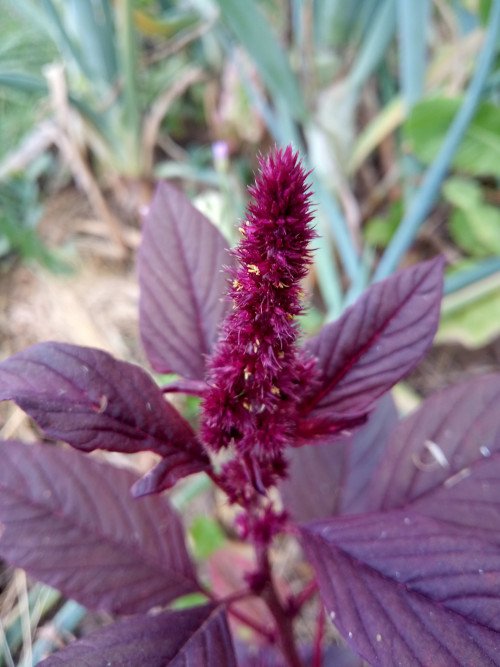
Details Top
| Internal ID | UUID644008bd703fe210904266 |
| Scientific name | Amaranthus cruentus |
| Authority | L. |
| First published in | Syst. Nat. ed. 10 , 2: 1269 (1759) |
Ethnobotanical Use Top
Suggest a correction!
Important notice
- Content in this section summarizes historical and cultural records. It is not medical advice.
- Do not use plants for self-treatment. Safety, efficacy, and appropriate use are not established here.
- Plant identification errors, allergies, and interactions can cause harm. Consult qualified professionals for health questions.
- Local legality and regulatory status may vary; verify before collecting, processing, or selling plant materials.
In several regions, Amaranthus cruentus has been prepared as a medicinal infusion. Among the Mapuche of southern Chile, a mild tea is made from the leaves to alleviate digestive complaints, as recorded by Bennett et al., 2021. Traditional healers in Kenya traditionally brew a decoction from the roots to treat fevers and malaria, as documented by Chepkwony et al., 2014. In northern India, practitioners create a poultice by crushing the fresh leaves and applying them topically to reduce inflammation, based on reports by Singh et al., 2020. Each preparation specifies the plant part used: leaves for tea and poultice, roots for decoction.
A practical recipe for a mild fever-reducing leaf tea is: collect 10–15 grams of dried young leaves, cover with 250 mL of boiling water, then steep for 10 minutes before straining. This preparation, drawn from the traditional use described by Singh et al., 2020, is intended for short-term relief of mild fevers in adults. Safety note: the leaves contain oxalates and tannins; avoid long-term high-dose use and consult a healthcare provider if you have kidney issues or are pregnant.
Phytochemical studies have identified several well-established constituents in Amaranthus cruentus leaves that support these uses. Quercetin and kaempferol flavonoids exhibit antipyretic and anti-inflammatory activity, while phenolic acids like caffeic acid contribute to antioxidant effects that may reduce fever (Peredo-Lovillo et al., 2014). These compounds are consistently reported across laboratory analyses of the species.
Modern relevance: While traditional practices persist in rural communities, commercial production of Amaranthus cruentus focuses on its edible leaves and seeds, and research continues into its medicinal compounds for potential pharmaceutical applications.
General Uses Top
Suggest a correction!Common products:
Amaranthus cruentus yields grain used as whole seed (popped, parched, or boiled), flakes, and fine flour. The seeds can be milled into gluten-free flour for flatbreads, porridges, extruded snacks, and breakfast cereals. Leaves are harvested as a leafy vegetable, consumed fresh in salads or cooked (sautéed, stewed) and sold fresh or frozen. A minor product is natural brown/dark red–purple dye derived from aerial plant parts and seed pericarp, used to color protein fibers in craft dyeing.
Industrial and craft applications:
Stem fibers are weak and used only incidentally for twine/cordage; no established textile fiber exists. Seed oil is expressed for food-grade uses and may also serve non-edible industrial purposes when purified; fatty acid profile (high linoleic acid) and moderate tocopherol content suit applications such as printing inks and alkyd resin binders in paints.
Food and beverages (non-medicinal):
Culinary products include popped grains; parched or boiled whole seeds; grain flours and fractions (high lysine, reduced prolamins); breakfast cereals and extruded snacks made from flour or grit; porridges; flatbreads and unleavened breads; leaf products marketed as “green vegetable amaranth” for fresh salads or cooked greens. Some cultivars are grown as ornamentals; others are dual-purpose (leaf and grain).
Colorants and tanning:
A brown-to-dark red–purple natural dye can be obtained from floral bracts/seed pericarp and plant aerial parts. Use is limited to craft dyeing of wool and silk; no commercial production is documented. Tannins are present in leaves and stems but not used for tanning.
Wood and fiber:
Herbage is herbaceous; not a source of timber. Stem fibers are mechanically separable but short and brittle, generally unsuitable for spinning and rarely used beyond rough cordage. Seed flour is sometimes suggested as a minor binder in composite boards.
Fragrance and cosmetics:
Seeds and aerial parts are not used as fragrance materials; no established essential oil or cosmetic resin/gum is reported.
Properties relevant to use:
Grain protein is of unusually high nutritional quality (high lysine), enabling partial wheat flour replacement in gluten-free formulations. Seed oil is rich in linoleic acid, with moderate tocopherols, conferring oxidative stability; the presence of squalene has been reported. Leaves contain betalain-type pigments (red–purple hues) and are water-soluble colorants in foods and craft dyeing.
Standards and regulation:
Where marketed for food, grain and flour are regulated under national food standards (e.g., Codex Alimentarius, US 21 CFR/FSMA, EU Novel Food Regulation). For greens, national produce safety standards and pesticide residue limits apply. Cosmetics colorants must comply with regional lists (e.g., EU Cosmetic Ingredient Regulation, FDA Color Additive status in the US). Organic certification (e.g., USDA NOP, EU Organic) and Good Agricultural and Collection Practices (GACP) support market entry. If used for non-food coloring of textiles, no specific dye safety standards apply beyond general product safety regulations.
Sustainability and sourcing:
Production is generally low-input with relatively modest water requirements relative to other leafy vegetables and cereals; seed yields vary widely by cultivar and environment. Crop residues may be used as animal feed. Regional breeding has expanded short-cycle cultivars adapted to warm, arid conditions, aiding resilience; however, some ornamental varieties are day-length sensitive. Certification systems support traceability and residue compliance for food use.
Synonyms Top
| Scientific name | Authority | First published in |
|---|---|---|
| Amaranthus anacardana | Hook.f. | Fl. Brit. India 4: 719 (1885) |
| Amaranthus arardhanus | Sweet | Hort. Brit. , ed. 3: 569 (1839) |
| Amaranthus carneus | hort. ex Moq. | Prodr. 13(2): 257 (1849) |
| Amaranthus esculentus | Besser | Cat. Hort. Volhyn. (1816) 9; ex Moq. in DC. Prod. xiii. II. 266. |
| Amaranthus farinaceus | Roxb. ex Moq. | Prodr. 13(2): 266 (1849) |
| Amaranthus guadeloupensis | hort. | Vilm. Blumengärtn., ed. 3. 1: 866, in syn. 1895 |
| Amaranthus guadelupensis | hort. ex Moq. | Prodr. 13(2): 257 (1849) |
| Amaranthus hybridus subsp. cruentus | (L.) Thell. | Fl. Adv. Montpellier : 205 (1912) |
| Amaranthus hybridus var. paniculatus | (L.) Uline & W.L.Bray | Mem. Torrey Bot. Club 5: 145 (1891) |
| Amaranthus hybridus var. patulus | Thell. | Fl. Adv. Montpellier : 206 (1912) |
| Amaranthus hybridus subsp. patulus | (Bertol.) Carretero | Collect. Bot. (Barcelona) 11: 127 (1979) |
| Amaranthus incarnatus | hort. ex Moq. | Prodr. 13(2): 257 (1849) |
| Amaranthus montevidensis | hort. ex Moq. | Prodr. 13(2): 257 (1849) |
| Amaranthus paniculatus | L. | Sp. Pl. ed. 2 : 1406 (1763) |
| Amaranthus paniculatus var. cruentus | (L.) Moq. | Prodr. 13(2): 257 (1849) |
| Amaranthus paniculatus var. longispicatus | Moq. | Prodr. 13(2): 257 1849 |
| Amaranthus paniculatus var. monstrosus | Moq. | Prodr. 13(2): 257 1849 |
| Amaranthus paniculatus var. sanguineus | (L.) Moq. | Prodr. 13(2): 257 (1849) |
| Amaranthus paniculatus var. speciosus | L.H.Bailey | Stand. Cycl. Hort. 1: 270 (1914) |
| Amaranthus paniculatus var. strictus | (Willd.) Seub. | Fl. Bras. (Martius) 5(1): 238. 1875 [1 Mar 1875] |
| Amaranthus purgans | hort. ex Moq. | Prodr. 13(2): 257 (1849) |
| Amaranthus rubescens | hort. ex Moq. | Prodr. 13(2): 257 (1849) |
| Amaranthus sanguineus | L. | Sp. Pl. ed. 2 : 1407 (1763) |
| Amaranthus sanguinolentus | Schrad. ex Moq. | Prodr. 13(2): 267 (1849) |
| Amaranthus speciosus | Sims | Bot. Mag. 48: t. 2227 (1821) |
| Amaranthus spicatus | Wirzen | Diss. Pl. Casan. 454. |
| Amaranthus strictus | Willd. | Hist. Amaranth. : 27 (1790) |
| Amaranthus violaceus | hort. ex Moq. | Prodr. [A. P. de Candolle] 13(2): 270. 1849 [5 May 1849] |
Common names Top
Add a new one! Suggest a correction!| Language | Common/alternative name |
|---|---|
| English | amaranth |
| English | blood amaranth |
| English | prince's feather |
| English | purple amaranth |
| English | mexican grain amaranth |
| English | red amaranth |
| English | pigweed |
| English | love-lies-bleeding |
| Spanish | amaranthus rubescens |
| Spanish | quelite |
| Spanish | amaranthus anacardana |
| Spanish | amaranthus arardhanus |
| Spanish | amaranthus guadeloupensis |
| Spanish | amaranthus guadelupensis |
| Spanish | huautli |
| Spanish | amaranthus paniculatus |
| Spanish | amaranthus hybridus var. paniculatus |
| Spanish | amaranthus hybridus var. patulus |
| Spanish | amaranthus sanguineus |
| Spanish | amaranthus speciosus |
| Spanish | amaranthus spicatus |
| Spanish | galliaria patula |
| Spanish | alegría |
| Arabic | قطيفة دموية |
| Belarusian | аксамітнік мяцёлчаты |
| Catalan | espinac africà |
| Catalan | marxant vermell |
| Czech | laskavec krvavý |
| Welsh | blodyn amor porffor |
| German | riesenfuchsschwanz |
| German | rispen-fuchsschwanz |
| Estonian | verev rebashein |
| Persian | تاجخروس خونی |
| Finnish | purppurarevonhäntä |
| French | amarante rouge |
| Upper Sorbian | wisaty šćěrjenc |
| Japanese | スギモリゲイトウ |
| Japanese | スギモリケイトウ |
| Korean | 선줄맨드라미 |
| Lithuanian | amaranthus paniculatus |
| Lithuanian | Šluotinis burnotis |
| Lithuanian | raibasis burnotis |
| Marathi | राजगिरा |
| Polish | szarłat wiechowaty |
| Polish | szarłat wyniosły |
| Polish | szarłat spożywczy |
| Russian | Щирица кроваво-красная |
| Russian | Амарант багряный |
| Russian | Щирица метельчатая |
| Russian | Амарант метельчатый |
| Russian | Щирица багряная |
| shn | မွၵ်ႇသွႆႈလၢႆႈ |
| Slovenian | košati ščir |
| Swedish | blodamarant |
| Tamil | சிவப்புப் பன்றிக்களை |
| tt | Әтәч кикриге |
| Chinese | 繁穗苋 |
| Chinese | 红粘谷 |
| Chinese | 红粘谷子 |
| Chinese | 老鸦谷 |
| Chinese | 天雪米 |
| Chinese | 鸦谷 |
| Chinese | 红苋 |
| Chinese | 繁穗莧 |
Germination/Propagation Top
Suggest a correction or add new data!| Sow seeds at 20°C, expecting germination within 3 months without further temperature treatment. |
| protect from damping off |
Distribution (via POWO/KEW) Top
Legend for the distribution data:
- Doubtful data
- Extinct
- Introduced
- Native
-
Africa click to expand
-
East Tropical Africa
- Kenya
- Tanzania
- Uganda
-
Macaronesia
- Cape Verde
-
Northeast Tropical Africa
- Ethiopia
- Somalia
- Sudan
-
Northern Africa
- Algeria
- Egypt
- Libya
- Morocco
- Tunisia
- Western Sahara
-
South Tropical Africa
- Malawi
- Mozambique
- Zambia
-
Southern Africa
- Botswana
- Cape Provinces
- Free State
- Kwazulu-Natal
- Northern Provinces
-
West Tropical Africa
- Benin
- Ghana
- Guinea
- Guinea-Bissau
- Ivory Coast
- Mali
- Niger
- Nigeria
- Sierra Leone
-
West-central Tropical Africa
- Burundi
- Cameroon
- Gulf Of Guinea Islands
- Rwanda
- Zaïre
-
East Tropical Africa
-
Asia-temperate click to expand
-
Arabian Peninsula
- Saudi Arabia
- Yemen
-
Caucasus
- North Caucasus
-
China
- China North-central
- China South-central
- China Southeast
- Inner Mongolia
- Manchuria
- Qinghai
- Tibet
-
Eastern Asia
- Japan
- Korea
- Taiwan
-
Middle Asia
- Kazakhstan
- Kirgizstan
- Tadzhikistan
- Turkmenistan
- Uzbekistan
-
Russian Far East
- Amur
- Primorye
-
Siberia
- Altay
- Chita
- Irkutsk
-
Western Asia
- Afghanistan
- Cyprus
- East Aegean Islands
- Iran
- Iraq
- Palestine
- Sinai
-
Arabian Peninsula
-
Asia-tropical click to expand
-
Indian Subcontinent
- Assam
- Bangladesh
- India
- Laccadive Islands
- Nepal
- Pakistan
-
Indo-China
- Cambodia
- Myanmar
- South China Sea
- Vietnam
-
Malesia
- Borneo
- Christmas Island
- Jawa
- Lesser Sunda Islands
- Philippines
- Sumatera
-
Papuasia
- New Guinea
-
Indian Subcontinent
-
Australasia click to expand
-
Australia
- New South Wales
-
New Zealand
- New Zealand North
- New Zealand South
-
Australia
-
Europe click to expand
-
Eastern Europe
- Central European Russia
- East European Russia
- Krym
- South European Russia
- Ukraine
-
Middle Europe
- Belgium
- Czechoslovakia
- Germany
- Hungary
- Switzerland
-
Northern Europe
- Great Britain
- Sweden
-
Southeastern Europe
- Albania
- Bulgaria
- Italy
- Kriti
- Romania
- Sicilia
- Yugoslavia
-
Southwestern Europe
- Baleares
- Corse
- France
- Portugal
- Sardegna
- Spain
-
Eastern Europe
-
Northern America click to expand
-
Mexico
- Mexico Central
- Mexico Gulf
- Mexico Northwest
- Mexico Southeast
- Mexico Southwest
-
North-central U.S.A.
- Illinois
- Missouri
- Nebraska
- Wisconsin
-
Northeastern U.S.A.
- Connecticut
- Indiana
- Maine
- Massachusetts
- Michigan
- New Hampshire
- New Jersey
- New York
- Ohio
- Pennsylvania
- Rhode Island
- Vermont
- West Virginia
-
Northwestern U.S.A.
- Oregon
- Washington
-
South-central U.S.A.
- New Mexico
- Texas
-
Southeastern U.S.A.
- Alabama
- Kentucky
- Maryland
- North Carolina
- South Carolina
-
Southwestern U.S.A.
- Arizona
- California
- Utah
-
Mexico
-
Pacific click to expand
-
North-central Pacific
- Hawaii
-
South-central Pacific
- Society Islands
- Tubuai Islands
-
Southwestern Pacific
- Fiji
- New Caledonia
- Tonga
-
North-central Pacific
-
Southern America click to expand
-
Brazil
- Brazil Northeast
- Brazil South
- Brazil Southeast
- Brazil West-central
-
Caribbean
- Cuba
- Dominican Republic
- Haiti
- Leeward Islands
- Puerto Rico
- Windward Islands
-
Central America
- El Salvador
- Guatemala
- Honduras
- Nicaragua
- Panamá
-
Northern South America
- Venezuela
-
Southern South America
- Argentina Northeast
- Argentina Northwest
- Chile Central
- Paraguay
-
Western South America
- Bolivia
- Colombia
- Ecuador
- Peru
-
Brazil
Links to other databases Top
Suggest others/fix!| Database | ID/link to page |
|---|---|
| World Flora Online | wfo-0000530168 |
| UNII | 0K2XZG537D |
| Canadensys | 2502 |
| USDA Plants | AMCR4 |
| Tropicos | 1100428 |
| INPN | 81976 |
| KEW | urn:lsid:ipni.org:names:10631-2 |
| The Plant List | kew-2632793 |
| Observations.org | 114373 |
| NCBI Taxonomy | 117272 |
| NBN Atlas | NBNSYS0000033863 |
| Nature Serve | 2.159876 |
| IPNI | 10631-2 |
| iNaturalist | 52328 |
| GBIF | 5384390 |
| Freebase | /m/08dtjx |
| WisFlora | 7014 |
| EPPO | AMACR |
| EOL | 585507 |
| Elurikkus | 2713 |
| Calflora (Californian flora) | 276 |
| USDA GRIN | 70070 |
| Wikipedia | Amaranthus_cruentus |
| PFAF | Amaranthus cruentus |
| Open Tree Of Life | 343515 |
| Plantarium | 2560 |
Genomes (via NCBI) Top
Below is displayed the reference genome only!
If you wish to browse all genomes for this plant click here.
If you wish to browse all genomes for this plant click here.
| Accession | Assembly | |||||
|---|---|---|---|---|---|---|
| Name | Level | Submitter | Released | Coverage | Size | |
| GCA_048987545.1 | ASM4898754v1 | Contig | KAUST | 2025-03-26 | 174 | 457.77 Mb |
Scientific Literature Top
Below are displayed the latest 15 articles published in PMC (PubMed Central®) and other sources (DOI number only)!
If you wish to see all the related articles click here.
If you wish to see all the related articles click here.
Phytochemical Profile Top
Add a new one!
Below are displayed the proven (via scientific papers) natural compounds!
You can also contribute to this by clicking here.
You can also contribute to this by clicking here.
| Name | PubChem ID | Canonical SMILES | MW | Found in | Proof |
|---|---|---|---|---|---|
| > Alkaloids and derivatives / Betalains / Betacyanins and derivatives | |||||
| Amaranthin | 6325284 | Click to see C1C(NC(=CC1=CC=[N+]2C(CC3=CC(=C(C=C32)O)OC4C(C(C(C(O4)CO)O)O)OC5C(C(C(C(O5)C(=O)O)O)O)O)C(=O)[O-])C(=O)O)C(=O)O | 726.60 | unknown | https://doi.org/10.1016/S0031-9422(00)84563-X |
| Betacyanin | 11953901 | Click to see | 550.50 | unknown | https://doi.org/10.1016/S0031-9422(00)84563-X |
| > Lipids and lipid-like molecules / Fatty Acyls / Fatty acids and conjugates / Long-chain fatty acids | |||||
| (9Z)-11-((2R,3S)-3-Pentyl-2-oxiranyl)-9-undecenoic acid | 5281128 | Click to see | 296.40 | unknown | https://doi.org/10.1002/JSFA.2740580123 |
| Eicosanoic Acid | 10467 | Click to see | 312.50 | unknown | https://doi.org/10.1007/BF02541498 |
| Malvalic acid | 10416 | Click to see | 280.40 | unknown | https://doi.org/10.1002/JSFA.2740580123 |
| Oleic Acid | 445639 | Click to see | 282.50 | unknown |
https://doi.org/10.1002/JSFA.2740580123 https://doi.org/10.1007/BF02541498 |
| Palmitic Acid | 985 | Click to see | 256.42 | unknown |
https://doi.org/10.1002/JSFA.2740580123 https://doi.org/10.1007/BF02541498 |
| Stearic Acid | 5281 | Click to see | 284.50 | unknown |
https://doi.org/10.1007/BF02541498 https://doi.org/10.1002/JSFA.2740580123 |
| Vernolic acid, cis-(+)- | 6449780 | Click to see | 296.40 | unknown | https://doi.org/10.1002/JSFA.2740580123 |
| > Lipids and lipid-like molecules / Fatty Acyls / Fatty acids and conjugates / Medium-chain fatty acids | |||||
| Sterculic acid | 12921 | Click to see | 294.50 | unknown | https://doi.org/10.1002/JSFA.2740580123 |
| > Lipids and lipid-like molecules / Fatty Acyls / Lineolic acids and derivatives | |||||
| Elaidolinolenic acid | 5282822 | Click to see | 278.40 | unknown | https://doi.org/10.1007/BF02541498 |
| Linoleic Acid | 5280450 | Click to see CCCCCC=CCC=CCCCCCCCC(=O)O | 280.40 | unknown | https://doi.org/10.1002/JSFA.2740580123 |
| Linolenic Acid | 5280934 | Click to see | 278.40 | unknown | https://doi.org/10.1007/BF02541498 |
| > Lipids and lipid-like molecules / Prenol lipids / Quinone and hydroquinone lipids / Vitamin E compounds / Tocopherols | |||||
| Delta-Tocopherol | 92094 | Click to see CC1=CC(=CC2=C1OC(CC2)(C)CCCC(C)CCCC(C)CCCC(C)C)O | 402.70 | unknown | https://doi.org/10.1007/BF02536726 |
| > Lipids and lipid-like molecules / Prenol lipids / Quinone and hydroquinone lipids / Vitamin E compounds / Tocotrienols | |||||
| Alpha-Tocotrienol | 5282347 | Click to see | 424.70 | unknown | https://doi.org/10.1007/BF02536726 |
| delta-Tocotrienol | 5282350 | Click to see CC1=CC(=CC2=C1OC(CC2)(C)CCC=C(C)CCC=C(C)CCC=C(C)C)O | 396.60 | unknown | https://doi.org/10.1007/BF02536726 |
| Gamma-Tocotrienol | 5282349 | Click to see | 410.60 | unknown | https://doi.org/10.1007/BF02536726 |
| > Lipids and lipid-like molecules / Prenol lipids / Terpene glycosides / Triterpene glycosides / Triterpene saponins | |||||
| Amaranthussaponin I | 131753081 | Click to see | 957.10 | unknown | https://doi.org/10.1016/S0031-9422(97)00904-7 |
| Amaranthussaponin II | 131753116 | Click to see | 971.10 | unknown | https://doi.org/10.1016/S0031-9422(97)00904-7 |
| beta-D-Glucopyranosiduronic acid, (2beta,3beta,4alpha)-28-(beta-D-glucopyranosyloxy)-2-hydroxy-23,28-dioxoolean-12-en-3-yl 3-O-(6-deoxy-alpha-L-mannopyranosyl)- | 102438527 | Click to see CC1C(C(C(C(O1)OC2C(C(OC(C2O)OC3C(CC4(C(C3(C)C=O)CCC5(C4CC=C6C5(CCC7(C6CC(CC7)(C)C)C(=O)OC8C(C(C(C(O8)CO)O)O)O)C)C)C)O)C(=O)O)O)O)O)O | 971.10 | unknown | https://doi.org/10.1016/S0031-9422(97)00904-7 |
| beta-D-Glucopyranosiduronic acid, (2beta,3beta)-28-(beta-D-glucopyranosyloxy)-2-hydroxy-28-oxoolean-12-en-3-yl 3-O-(6-deoxy-alpha-L-mannopyranosyl)- | 102438528 | Click to see CC1C(C(C(C(O1)OC2C(C(OC(C2O)OC3C(CC4(C(C3(C)C)CCC5(C4CC=C6C5(CCC7(C6CC(CC7)(C)C)C(=O)OC8C(C(C(C(O8)CO)O)O)O)C)C)C)O)C(=O)O)O)O)O)O | 957.10 | unknown | https://doi.org/10.1016/S0031-9422(97)00904-7 |
| > Lipids and lipid-like molecules / Prenol lipids / Triterpenoids | |||||
| Squalene | 638072 | Click to see | 410.70 | unknown | https://doi.org/10.1111/J.1365-2621.1981.TB03018.X |
| > Lipids and lipid-like molecules / Steroids and steroid derivatives / Cycloartanols and derivatives | |||||
| 24-Methylenecycloartanol | 94204 | Click to see | 440.70 | unknown | https://doi.org/10.1016/S0031-9422(00)81167-X |
| 7,7,12,16-Tetramethyl-15-(6-methyl-5-methylideneheptan-2-yl)pentacyclo[9.7.0.01,3.03,8.012,16]octadec-8-en-6-ol | 162820419 | Click to see | 438.70 | unknown | https://doi.org/10.1007/BF02541498 |
| > Lipids and lipid-like molecules / Steroids and steroid derivatives / Stigmastanes and derivatives | |||||
| 17-(5-ethyl-6-methylhept-3-en-2-yl)-10,13-dimethyl-2,3,4,5,6,9,11,12,14,15,16,17-dodecahydro-1H-cyclopenta[a]phenanthren-3-ol | 521229 | Click to see CCC(C=CC(C)C1CCC2C1(CCC3C2=CCC4C3(CCC(C4)O)C)C)C(C)C | 412.70 | unknown | https://doi.org/10.1016/S0031-9422(97)00904-7 |
| 17-(5-ethyl-6-methylheptan-2-yl)-10,13-dimethyl-2,3,4,7,8,9,11,12,14,15,16,17-dodecahydro-1H-cyclopenta[a]phenanthren-3-ol | 86821 | Click to see CCC(CCC(C)C1CCC2C1(CCC3C2CC=C4C3(CCC(C4)O)C)C)C(C)C | 414.70 | unknown | https://doi.org/10.1002/JSFA.2740580210 |
| alpha-Spinasterin | 5281331 | Click to see CCC(C=CC(C)C1CCC2C1(CCC3C2=CCC4C3(CCC(C4)O)C)C)C(C)C | 412.70 | unknown | https://doi.org/10.1016/S0031-9422(97)00904-7 |
| Chondrillasterol | 5283663 | Click to see | 412.70 | unknown | https://doi.org/10.1016/S0031-9422(97)00904-7 |
| Stigmasterol | 5280794 | Click to see | 412.70 | unknown | https://doi.org/10.1002/JSFA.2740580210 |
| > Organic acids and derivatives / Carboxylic acids and derivatives / Tetracarboxylic acids and derivatives | |||||
| (1R,2S)-1-[(E)-3-(3,4-dihydroxyphenyl)prop-2-enoyl]oxypropane-1,2,3-tricarboxylic acid | 146672465 | Click to see C1=CC(=C(C=C1C=CC(=O)OC(C(CC(=O)O)C(=O)O)C(=O)O)O)O | 354.26 | unknown | https://doi.org/10.1016/S0031-9422(00)84563-X |
| (1R,2S)-1-[(Z)-3-(3,4-dihydroxyphenyl)prop-2-enoyl]oxypropane-1,2,3-tricarboxylic acid | 163194056 | Click to see | 354.26 | unknown | https://doi.org/10.1016/S0031-9422(00)84563-X |
| 1-[3-(3,4-Dihydroxyphenyl)prop-2-enoyloxy]propane-1,2,3-tricarboxylic acid | 439851 | Click to see C1=CC(=C(C=C1C=CC(=O)OC(C(CC(=O)O)C(=O)O)C(=O)O)O)O | 354.26 | unknown | https://doi.org/10.1016/S0031-9422(00)84563-X |
| > Organic oxygen compounds / Organooxygen compounds / Alcohols and polyols / Secondary alcohols / Cyclohexanols | |||||
| An inositol | 892 | Click to see | 180.16 | unknown | https://doi.org/10.1111/J.1365-2621.1981.TB03018.X |
| > Organic oxygen compounds / Organooxygen compounds / Carbohydrates and carbohydrate conjugates / Glycosyl compounds / O-glycosyl compounds | |||||
| beta-D-Glucopyranose, 4-O-beta-D-galactopyranosyl- | 294 | Click to see C(C1C(C(C(C(O1)OC2C(OC(C(C2O)O)O)CO)O)O)O)O | 342.30 | unknown | https://doi.org/10.1111/J.1365-2621.1981.TB03018.X |
| Gal(a1-4)a-Ido | 131632347 | Click to see C(C1C(C(C(C(O1)OC2C(OC(C(C2O)O)O)CO)O)O)O)O | 342.30 | unknown | https://doi.org/10.1111/J.1365-2621.1981.TB03018.X |
| Sucrose | 5988 | Click to see | 342.30 | unknown | https://doi.org/10.1111/J.1365-2621.1981.TB03018.X |
| > Organic oxygen compounds / Organooxygen compounds / Carbohydrates and carbohydrate conjugates / Glycosyl compounds / Phenolic glycosides | |||||
| (2S)-4-[(E)-2-[(2R)-2-carboxy-5-[(2S,3R,4S,5S,6R)-3-[(2R,3R,4S,5S,6S)-6-carboxy-3,4,5-trihydroxyoxan-2-yl]oxy-4,5-dihydroxy-6-(hydroxymethyl)oxan-2-yl]oxy-6-hydroxy-2,3-dihydroindol-1-yl]ethenyl]-2,3-dihydropyridine-2,6-dicarboxylic acid | 102154177 | Click to see | 726.60 | unknown | https://doi.org/10.1016/S0031-9422(00)84563-X |
| > Organic oxygen compounds / Organooxygen compounds / Carbohydrates and carbohydrate conjugates / Oligosaccharides | |||||
| Gal(a1-6)D-Ido(a1-6)Glc(a1-2b)Psif | 132990894 | Click to see | 666.60 | unknown | https://doi.org/10.1111/J.1365-2621.1981.TB03018.X |
| Raffinose | 439242 | Click to see | 504.40 | unknown | https://doi.org/10.1111/J.1365-2621.1981.TB03018.X |
| Stachyose | 439531 | Click to see | 666.60 | unknown | https://doi.org/10.1111/J.1365-2621.1981.TB03018.X |
| > Phenylpropanoids and polyketides / Flavonoids / Flavones | |||||
| Apigenin | 5280443 | Click to see C1=CC(=CC=C1C2=CC(=O)C3=C(C=C(C=C3O2)O)O)O | 270.24 | unknown | https://doi.org/10.1007/BF02323285 |
| > Phenylpropanoids and polyketides / Flavonoids / Flavonoid glycosides / Flavonoid O-glycosides / Flavonoid-3-O-glycosides | |||||
| Hyperoside | 5281643 | Click to see C1=CC(=C(C=C1C2=C(C(=O)C3=C(C=C(C=C3O2)O)O)OC4C(C(C(C(O4)CO)O)O)O)O)O | 464.40 | unknown | https://doi.org/10.1007/BF02323285 |
| Rutin | 5280805 | Click to see | 610.50 | unknown | https://doi.org/10.1007/BF02323285 |

Collections Top
| In private collections | 1 |
| In public collections | 1 |