
Genus Crataegus in Family Rosaceae
In botanical taxonomy, a genus (plural genera) is a rank used to group closely related species within a family. In the hierarchy, genus sits below family and above species.
Genera are defined by shared morphological, anatomical, and genetic characteristics (for example, features of flowers, fruits, seeds, or leaves) that indicate a close evolutionary relationship among the species they contain.
Each genus can include one or more species. Examples include Rosa (roses) and Solanum (nightshades, including tomato and eggplant).
Do you wish to read more about plant taxonomy? Click here!
Genus Description
Suggest a correction!Crataegus (L.) belongs to the Rosaceae family, subfamily Spiraeoideae, tribe Maleae (formerly Maloideae). Approximately two hundred species are recognised worldwide, with additional unnamed microspecies caused by widespread apomixis and hybridisation. The genus has a temperate Northern Hemisphere distribution ranging from Europe and the Mediterranean through Central Asia to North America, occupying open woodlands, scrub, hedgerows and riverbanks up to about 2600 m elevation. Its type species is Crataegus oxyacantha L., the classic European hawthorn.
Morphologically Crataegus is a small, often thorny shrub or tree. Leaves are simple, palmately lobed with three to five acute lobes and serrate margins; stipules are caducous or absent. Flowers appear in dense corymbose inflorescences, each bearing five white to pink petals, numerous stamens (often 10–20) and a single style. The inferior ovary is syncarpous, usually of two to five carpels, each containing a single ovule; the fruit is a pome (the familiar haw), fleshy and bright red to black, enclosing one to five hard pyrenes.
Diversity is highest in eastern North America and in the Mediterranean–Caucasian region, with several narrow endemics in the Himalayas and East Asia. Some species are widespread (e.g., C. monogyna), whereas many are confined to specific mountain or coastal habitats. Typical habitats include mixed deciduous forest edges, woodland clearings and semi‑arid shrublands.
Pollination is by generalist insects, primarily bees, while fruit dispersal is largely by birds and mammals. Chromosome numbers are consistently based on x = 17, with most taxa diploid (2n = 34) and occasional polyploids. The genus shows a high frequency of apomixis, contributing to the taxonomic complexity.
Molecular phylogenies (Campbell et al., 2011; Potter et al., 2007) resolve three major clades within Crataegus, supporting the traditional subgeneric grouping but also highlighting reticulate evolution. Recent revisions (POWO, 2024; WFO, 2024) retain Crataegus as a single genus, while some regional treatments retain Mespilus separately (USDA Plants Database, 2023), illustrating ongoing debate about generic limits.
Crataegus is widely cultivated as an ornamental tree and hedgerow plant; its fruits are used for jams and wines, and its wood supplies small craft items. Certain species, notably C. monogyna, are listed as invasive in parts of New Zealand. Many taxa face habitat loss, and several narrow endemics are of conservation concern.
Future work integrating population genomics with field surveys will refine species circumscriptions and guide conservation priorities.
-
Crataegus × aberrans ((Lange) K.I.Chr.)
-
Crataegus × ardua (Sarg.)
-
Crataegus × armena (Pojark.)
-
Crataegus × atrorubens (Ashe)
-
Crataegus × bicknellii ((Eggl.) Eggl.)
-
Crataegus × bornmuelleri (Zabel ex K.I.Chr. & Ziel.)
-
Crataegus × brevipes (Peck)
-
Crataegus × coleae (Sarg.)
-
Crataegus × corusca (Sarg.)
-
Crataegus × disperma (Ashe)
-
Crataegus × dispessa (Ashe)
-
Crataegus × gillotii ((Beck) T.A.Dickinson & E.Y.Y.Lo)
-
Crataegus × harryi (Sarg.)
-
Crataegus × hiemalis (Lange)
-
Crataegus × hudsonica (Sarg.)
-
Crataegus × ideae (Sarg.)
-
Crataegus × incaedua (Sarg.)
-
Crataegus × kelloggii (Sarg.)
-
Crataegus × kennedyi (Sarg.)
-
Crataegus × killinica (K.I.Chr.)
-
Crataegus × knieskerniana (Sarg.)
-
Crataegus × kyrtostyla (Fingerh.)
-
Crataegus × lambertiana (Lange)
-
Crataegus × laneyi (Sarg.)
-
Crataegus × lecta (Sarg.)
-
Crataegus × lucorum (Sarg.)
-
Crataegus × macrocarpa (Hegetschw.)
2 -
Crataegus × maligna (Sarg.)
-
Crataegus × media (Bechst.)
-
Crataegus × neobaxteri (Sarg.)
-
Crataegus × ninae\-celottiae (K.I.Chr. & T.A.Dickinson)
-
Crataegus × peloponnesiaca (Byatt)
-
Crataegus × permixta (E.J.Palmer)
-
Crataegus × persimilis (Sarg.)
-
Crataegus × pilosa (Sarg.)
-
Crataegus × polyacantha (Jan)
-
Crataegus × puberis (Sarg.)
-
Crataegus × randiana (Sarg.)
-
Crataegus × rubrocarnea (Sarg.)
-
Crataegus × shirleyensis (Sarg.)
-
Crataegus × sicca (Sarg.)
-
Crataegus × simulata (Sarg.)
-
Crataegus × tianschanica (Pojark.)
-
Crataegus × vittata (Ashe)
-
Crataegus × yosgatica (K.I.Chr.)
-
Crataegus × zangezura (Pojark.)
2 -
Crataegus acutifolia (Sarg.)
-
Crataegus aestivalis ((Walter) Torr. & A.Gray)
-
Crataegus alabamensis (Beadle)
-
Crataegus albanica (Pojark.)
-
Crataegus alleghaniensis (Beadle)
-
Crataegus ambigua (A.K.Becker)
2 -
Crataegus amicta (Ashe)
-
Crataegus anamesa (Sarg.)
-
Crataegus aprica (Beadle)
-
Crataegus aquacervensis (J.B.Phipps & O'Kennon)
-
Crataegus armena (Pojark.)
-
Crataegus ashei (Beadle)
-
Crataegus atrorubens (Ashe)
-
Crataegus atrovirens (J.B.Phipps & R.O'Kennon)
-
Crataegus aurantia (Pojark.)
-
Crataegus aurescens (J.B.Phipps)
-
Crataegus austromontana (Beadle)
-
Crataegus azarolus (L.)
4 -
Crataegus baroussana (Eggl.)
-
Crataegus beadlei (Ashe)
-
Crataegus beata (Sarg.)
-
Crataegus berberifolia (Torr. & A.Gray)
2 -
Crataegus brachyacantha (Sarg. & Engelm.)
-
Crataegus brazoria (Sarg.)
-
Crataegus calpodendron ((Ehrh.) Medik.)
-
Crataegus canescens ((J.B.Phipps) T.A.Dickinson & E.Y.Y.Lo)
-
Crataegus castlegarensis (J.B.Phipps & R.O'Kennon)
-
Crataegus caucasica (K.Koch)
-
Crataegus celsiana (Bosc)
-
Crataegus chersonensis (K.I.Chr.)
-
Crataegus chlorocarpa (K.Koch)
-
Crataegus chlorosarca (Maxim.)
-
Crataegus chrysocarpa (Ashe)
7 -
Crataegus chungtienensis (W.W.Sm.)
-
Crataegus cispontica (Ufimov)
-
Crataegus clarkei (Hook.f.)
-
Crataegus coccinea (L.)
3 -
Crataegus coccinioides (Ashe)
-
Crataegus cognata (Sarg.)
-
Crataegus cogswellii (K.I.Chr. & T.A.Dickinson)
-
Crataegus coleae (Sarg.)
-
Crataegus collicola (Ashe)
-
Crataegus collina (Chapm.)
4 -
Crataegus compacta (Sarg.)
-
Crataegus condigna (Beadle)
-
Crataegus coriifolia (Sharifnia & Zarrink.)
-
Crataegus corusca (Sarg.)
-
Crataegus crus-galli (L.)
-
Crataegus cuneata (Siebold & Zucc.)
2 -
Crataegus cupressocollina (J.B.Phipps & O'Kennon)
-
Crataegus cuprina (J.B.Phipps)
-
Crataegus dahurica (hort. ex Koehne)
2 -
Crataegus delawarensis (Sarg.)
-
Crataegus desueta (Sarg.)
-
Crataegus dipyrena (Pojark.)
-
Crataegus dispar (Beadle)
-
Crataegus disperma (Ashe)
-
Crataegus dispessa (Ashe)
-
Crataegus distincta (Kruschke)
-
Crataegus dodgei (Ashe)
-
Crataegus douglasii (Lindl.)
-
Crataegus dsungarica (Zabel ex Lange)
-
Crataegus dzhairensis (Vassilcz.)
-
Crataegus enderbyensis (J.B.Phipps & R.O'Kennon)
-
Crataegus erythrocarpa (Ashe)
-
Crataegus erythropoda (Ashe)
-
Crataegus fecunda (Sarg.)
-
Crataegus ferganensis (Pojark.)
-
Crataegus flabellata ((Bosc ex Spach) K.Koch)
-
Crataegus flava (Sol.)
-
Crataegus floridana (Sarg.)
-
Crataegus florifera (Sarg.)
-
Crataegus fluviatilis (Sarg.)
-
Crataegus forbesae (Sarg.)
-
Crataegus fragilis (Beadle)
-
Crataegus fretalis (Sarg.)
-
Crataegus gattingeri (Ashe)
-
Crataegus gaylussacia (A.Heller)
-
Crataegus germanica ((L.) Kuntze)
-
Crataegus glareosa (Ashe)
-
Crataegus gracilior (J.B.Phipps)
-
Crataegus granatensis (Boiss.)
-
Crataegus grandifolia (J.B.Phipps)
-
Crataegus greggiana (Eggl.)
-
Crataegus gregorianii (Gabrieljan & Sargsyan)
-
Crataegus grignonensis (Mouill.)
-
Crataegus grossidentata (Sharifnia & K.I.Chr.)
-
Crataegus harbisonii (Beadle)
-
Crataegus hatamii (Hamzehee, K.I.Chr. & Attar)
-
Crataegus heldreichii (Boiss.)
-
Crataegus heterophylloides (Pojarkova ex K.I.Chr.)
-
Crataegus hiemalis (Lange)
-
Crataegus hissarica (Pojark.)
-
Crataegus holmesiana (Ashe)
-
Crataegus hudsonica (Sarg.)
-
Crataegus hupehensis (Sarg.)
-
Crataegus ideae (Sarg.)
-
Crataegus incaedua (Sarg.)
-
Crataegus indicens (Ashe)
-
Crataegus intricata (Lange)
-
Crataegus iracunda (Beadle)
-
Crataegus irrasa (Sarg.)
-
Crataegus isfajramensis (Pachom.)
-
Crataegus jesupii (Sarg.)
-
Crataegus johnstonii (J.B.Phipps)
-
Crataegus jonesae (Sarg.)
-
Crataegus kansuensis (E.H.Wilson)
-
Crataegus karadaghensis (Pojark.)
-
Crataegus kelloggii (Sarg.)
-
Crataegus kennedyi (Sarg.)
-
Crataegus khatamsazae (Hamzehee, K.I.Chr. & Attar)
-
Crataegus knieskerniana (Sarg.)
-
Crataegus knorringiana (Pojark.)
-
Crataegus kurdistanica (E.Hadac & Chrtek)
-
Crataegus kyrtostyla (Fingerh. ex Schltdl.)
2 -
Crataegus laciniata (Ucria)
-
Crataegus lacrimata (Small)
-
Crataegus laevigata ((Poir.) DC.)
-
Crataegus laneyi (Sarg.)
-
Crataegus lanuginosa (Sarg.)
-
Crataegus lassa (Beadle)
-
Crataegus latebrosa (Sarg.)
-
Crataegus lavalleei (Hérincq ex Lavallée)
-
Crataegus leonensis (E.J.Palmer)
-
Crataegus lettermanii (Sarg.)
-
Crataegus longipes (Pojark.)
-
Crataegus lucorum (Sarg.)
-
Crataegus lumaria (Ashe)
-
Crataegus macracantha (Lodd. ex Loudon)
-
Crataegus macrocarpa (Hegetschw.)
-
Crataegus macrosperma (Ashe)
-
Crataegus magniflora (Sarg.)
-
Crataegus maligna (Sarg.)
-
Crataegus margarettae (Ashe)
-
Crataegus marshallii (Eggl.)
-
Crataegus maximowiczii (C.K.Schneid.)
-
Crataegus menandiana (Sarg.)
-
Crataegus mexicana (Moc. & Sessé ex DC.)
-
Crataegus meyeri (Pojark.)
-
Crataegus microphylla (K.Koch)
2 -
Crataegus mollis ((Torr. & A.Gray) Scheele)
4 -
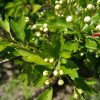
Crataegus monogyna (Jacq.)
1 -
Crataegus multiflora (Bunge)
-
Crataegus munda (Beadle)
-
Crataegus nananixonii (J.B.Phipps & O'Kennon)
-
Crataegus necopinata (Pojark.)
-
Crataegus nelsonii (Eggl.)
-
Crataegus neobushii (Sarg.)
-
Crataegus nigra (Waldst. & Kit.)
-
Crataegus nitida ((Engelm. ex Britton & A.Br.) Sarg.)
-
Crataegus nitidula (Sarg.)
-
Crataegus notha (Sarg.)
-
Crataegus okanaganensis (J.B.Phipps & O'Kennon)
3 -
Crataegus okennonii (J.B.Phipps)
-
Crataegus opaca (Hook. & Arn.)
-
Crataegus opulens (Sarg.)
-
Crataegus orbicularis (J.B.Phipps & R.O'Kennon)
-
Crataegus oreophila (Lance)
-
Crataegus oresbia (W.W.Sm.)
-
Crataegus orientalis ((Mill.) M.Bieb.)
3 -
Crataegus ouachitensis (E.J.Palmer)
-
Crataegus padifolia (Sarg.)
-
Crataegus pallasii (Griseb.)
-
Crataegus pamiroalaica (Zaprjagaeva)
-
Crataegus pearsonii (Ashe)
-
Crataegus pennsylvanica (Ashe)
-
Crataegus pentagyna (Waldst. & Kit. ex Willd.)
2 -
Crataegus pequotorum (Sarg.)
-
Crataegus peregrina (Sarg.)
-
Crataegus persimilis (Sarg.)
-
Crataegus petrodavisii (Dönmez)
-
Crataegus phaenopyrum ((L.f.) Medik.)
-
Crataegus phippsii (O'Kennon)
-
Crataegus pilosa (Sarg.)
-
Crataegus pinnatifida (Bunge)
2 -
Crataegus piperi (Britton)
-
Crataegus pisifera (Sarg.)
-
Crataegus pontica (K.Koch)
-
Crataegus populnea (Ashe)
-
Crataegus prona (Ashe)
-
Crataegus pruinosa ((H.L.Wendl.) K.Koch)
4 -
Crataegus pseudazarolus (Popow)
-
Crataegus pseudoheterophylla (Pojark.)
2 -
Crataegus pseudosanguinea (Popov ex Poyarkova)
-
Crataegus pulcherrima (Ashe)
-
Crataegus punctata (Jacq.)
-
Crataegus purpurella (J.B.Phipps & O'Kennon)
-
Crataegus putata (Sarg.)
-
Crataegus pycnoloba (Boiss. & Heldr.)
-
Crataegus radnoti-gyarmatii (Ker.-Nagy)
-
Crataegus ravida (Ashe)
-
Crataegus remotilobata (Raikova ex Popov)
-
Crataegus reverchonii (Sarg.)
3 -
Crataegus rhipidophylla (Gand.)
3 -
Crataegus rivularis (Nutt. ex Torr. & A.Gray)
-
Crataegus rivuloadamensis (J.B.Phipps & O'Kennon)
-
Crataegus rivulopugnensis (J.B.Phipps & O'Kennon)
-
Crataegus roribacca (Ashe)
-
Crataegus rosei (Eggl.)
-
Crataegus rubella (Beadle)
-
Crataegus rubribracteolata (J.B.Phipps & O'Kennon)
-
Crataegus rubrinervis (Lange)
-
Crataegus rufula (Sarg.)
-
Crataegus rupicola (Sarg.)
-
Crataegus ruscinonensis (Gren. & A.Blanc)
-
Crataegus russanovii (Cinovskis)
-
Crataegus sakranensis (E.Hadac & Chrtek)
-
Crataegus saligna (Greene)
-
Crataegus sanguinea (Pall.)
1 -
Crataegus sargentii (Beadle)
-
Crataegus scabrida (Sarg.)
-
Crataegus scabrifolia ((Franch.) Rehder)
-
Crataegus schizophylla (Eggl.)
-
Crataegus schuettei (Ashe)
3 -
Crataegus schumacheri (Raunk.)
-
Crataegus senta (Beadle)
-
Crataegus serratissima (J.B.Phipps)
-
Crataegus shandongensis (F.Z.Li & W.D.Peng)
-
Crataegus sheila-phippsiae (J.B.Phipps & O'Kennon)
2 -
Crataegus shensiensis (Pojark.)
-
Crataegus shinnersii (Kruschke)
-
Crataegus shuswapensis (J.B.Phipps & R.O'Kennon)
-
Crataegus silvestris (Sarg.)
-
Crataegus sinaica (Boiss.)
-
Crataegus songarica (K.Koch)
-
Crataegus spathulata (Michx.)
-
Crataegus spatiosa (Sarg.)
-
Crataegus spes-aestatum (J.B.Phipps)
-
Crataegus sphaenophylla (Pojark.)
-
Crataegus spissa (Sarg.)
-
Crataegus stankovii (Kossych)
-
Crataegus stenosepala (Sarg.)
-
Crataegus stevenii (Pojark.)
-
Crataegus subheterophylla (P.D.Sell)
-
Crataegus submollis (Sarg.)
-
Crataegus suborbiculata (Sarg.)
-
Crataegus succulenta (Schrad. ex Link)
2 -
Crataegus suksdorfii ((Sarg.) Kruschke)
-
Crataegus sulfurea (J.B.Phipps)
-
Crataegus talyschensis (Pojark. ex Ufimov)
-
Crataegus tanacetifolia ((Poir.) Pers.)
-
Crataegus tanuphylla (Sarg.)
-
Crataegus tenuior (J.B.Phipps)
-
Crataegus texana (Buckley)
2 -
Crataegus theodori (Essenova)
-
Crataegus thermopegaea (E.J.Palmer)
-
Crataegus tianschanica (Pojark.)
-
Crataegus tinctoria (Ashe)
-
Crataegus tkatschenkoi (K.I.Chr.)
-
Crataegus tracyi (Ashe ex Eggl.)
-
Crataegus triflora (Chapm.)
-
Crataegus turkestanica (Pojark.)
-
Crataegus turnerorum (Enquist)
-
Crataegus tzvelevii (Ufimov)
-
Crataegus umbratilis (Sarg.)
-
Crataegus uniflora (Münchh.)
-
Crataegus ursopedensis (J.B.Phipps & O'Kennon)
-
Crataegus vailiae (Britton)
-
Crataegus vegeta (Sarg.)
-
Crataegus venusta (Beadle)
-
Crataegus verruculosa (Sarg.)
-
Crataegus viridis (L.)
8 -
Crataegus warneri (Sarg.)
-
Crataegus wattiana (Hemsl. & Lace)
-
Crataegus whitakeri (Sarg.)
-
Crataegus wilsonii (Sarg.)
-
Crataegus wootoniana (Eggl.)
-
Crataegus xanthophylla (Sarg.)
-
Crataegus yaltirikii (Dönmez)
-
Crataegus zangezura (Pojark.)