
Genus Magnolia in Family Magnoliaceae
In botanical taxonomy, a genus (plural genera) is a rank used to group closely related species within a family. In the hierarchy, genus sits below family and above species.
Genera are defined by shared morphological, anatomical, and genetic characteristics (for example, features of flowers, fruits, seeds, or leaves) that indicate a close evolutionary relationship among the species they contain.
Each genus can include one or more species. Examples include Rosa (roses) and Solanum (nightshades, including tomato and eggplant).
Do you wish to read more about plant taxonomy? Click here!
Genus Description
Suggest a correction!The genus Magnolia L. (Magnoliaceae) comprises approximately 300–350 species distributed across temperate to tropical regions of eastern Asia and the Americas, with natural populations extending into Mexico and northern South America (Figlar & Nooteboom, 2004; POWO, 2024). Magnolia virginiana L. serves as the type species, establishing the nomenclatural foundation for the genus established by Linnaeus in his seminal Species Plantarum (1753).
The genus exhibits distinctive morphological features that distinguish it within Magnoliaceae. Species typically present as trees or shrubs bearing large, fragrant flowers with numerous tepals arranged in three or more whorls. Reproductive structures include numerous stamens and carpels arranged spirally on an elongate receptacle, reflecting the primitive condition characteristic of the family. Leaves are simple, alternate, and lack teeth, often bearing conspicuous stipules that enclose terminal buds. Fruits are aggregate follicles that split along their seams when mature, releasing seeds with fleshy arils adapted for dispersal by birds or small mammals.
Species diversity concentrates in two primary centers: East and Southeast Asia, including China, Japan, and Vietnam, and the southeastern United States through Mexico and Central America (Xia et al., 2008). Several species demonstrate remarkable endemism, particularly in montane cloud forests of Mexico and Central America, where they occupy elevations between 1,000–2,500 meters. The American species predominantly inhabit bottomland hardwood forests and stream margins, while Asian taxa demonstrate broader ecological tolerance from lowland tropical forests to temperate deciduous woodlands.
Pollination mechanisms primarily involve beetles attracted to the strong floral fragrances and warm temperatures generated by thermogenesis during anthesis, though bees occasionally visit certain species (Thien et al., 2009). Seed dispersal occurs through animal vectors following consumption of the fleshy arils. Chromosome base number consistently appears as x = 19 across the genus, supporting morphological circumscriptions and recent molecular phylogenetic studies (Azuma et al., 2001).
Recent taxonomic revisions have proposed subgeneric classifications based on molecular phylogenies, recognizing four principal clades corresponding to geographic distribution and morphological characteristics (Figlar & Nooteboom, 2004; WFO, 2024). Some treatments have advocated broader generic limits that include Yulania, though this position remains controversial among taxonomists, with most contemporary treatments maintaining Magnolia sensu strict (Sullivan, 2004).
Several species demonstrate significant economic importance as ornamental plants cultivated worldwide for their early spring flowering and attractive foliage. Magnolia grandiflora provides valuable timber in its native southeastern United States, while certain Asian species face conservation concerns due to habitat loss and over-collection. The genus contains numerous horticultural varieties and cultivars adapted to various climatic conditions, contributing substantially to temperate and subtropical landscape horticulture.
Population declines threaten numerous species, particularly narrow endemics with restricted distributions. Climate change poses additional risks to montane species through habitat modifications and altered precipitation patterns. Research priorities include continued taxonomic clarification of complex species groups and comprehensive conservation assessments utilizing standardized criteria (IUCN, 2023).
Magnolia, representing one of the most ancient flowering plant lineages, continues to provide crucial insights into early angiosperm evolution while facing contemporary conservation challenges requiring urgent attention.
-
Magnolia × jigongshanensis (T.B.Chao, D.L.Fu & W.B.Sun)
-
Magnolia × proctoriana (Rehder)
-
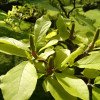
Magnolia × soulangeana (Soul.-Bod.)
-
Magnolia acuminata ((L.) L.)
2 -
Magnolia admirabilis ((Y.W.Law & R.Z.Zhou ex L.Fu, Q.W.Zeng & X.M.Hu) C.B.Callaghan & Png)
-
Magnolia albosericea (Chun & C.H.Tsoong)
-
Magnolia alejandrae (García-Mor. & Iamonico)
-
Magnolia allenii (Standl.)
-
Magnolia amabilis (Sima & Y.H.Wang)
-
Magnolia amazonica ((Ducke) Govaerts)
-
Magnolia amoena (W.C.Cheng)
-
Magnolia angatensis (Blanco)
-
Magnolia angustioblonga ((Y.W.Law & Y.F.Wu) Figlar)
-
Magnolia annamensis (Dandy)
-
Magnolia arcabucoana ((Lozano) Govaerts)
-
Magnolia archilana (A.Vázquez, Tribouill. & Véliz)
-
Magnolia argyrotricha ((Lozano) Govaerts)
-
Magnolia aromatica ((Dandy) V.S.Kumar)
-
Magnolia arroyoana (Molinari)
-
Magnolia ashei (Weath.)
-
Magnolia ashtonii (Dandy ex Noot.)
-
Magnolia atlantida (A.Vázquez)
-
Magnolia azulensis (F.Arroyo)
-
Magnolia baillonii (Pierre)
-
Magnolia balansae (Aug.DC.)
-
Magnolia banghamii ((Noot.) Figlar & Noot.)
-
Magnolia bankardiorum (M.O.Dillon & Sánchez Vega)
-
Magnolia baotaina ((D.L.Fu, Q.Zhang & M.Xu) C.B.Callaghan & Png)
-
Magnolia bawangensis (Y.W.Law, R.Z.Zhou & D.M.Liu)
-
Magnolia beccarii ((Ridl.))
-
Magnolia betongensis ((Craib) H.Keng)
-
Magnolia betuliensis (Aguilar-Cano & Humberto Mend.)
-
Magnolia bidoupensis (Q.N.Vu)
-
Magnolia bintuluensis ((A.Agostini) Noot.)
-
Magnolia biondii (Pamp.)
-
Magnolia blaoensis ((Gagnep.) Dandy)
-
Magnolia boliviana ((M.Nee) Govaerts)
-
Magnolia borneensis (Noot.)
-
Magnolia braianensis ((Gagnep.) Figlar)
-
Magnolia brasiliensis (C.O.Azevedo, A.F.P.Machado & A.Vázquez)
-
Magnolia brunnescens (K.W.Luo & Xiong Li)
-
Magnolia calimaensis ((Lozano) Govaerts)
-
Magnolia calophylla ((Lozano) Govaerts)
-
Magnolia calophylloides (Figlar & Noot.)
-
Magnolia campbellii (Hook.f. & Thomson)
-
Magnolia canandeana (F.Arroyo)
-
Magnolia cararensis ((Lozano) Govaerts)
-
Magnolia caricifragans ((Lozano) Govaerts)
-
Magnolia carnosa ((D.L.Fu & D.L.Zhang) C.B.Callaghan & Png)
-
Magnolia carsonii (Dandy ex Noot.)
3 -
Magnolia cathcartii ((Hook.f. & Thomson) Noot.)
-
Magnolia cattienensis (Q.N.Vu)
-
Magnolia cavaleriei ((Finet & Gagnep.) Figlar)
-
Magnolia caveana ((Hook.f. & Thomson) D.C.S.Raju & M.P.Nayar)
-
Magnolia celaquensis (A.Vázquez & H.Vega)
-
Magnolia cespedesii ((Triana & Planch.) Govaerts)
-
Magnolia champaca ((L.) Baill. ex Pierre)
2 -
Magnolia championii (Benth.)
-
Magnolia changhungtana (Noot.)
-
Magnolia chapensis ((Dandy) Sima)
-
Magnolia chevalieri ((Dandy) V.S.Kumar)
-
Magnolia chiguila (F.Arroyo, Á.J.Pérez & A.Vázquez)
-
Magnolia chimantensis (Steyerm. & Maguire)
-
Magnolia chiriquiensis (A.Vázquez)
-
Magnolia chocoensis ((Lozano) Govaerts)
-
Magnolia citrata (Noot. & Chalermglin)
-
Magnolia clemensiorum (Dandy)
-
Magnolia clementinana (F.Arroyo & M.Serna)
-
Magnolia cochranei (A.Vázquez)
-
Magnolia coco (DC.)
-
Magnolia colombiana ((Little) Govaerts)
-
Magnolia compressa (Maxim.)
-
Magnolia conifera ((Dandy) V.S.Kumar)
2 -
Magnolia coriacea ((Hung T.Chang & B.L.Chen) Figlar)
-
Magnolia coronata (M.Serna, C.Velásquez & Cogollo)
-
Magnolia costaricensis (A.Vázquez)
-
Magnolia crassipes ((Y.W.Law) V.S.Kumar)
-
Magnolia cristalensis (Bisse)
-
Magnolia cubensis (Urb.)
4 -
Magnolia cusucoensis (A.Vázquez & D.L.Kelly)
-
Magnolia cylindrica (E.H.Wilson)
-
Magnolia dabieshanensis ((T.B.Chao, Zhi X.Chen & H.T.Dai) C.B.Callaghan & Png)
-
Magnolia dandyi (Gagnep.)
-
Magnolia darioi (A.Vázquez & D.L.Kelly)
-
Magnolia dawsoniana (Rehder & E.H.Wilson)
-
Magnolia dealbata (Zucc.)
-
Magnolia decastroi (A.Vázquez & Muñiz-Castro)
-
Magnolia decidua ((Q.Y.Zheng) V.S.Kumar)
-
Magnolia delavayi (Franch.)
-
Magnolia denudata (Desr.)
-
Magnolia dimorpha ((T.B.Chao & Zhi X.Chen) C.B.Callaghan & Png)
-
Magnolia dixonii ((Little) Govaerts)
-
Magnolia dodecapetala ((Lam.) Govaerts)
-
Magnolia doltsopa ((Buch.-Ham. ex DC.) Figlar)
-
Magnolia domingensis (Urb.)
-
Magnolia duclouxii (Hu)
-
Magnolia duperreana (Pierre)
-
Magnolia ekmanii (Urb.)
-
Magnolia elegans ((Blume) H.Keng)
-
Magnolia elegantifolia (Noot.)
-
Magnolia elfina (A.Vázquez)
-
Magnolia elliptigemmata (C.L.Guo & L.L.Huang)
-
Magnolia emarginata (Urb. & Ekman)
-
Magnolia enepeceana (Rob.Fern. & Marcelo-Peña)
-
Magnolia equatorialis (A.Vázquez)
-
Magnolia ernestii (Figlar)
2 -
Magnolia espinalii ((Lozano) Govaerts)
-
Magnolia fansipanensis (C.B.Callaghan & Png)
-
Magnolia faustinomirandae (A.Vázquez)
-
Magnolia figlarii (V.S.Kumar)
-
Magnolia figo ((Lour.) DC.)
3 -
Magnolia fistulosa (Dandy)
-
Magnolia flaviflora ((Y.W.Law & Y.F.Wu) Figlar)
-
Magnolia floribunda ((Finet & Gagnep.) Figlar)
-
Magnolia fordiana (Hu)
4 -
Magnolia foveolata ((Merr. ex Dandy) Figlar)
-
Magnolia fragarigynandria ((T.B.Chao, Zhi X.Chen & H.T.Dai) C.B.Callaghan & Png)
-
Magnolia fraseri (Walter)
2 -
Magnolia frontinoensis (Cogollo, Hoyos-Gómez & M.Serna)
-
Magnolia fujianensis ((Q.F.Zheng) Figlar)
-
Magnolia fulva ((Hung T.Chang & B.L.Chen) Figlar)
2 -
Magnolia garrettii ((Craib) V.S.Kumar)
-
Magnolia gentryi (A.Vázquez)
-
Magnolia georgii ((Lozano) Govaerts)
-
Magnolia gigantifolia ((Miq.) Noot.)
-
Magnolia gilbertoi ((Lozano) Govaerts)
-
Magnolia globosa (Hook.f. & Thomson)
-
Magnolia gloriensis ((Pittier) Govaerts)
-
Magnolia granbarrancae (A.Vázquez, Muñiz-Castro & A.T.Nuño)
-
Magnolia grandiflora (L.)
-
Magnolia grandis ((Hu & W.C.Cheng) V.S.Kumar)
-
Magnolia griffithii (Hook.f. & Thomson)
-
Magnolia guanacastensis (A.Vázquez)
-
Magnolia guangdongensis ((Y.H.Yan, Q.W.Zeng & F.W.Xing) Noot.)
-
Magnolia guangxiensis ((Y.W.Law & R.Z.Zhou) Sima)
-
Magnolia guangzhouensis ((A.Q.Dong, Q.W.Zeng & F.W.Xing) C.B.Callaghan & Png)
-
Magnolia guatapensis ((Lozano) Govaerts)
-
Magnolia guatemalensis (Donn.Sm.)
-
Magnolia guerrerensis (J.Jiménez Ram., K.Vega & Cruz Durán)
-
Magnolia gustavi (King)
-
Magnolia hamorii (R.A.Howard)
-
Magnolia henaoi ((Lozano) Govaerts)
-
Magnolia henryi (Dunn)
-
Magnolia hernandezii ((Lozano) Govaerts)
-
Magnolia hodgsonii ((Hook.f. & Thomson) H.Keng)
-
Magnolia hondurensis (A.M.Molina)
-
Magnolia hongheensis ((Y.M.Shui & W.H.Chen) V.S.Kumar)
-
Magnolia hookeri ((Cubitt & W.W.Sm.) D.C.S.Raju & M.P.Nayar)
-
Magnolia hypolampra ((Dandy) Figlar)
-
Magnolia iltisiana (A.Vázquez)
-
Magnolia inbioana (A.Vázquez)
-
Magnolia insignis (Wall.)
-
Magnolia irwiniana ((Lozano) Govaerts)
-
Magnolia iteophylla ((C.Y.Wu ex Y.W.Law & Y.F.Wu) Noot.)
-
Magnolia jaenensis (Marcelo-Peña)
-
Magnolia jaliscana (A.Vázquez & R.Guzmán)
-
Magnolia jardinensis (M.Serna, C.Velásquez & Cogollo)
-
Magnolia javieri (A.Vázquez, Tribouill. & Archila)
-
Magnolia jianfenglingensis ((G.A.Fu & Kun Pan) C.B.Callaghan & Png)
-
Magnolia jigongshanensis (T.B.Chao, D.L.Fu & W.B.Sun)
-
Magnolia juninensis (F.Arroyo)
-
Magnolia kachinensis (S.S.Zhou, Q.Liu & Sima)
-
Magnolia kachirachirai (Dandy)
-
Magnolia kaifui ((Q.W.Zeng & X.M.Hu) C.B.Callaghan & Png)
-
Magnolia katiorum ((Lozano) Govaerts)
-
Magnolia kichuana (A.Vázquez, F.Arroyo & Á.J.Pérez)
-
Magnolia kingii ((Dandy) Figlar)
-
Magnolia kisopa ((Buch.-Ham. ex DC.) Figlar)
-
Magnolia kobus (DC.)
-
Magnolia koordersiana ((Noot.) Figlar)
-
Magnolia krusei (J.Jiménez Ram. & Cruz Durán)
-
Magnolia kwangsiensis (Figlar & Noot.)
-
Magnolia kwangtungensis (Merr.)
-
Magnolia lacandonica (A.Vázquez, Pérez-Farr. & Mart.-Camilo)
-
Magnolia lacei ((W.W.Sm.) Figlar)
-
Magnolia laevifolia ((Y.W.Law & Y.F.Wu) Noot.)
-
Magnolia lamdongensis (V.T.Tran, Duy & N.H.Xia)
-
Magnolia lanuginosa ((Wall.) Figlar & Noot.)
-
Magnolia lanuginosoides (Figlar & Noot.)
-
Magnolia lasia (Noot.)
-
Magnolia lawiana (Sima & Hong Yu)
-
Magnolia lawii ((N.H.Xia & W.F.Liao) C.B.Callaghan & Png)
-
Magnolia lenticellata ((Lozano) Govaerts)
-
Magnolia leveilleana ((Dandy) Figlar)
-
Magnolia liliifera (Baill.)
-
Magnolia liliiflora (Desr.)
-
Magnolia llanganatensis (A.Vázquez & D.A.Neill)
-
Magnolia longipedunculata ((Q.W.Zeng & Y.W.Law) V.S.Kumar)
-
Magnolia lopezobradorii (A.Vázquez)
-
Magnolia lotungensis (Chun & C.H.Tsoong)
-
Magnolia lozanoi (A.Vázquez & Castro-Arce)
-
Magnolia lucida ((B.L.Chen & S.C.Yang) V.S.Kumar)
-
Magnolia macklottii ((Korth.) Dandy)
2 -
Magnolia maclurei ((Dandy) Figlar)
-
Magnolia macrocarpa ((Zucc.) A.Vázquez & Castro-Arce)
-
Magnolia macrophylla (Michx.)
-
Magnolia madidiensis (A.Vázquez)
-
Magnolia mahechae ((Lozano) Govaerts)
-
Magnolia manguillo (Marcelo-Peña & F.Arroyo)
-
Magnolia mannii ((King) Figlar)
-
Magnolia manuensis (F.Arroyo)
-
Magnolia mariusjacobsia (Noot.)
-
Magnolia martini (H.Lév.)
-
Magnolia mashpi (Á.J.Pérez, F.Arroyo & A.Vázquez)
-
Magnolia masticata ((Dandy) Figlar)
-
Magnolia maudiae ((Dunn) Figlar)
2 -
Magnolia mayae (A.Vázquez & Pérez-Farr.)
-
Magnolia mediocris ((Dandy) Figlar)
-
Magnolia mercedesiarum (D.A.Neill, A.Vázquez & F.Arroyo)
-
Magnolia mexicana (DC.)
-
Magnolia mindoensis (A.Vázquez, D.A.Neill & A.Dahua)
-
Magnolia minor ((Urb.) Govaerts)
-
Magnolia mirifolia ((D.L.Fu, T.B.Chao & Zhi X.Chen) Noot.)
-
Magnolia mixteca (A.Vázquez & Domínguez-Yescas)
-
Magnolia montana ((Blume) Figlar)
-
Magnolia montebelloensis (A.Vázquez & Pérez-Farr.)
-
Magnolia morii ((Lozano) Govaerts)
-
Magnolia multinervia (A.Vázquez)
-
Magnolia nana (Dandy)
-
Magnolia napoensis (F.Arroyo, Á.J.Pérez & A.Vázquez)
-
Magnolia narinensis ((Lozano) Govaerts)
-
Magnolia neillii ((Lozano) Govaerts)
-
Magnolia neomagnifolia (I.M.Turner)
-
Magnolia nilagirica ((Zenker) Figlar)
-
Magnolia nitida (W.W.Sm.)
-
Magnolia nuevoleonensis (A.Vázquez & Domínguez-Yescas)
-
Magnolia oaxacensis (A.Vázquez)
-
Magnolia oblonga ((Wall. ex Hook.f. & Thomson) Figlar)
-
Magnolia oblongifolia ((León) Palmarola)
-
Magnolia obovalifolia ((C.Y.Wu & Y.W.Law) V.S.Kumar)
-
Magnolia obovata (Thunb.)
-
Magnolia odora ((Chun) Figlar & Noot.)
-
Magnolia ofeliae (A.Vázquez & Cuevas)
-
Magnolia officinalis (Rehder & E.H.Wilson)
2 -
Magnolia omeiensis ((W.C.Cheng) Dandy)
-
Magnolia opipara ((Hung T.Chang & B.L.Chen) Sima)
-
Magnolia orbiculata ((Britton & P.Wilson) Palmarola)
-
Magnolia oscarrodrigoi (A.Vázquez, Tribouill. & Archila)
-
Magnolia ottoi (A.Vázquez, Tribouill. & Archila)
-
Magnolia ovata (Spreng.)
-
Magnolia ovoidea ((H.T.Chang & B.L.Chen) V.S.Kumar)
-
Magnolia pacifica (A.Vázquez)
-
Magnolia pahangensis (Noot.)
-
Magnolia palandana (F.Arroyo)
-
Magnolia pallescens (Urb. & Ekman)
-
Magnolia panamensis (A.Vázquez & Iltis)
-
Magnolia paranaensis (A.Vázquez)
-
Magnolia pastazaensis (F.Arroyo & Á.J.Pérez)
-
Magnolia pastorcortesii (A.Vázquez & D.L.Kelly)
-
Magnolia patungensis ((Hu) Noot.)
-
Magnolia pealiana (King)
-
Magnolia pedrazae (A.Vázquez)
-
Magnolia pendula ((D.L.Fu) C.B.Callaghan & Png)
-
Magnolia perezfarrerae (A.Vázquez & Gómez-Domínguez)
-
Magnolia persuaveolens (Dandy)
3 -
Magnolia peruviana (A.Vázquez)
-
Magnolia philippinensis (P.Parm.)
-
Magnolia picopijolensis (A.Vázquez)
-
Magnolia platyphylla ((Merr.) Figlar & Noot.)
-
Magnolia pleiocarpa ((Dandy) Figlar & Noot.)
-
Magnolia poasana (Dandy)
-
Magnolia polyhypsophylla ((Lozano) Govaerts)
-
Magnolia poqomchi (M.J.Serrano & A.Vázquez)
-
Magnolia portoricensis (Bello)
-
Magnolia praecalva ((Dandy) Figlar & Noot.)
-
Magnolia ptaritepuiana (Steyerm.)
-
Magnolia pterocarpa (Roxb.)
-
Magnolia puberula ((D.L.Fu) C.B.Callaghan & Png)
-
Magnolia pubescens ((Merr.) Figlar & Noot.)
-
Magnolia pugana ((Iltis & A.Vázquez) A.Vázquez & Carvajal)
-
Magnolia punduana ((Hook.f. & Thomson) Figlar)
-
Magnolia quangninhensis (Q.N.Vu & N.H.Xia)
-
Magnolia quetzal (A.Vázquez, Véliz & Tribouill.)
-
Magnolia quichensis (Tribouill., A.Vázquez & Archila)
-
Magnolia rabaniana ((Hook.f. & Thomson) D.C.S.Raju & M.P.Nayar)
-
Magnolia rajaniana ((Craib) Figlar)
-
Magnolia resupinatifolia (Aguilar-Cano & Humberto Mend.)
-
Magnolia reynelii (Rob.Fern. & Marcelo-Peña)
-
Magnolia rimachii ((Lozano) Govaerts)
-
Magnolia rostrata (W.W.Sm.)
-
Magnolia rufibarbata ((Dandy) V.S.Kumar)
-
Magnolia rzedowskiana (A.Vázquez, Domínguez-Yescas & R.Pedraza)
-
Magnolia sabahensis ((Dandy ex Noot.) Figlar & Noot.)
-
Magnolia salicifolia (Maxim.)
-
Magnolia sambuensis ((Pittier) Govaerts)
-
Magnolia sanchez-vegae (Marcelo-Peña)
-
Magnolia santanderiana ((Lozano) Govaerts)
-
Magnolia sapaensis ((N.H.Xia & Q.N.Vu) Grimshaw & Macer)
-
Magnolia sarawakensis ((A.Agostini) Noot.)
-
Magnolia sargentiana (Rehder & E.H.Wilson)
-
Magnolia savegrensis (A.Vázquez)
-
Magnolia schiedeana (Schlecht.)
-
Magnolia scortechinii ((King) Figlar & Noot.)
-
Magnolia sellowiana ((A.St.-Hil.) Govaerts)
-
Magnolia sharpii (Miranda)
-
Magnolia shiluensis ((Chun & Y.F.Wu) Figlar)
-
Magnolia shirenshanensis ((D.L.Fu & T.B.Chao) C.B.Callaghan & Png)
-
Magnolia shizhenii ((D.L.Fu & F.W.Li) C.B.Callaghan & Png)
-
Magnolia shuariorum (F.Arroyo & A.Vázquez)
-
Magnolia siamensis ((Dandy) H.Keng)
-
Magnolia sieboldii (K.Koch)
3 -
Magnolia silvioi ((Lozano) Govaerts)
-
Magnolia sinacacolinii (A.Vázquez)
-
Magnolia singaporensis ((Ridl.) H.Keng)
-
Magnolia sinica ((Law Yuh-wu) Noot.)
-
Magnolia sinostellata (P.L.Chiu & Z.H.Chen)
-
Magnolia sirindhorniae (Noot. & Chalermglin)
-
Magnolia sonlaensis ((Q.N.Vu) C.B.Callaghan & Png)
-
Magnolia sororum (Seibert)
3 -
Magnolia sphaerantha ((C.Y.Wu ex Y.W.Law & Y.F.Wu) Sima)
-
Magnolia splendens (Urb.)
-
Magnolia sprengeri (Pamp.)
2 -
Magnolia stellata ((Siebold & Zucc.) Maxim.)
-
Magnolia steyermarkii (A.Vázquez)
-
Magnolia striatifolia (Little)
-
Magnolia sulawesiana (Brambach, Noot. & Culmsee)
-
Magnolia sumatrae ((Dandy) Figlar & Noot.)
-
Magnolia sumatrana ((Miq.) Figlar & Noot.)
2 -
Magnolia talamancana (A.Vázquez)
-
Magnolia talpana (A.Vázquez, Muñiz-Castro & A.S.Ortega)
-
Magnolia tamaulipana (A.Vázquez)
-
Magnolia tarahumara ((A.Vázquez) A.Vázquez)
-
Magnolia thailandica (Noot. & Chalermglin)
-
Magnolia tiepii (V.T.Tran & Duy)
-
Magnolia tribouillieriana (A.Vázquez, Archila & Véliz)
-
Magnolia tripetala (L.)
-
Magnolia tsiampacca ((L.) Figlar & Noot.)
3 -
Magnolia urceolata ((D.L.Fu, B.H.Xiong & X.Chen) C.B.Callaghan & Png)
-
Magnolia urraoensis ((Lozano) Govaerts)
-
Magnolia utilis ((Dandy) V.S.Kumar)
-
Magnolia vargasiana (A.Vázquez & D.A.Neill)
-
Magnolia vazquezii (Cruz Durán & K.Vega)
-
Magnolia veliziana (A.Vázquez, Tribouill. & Archila)
-
Magnolia venezuelensis ((Lozano) Govaerts)
-
Magnolia ventii ((N.V.Tiep) V.S.Kumar)
-
Magnolia villosa ((Miq.) H.Keng)
-
Magnolia virginiana (L.)
3 -
Magnolia viridipetala ((Y.W.Law, R.Z.Zhou & Q.F.Yi) C.B.Callaghan & Png)
-
Magnolia viridula ((D.L.Fu, T.B.Chao & G.H.Tian) Noot.)
-
Magnolia virolinensis ((Lozano) Govaerts)
-
Magnolia vovidesii (A.Vázquez, Domínguez-Yescas & L.Carvajal)
-
Magnolia vrieseana (Baill. ex Pierre)
-
Magnolia weerakitiana (Archila, A.Vázquez & Tribouill.)
-
Magnolia wendtii (A.Vázquez)
-
Magnolia wetteri (A.Vázquez)
-
Magnolia wilsonii (Rehder)
-
Magnolia wolfii ((Lozano) Govaerts)
-
Magnolia wugangensis (T.B.Chao, W.B.Sun & Zhi X.Chen)
-
Magnolia wuzhishangensis ((G.A.Fu & Kun Pan) C.B.Callaghan & Png)
-
Magnolia xanthantha ((C.Y.Wu ex Y.W.Law & Y.F.Wu) Figlar)
-
Magnolia xiana (Noot.)
-
Magnolia xianianhei ((Q.N.Vu) C.B.Callaghan & Png)
-
Magnolia xinganensis (Noot.)
-
Magnolia xinyangensis ((T.B.Chao, Zhi X.Chen & H.T.Dai) C.B.Callaghan & Png)
-
Magnolia yajlachhi (A.Vázquez & Domínguez-Yescas)
-
Magnolia yantzazana (F.Arroyo)
-
Magnolia yarumalensis ((Lozano) Govaerts)
-
Magnolia yoroconte (Dandy)
-
Magnolia yunnanensis ((Hu) Noot.)
-
Magnolia yuyuanensis ((Y.W.Law) V.S.Kumar)
-
Magnolia zamorana (F.Arroyo)
-
Magnolia zamudioi (A.Vázquez)
-
Magnolia zenii (W.C.Cheng)
-
Magnolia zhengyiana ((N.H.Xia) Noot.)
-
Magnolia zoquepopolucae (A.Vázquez)
-
Magnolia zotictla (A.Sánchez-Gonz., Gut.-Lozano & A.Vázquez)