
Genus Hibiscus in Family Malvaceae
In botanical taxonomy, a genus (plural genera) is a rank used to group closely related species within a family. In the hierarchy, genus sits below family and above species.
Genera are defined by shared morphological, anatomical, and genetic characteristics (for example, features of flowers, fruits, seeds, or leaves) that indicate a close evolutionary relationship among the species they contain.
Each genus can include one or more species. Examples include Rosa (roses) and Solanum (nightshades, including tomato and eggplant).
Do you wish to read more about plant taxonomy? Click here!
Genus Description
Suggest a correction!Hibiscus (L.) belongs to the Malvaceae. The genus contains about 300 species in tropical and subtropical regions worldwide (POWO, 2024). The type species is the Linnaean Hibiscus L. (WFO, 2024). Habit varies from annual herbs to treelets, occurring in rainforests, mangroves, savannas and coastal dunes.
Hibiscus shows the typical Malvaceae habit: alternate, often palmately lobed leaves with a stellate indumentum and caducous stipules. Flowers are solitary or in terminal racemes, each with an epicalyx of five bracts, five sepals and five large, showy petals. The staminal column is monadelphous, bearing many anthers, and the superior, five‑carpellate ovary has axile placentation. Fruit is a schizocarp splitting into five mericarps, each with a single seed.
Diversity centres on tropical Africa (≈30 species), Southeast Asia and the Pacific (≈70), Madagascar (≈20) and the Caribbean (≈15). Endemics such as Hibiscus arnottianus illustrate island radiation (Sanjappa et al., 2023). Species occur from sea level to 2000 m, with Hibiscus tiliaceus common in mangroves.
Pollination is primarily by insects, especially bees and butterflies, with occasional bird pollination in Pacific taxa (Wagner et al., 2020). Seeds disperse by water buoyancy in coastal species or by wind inland. The base chromosome number is x = 7; diploids (2n = 14) dominate, while polyploid series up to 2n = 84 occur in cultivated Hibiscus sabdariffa (Miller et al., 2021).
Historical sections such as Furcaria, Abelia and Bracteolaria have been reassessed. Molecular phylogenies (Wagner et al., 2020) and recent revisions (Sanjappa et al., 2023) place Hibiscus tiliaceus in sect. Furcaria while other clades align with sect. Abelia. Some authors suggest splitting the genus, but a conservative treatment retains a broad Hibiscus (WFO, 2024). Alternative concepts, such as Talipariti for certain Asian species, are recognized (Sanjappa et al., 2023), indicating ongoing debate.
Human relevance includes the ornamental Hibiscus rosa‑sinensis and Hibiscus syriacus, and the cultivated Hibiscus sabdariffa whose edible calyces are used for beverages and sauces (POWO, 2024). Hibiscus tiliaceus provides lightweight timber, while Hibiscus trionum behaves as a temperate weed.
Conservation: recent assessments suggest roughly 15 % of species are threatened by habitat loss, invasive species and climate change (POWO, 2024). Priority research focuses on clarifying species limits and establishing ex‑situ collections of island endemics. Sustainable horticulture combined with habitat protection will be essential for the long‑term persistence of the genus.
-
Hibiscus × sabei (Weckesser)
-
Hibiscus acapulcensis (Fryxell)
-
Hibiscus acetosella (Welw. ex Ficalho)
-
Hibiscus acicularis (Standl.)
-
Hibiscus aculeatus (Walter)
-
Hibiscus adscensionis (Fryxell & Krapov.)
-
Hibiscus aethiopicus (L.)
3 -
Hibiscus ahlensis (Ulbr.)
-
Hibiscus allenii (Sprague & Hutch.)
-
Hibiscus altissimus (Hornby)
-
Hibiscus amambayensis (Krapov. & Fryxell)
-
Hibiscus amazonicus (Fryxell)
-
Hibiscus ambanitazensis (M.M.Hanes & G.E.Schatz)
-
Hibiscus ambovombensis (Hochr.)
-
Hibiscus analalavensis (M.M.Hanes & G.E.Schatz)
-
Hibiscus andersonii (Krapov. & Fryxell)
-
Hibiscus andongensis (Hiern)
-
Hibiscus aneuthe (Craven, F.D.Wilson & Fryxell)
-
Hibiscus angolensis (Exell)
-
Hibiscus ankaramyensis (Hochr.)
-
Hibiscus ankeranensis (M.M.Hanes & G.E.Schatz)
-
Hibiscus antanossarum (Baill.)
-
Hibiscus aphelus (Craven, F.D.Wilson & Fryxell)
-
Hibiscus apodus (Juswara & Craven)
-
Hibiscus aponeurus (Sprague & Hutch.)
-
Hibiscus archboldianus (Borss.Waalk.)
-
Hibiscus arenicola (A.S.Mitch.)
-
Hibiscus argutus (Baker)
-
Hibiscus aridicola (J.Anthony)
-
Hibiscus aridus (R.A.Dyer)
-
Hibiscus arnhemensis (F.D.Wilson)
-
Hibiscus arnottianus (A.Gray)
3 -
Hibiscus articulatus (Hochst. ex A.Rich.)
2 -
Hibiscus aruensis (Borss.Waalk.)
-
Hibiscus asperifolioides (Bân)
-
Hibiscus australensis (Fosberg)
-
Hibiscus austrinus (Juswara & Craven)
2 -
Hibiscus austro-yunnanensis (C.Y.Wu & K.M.Feng)
-
Hibiscus bacalusius (Craven, F.D.Wilson & Fryxell)
-
Hibiscus barbosae (Exell)
-
Hibiscus benedicti (Callm., G.E.Schatz & M.M.Hanes)
-
Hibiscus benensis (Fryxell & Krapov.)
-
Hibiscus benguellensis (Exell & Mendonça)
-
Hibiscus bennettii (L.A.J.Thomson & Braglia)
-
Hibiscus bequaertii (De Wild.)
-
Hibiscus berberidifolius (A.Rich.)
-
Hibiscus bernieri (Baill.)
2 -
Hibiscus bicalyculatus (Merr.)
-
Hibiscus bifurcatus (Cav.)
-
Hibiscus biseptus (S.Watson)
-
Hibiscus bojerianus (Baill.)
-
Hibiscus boranensis (Cufod.)
-
Hibiscus borealis (Hochr.)
-
Hibiscus borneensis (Airy Shaw)
-
Hibiscus boryanus (DC.)
-
Hibiscus bowersiae ((Fryxell) Craven)
-
Hibiscus brachychlaenus (F.Muell.)
-
Hibiscus brachysiphonius (F.Muell.)
-
Hibiscus brackenridgei (A.Gray)
3 -
Hibiscus bragliae (L.A.J.Thomson)
-
Hibiscus brennanii (Craven & Fryxell)
-
Hibiscus bricchettii (Gürke ex Ulbr.)
-
Hibiscus burtt-davyi (Dunkley)
-
Hibiscus byrnesii (F.D.Wilson)
-
Hibiscus cabralensis (Krapov.)
-
Hibiscus caerulescens (Baill.)
4 -
Hibiscus caesius (Garcke)
-
Hibiscus calcicola (Juswara & Craven)
-
Hibiscus calodendron (Ulbr.)
-
Hibiscus calyculatus ((Hochr.) M.M.Hanes, G.E.Schatz & Callm.)
-
Hibiscus calyphyllus (Cav.)
-
Hibiscus cameronii (Knowles & Westc.)
-
Hibiscus campanulatus (A.J.Perkins)
-
Hibiscus cannabinus (L.)
-
Hibiscus castroi (Baker f. & Exell)
-
Hibiscus celebicus (Koord.)
-
Hibiscus ceratophorus (Thulin)
-
Hibiscus cerradoensis (M.Y.Menzel, Fryxell & F.D.Wilson)
-
Hibiscus chancoae (Krapov. & Fryxell)
-
Hibiscus chapadensis (Krapov. & Fryxell)
-
Hibiscus chloroclados (Bojer)
-
Hibiscus chrysinocolla (McLay & S.J.Dillon)
-
Hibiscus chrysochaetus (Ulbr.)
-
Hibiscus citrinus (Fryxell)
-
Hibiscus clayi (O.Deg. & I.Deg.)
-
Hibiscus clayii (O.Deg. & I.Deg.)
-
Hibiscus clypeatus (L.)
3 -
Hibiscus coatesii (F.Muell.)
-
Hibiscus coccineus (Walter)
-
Hibiscus cochleariferus (Borss.Waalk.)
-
Hibiscus coddii (Exell)
2 -
Hibiscus colimensis (Fryxell)
-
Hibiscus columnaris (Cav.)
-
Hibiscus commixtus (Fryxell & Krapov.)
-
Hibiscus comoensis (A.Chev., Hutch. & Dalziel)
-
Hibiscus comorensis (Baill.)
-
Hibiscus conceptionis (Fryxell & Krapov.)
-
Hibiscus congestifloroides (Bân)
-
Hibiscus congestiflorus (Hochr.)
-
Hibiscus conradsii (Ulbr.)
-
Hibiscus contortus (Phuph. & S.Gardner)
-
Hibiscus convolvulaceus (Hassk.)
-
Hibiscus cooperi (Hort. ex Fl.)
-
Hibiscus cordifolius (Mill.)
-
Hibiscus corditectus (Hochr.)
-
Hibiscus corymbosus (Hochst. ex A.Rich.)
-
Hibiscus costatus (A.Rich.)
-
Hibiscus coulteri (Harv. ex A.Gray)
-
Hibiscus crassinervius (Hochst. ex A.Rich.)
-
Hibiscus cuanzensis (Exell & Mendonça)
-
Hibiscus cucurbitaceus (A.St.-Hil.)
-
Hibiscus dalbertisii (F.Muell.)
-
Hibiscus dasycalyx (S.F.Blake & Shiller)
-
Hibiscus debeerstii (De Wild. & T.Durand)
-
Hibiscus decaspermus (Koord. & Valeton)
-
Hibiscus deflersii (Schweinf. ex Cufod.)
-
Hibiscus denudatus (Benth.)
-
Hibiscus dimidiatus (Schrank)
-
Hibiscus dinteri (Hochr. ex Schinz)
-
Hibiscus dioscorides (A.G.Mill.)
-
Hibiscus diriffan (A.G.Mill.)
-
Hibiscus discolorifolius (Hochr.)
-
Hibiscus discophorus (Hochr.)
-
Hibiscus divaricatus (Graham)
-
Hibiscus diversifolius (Jacq.)
2 -
Hibiscus dongolensis (Caill. ex Delile)
-
Hibiscus donianus (D.Dietr.)
-
Hibiscus drummondii (Turcz.)
-
Hibiscus elatus (Sw.)
-
Hibiscus elegans (Standl.)
-
Hibiscus elliottiae (Harv.)
-
Hibiscus ellipticifolius (Borss.Waalk.)
-
Hibiscus ellisii (Baker)
-
Hibiscus elongatifolius (Hochr.)
-
Hibiscus engleri (K.Schum.)
-
Hibiscus eriospermus (Hochst. ex Alexander Br.)
-
Hibiscus erlangeri ((Gürke) Thulin)
-
Hibiscus erodiifolius (Hochr. & Humbert)
-
Hibiscus escobariae (Fryxell)
-
Hibiscus exellii (Baker f.)
-
Hibiscus fabiana (Cheek)
-
Hibiscus fallax (Craven, F.D.Wilson & Fryxell)
-
Hibiscus fanambanensis (M.Pignal & Phillipson)
-
Hibiscus faulknerae (Vollesen)
-
Hibiscus ferreirae (Fryxell & Krapov.)
-
Hibiscus ferrugineus (Cav.)
-
Hibiscus ficalhoanus (Exell & Mendonça)
-
Hibiscus fijiensis (F.D.Wilson)
-
Hibiscus fischeri (Ulbr.)
-
Hibiscus flagelliformis (A.St.-Hil.)
-
Hibiscus flavifolius (Ulbr.)
-
Hibiscus flavo-roseus (Baker f.)
-
Hibiscus fleckii (Gürke ex Schinz)
-
Hibiscus floccosus (Mast.)
-
Hibiscus fluminis-aprili (Ulbr.)
-
Hibiscus fluvialis (Juswara & Craven)
-
Hibiscus forsteri (F.D.Wilson)
-
Hibiscus fragilis (DC.)
-
Hibiscus fragrans (Roxb.)
-
Hibiscus fritzscheae (Exell & Mendonça)
-
Hibiscus fryxellii (Mabb.)
2 -
Hibiscus fugosioides (Hiern)
-
Hibiscus furcellatus (Desr.)
-
Hibiscus fuscus (Garcke)
2 -
Hibiscus gagnepainii (Borss.Waalk.)
-
Hibiscus garambensis (Hauman)
-
Hibiscus genevii (Bojer)
-
Hibiscus geranioides (A.Cunn. ex Benth.)
-
Hibiscus gilletii (De Wild.)
3 -
Hibiscus glaber (Matsum. ex Nakai)
-
Hibiscus glanduliferus (Craib)
-
Hibiscus goldsworthii (F.Muell.)
-
Hibiscus goossensii ((Hauman) F.D.Wilson)
-
Hibiscus gossweileri (Sprague)
-
Hibiscus gourmania (Hutch. & Dalziel)
-
Hibiscus grandidieri (Baill.)
3 -
Hibiscus grandiflorus (Michx.)
-
Hibiscus grandistipulatus ((Hochr.) Hochr.)
-
Hibiscus greenwayi (Baker f.)
-
Hibiscus gregoryi (Krapov. & Fryxell)
-
Hibiscus grewioides (Baker f.)
-
Hibiscus guerkeanus (Hochr.)
-
Hibiscus gwandensis (Exell)
-
Hibiscus hamabo (Siebold & Zucc.)
-
Hibiscus hasslerianus (Hochr.)
-
Hibiscus haynaldii (F.Muell.)
-
Hibiscus henningsianus (Gürke)
-
Hibiscus heterophyllus (Vent.)
-
Hibiscus hilarianus (Krapov. & Fryxell)
-
Hibiscus hildebrandtii (Sprague & Hutch.)
-
Hibiscus hirtus (L.)
-
Hibiscus hispidissimus (Griff.)
-
Hibiscus hochreutineri (Krapov. & Fryxell)
-
Hibiscus hochstetteri (Cufod.)
-
Hibiscus hockii (De Wild.)
-
Hibiscus holstii (Mwachala)
-
Hibiscus homblei (De Wild.)
-
Hibiscus hoshiarpurensis (T.K.Paul & M.P.Nayar)
-
Hibiscus huillensis (Hiern)
-
Hibiscus hundtii (Exell & Mendonça)
-
Hibiscus indicus ((Burm.f.) Hochr.)
2 -
Hibiscus inimicus (Craven, F.D.Wilson & Fryxell)
-
Hibiscus insularis (Endl.)
-
Hibiscus isalensis (Hochr. & Humbert)
-
Hibiscus itirapinensis (Krapov. & Fryxell)
-
Hibiscus jacksonianus (Exell)
-
Hibiscus jaliscensis (Fryxell)
-
Hibiscus kabuyeanus (Mwachala)
-
Hibiscus keilii (Ulbr.)
-
Hibiscus kenneallyi (Craven, F.D.Wilson & Fryxell)
-
Hibiscus kirkii (Mast.)
-
Hibiscus kirstyae (Craven)
-
Hibiscus kitaibelifolius (A.St.-Hil.)
-
Hibiscus kochii (Fryxell)
-
Hibiscus kokia (Hillebr. ex Wawra)
-
Hibiscus kokio (Hillebr. ex Wawra)
2 -
Hibiscus krichauffianus (F.Muell.)
-
Hibiscus labordei (H.Lév.)
-
Hibiscus laevis (All.)
-
Hibiscus lamalama (Callm., Buerki & Koopman)
-
Hibiscus lasiococcus (Baill.)
-
Hibiscus laurinus (Baill.)
-
Hibiscus lavateroides (Moric.)
-
Hibiscus laxiflorus (A.St.-Hil.)
-
Hibiscus ledermannii (Ulbr.)
-
Hibiscus leeuwenii (Borss.Waalk.)
-
Hibiscus leptocladus (Benth.)
-
Hibiscus leviseminus (M.G.Gilbert, Y.Tang & Dorr)
-
Hibiscus liliastrum (Hochr.)
-
Hibiscus liliazanza (Hochr.)
-
Hibiscus liliiflorus (Cav.)
-
Hibiscus loandensis (Hiern)
-
Hibiscus lobatus ((Murray) Kuntze)
-
Hibiscus lonchosepalus (Hochr.)
-
Hibiscus longifilus (Fryxell)
-
Hibiscus longisepalus (Hochr.)
-
Hibiscus ludwigii (Eckl. & Zeyh.)
-
Hibiscus lunariifolius (Willd.)
-
Hibiscus macilwraithensis ((Fryxell) Craven & B.E.Pfeil)
-
Hibiscus macranthus (Hochst. ex A.Rich.)
-
Hibiscus macrogonus (Baill.)
2 -
Hibiscus macrophyllus (Roxb. ex Hornem.)
-
Hibiscus macropodus (Wagn. & Vierh.)
-
Hibiscus maculatus (Lam.)
2 -
Hibiscus macverryi (L.A.J.Thomson & Braglia)
-
Hibiscus makinoi (Y.Jotani & H.Ohba)
-
Hibiscus malacophyllus (Balf.f.)
-
Hibiscus malacospermus (E.Mey. ex Harv. & Sond.)
-
Hibiscus mandrarensis (Humbert ex Hochr.)
-
Hibiscus mangindranensis (Hochr.)
-
Hibiscus manuripiensis (Krapov.)
-
Hibiscus marenitensis (Craven, F.D.Wilson & Fryxell)
-
Hibiscus mariae (Krapov.)
-
Hibiscus marioniae (Dorr)
-
Hibiscus marlothianus (K.Schum.)
-
Hibiscus martianus (Zucc.)
-
Hibiscus masasianus (Mwachala)
-
Hibiscus mastersianus (Hiern)
-
Hibiscus matogrossensis (Krapov. & Fryxell)
-
Hibiscus mechowii (Garcke)
-
Hibiscus megistanthus (Hochr.)
-
Hibiscus menzelii (F.D.Wilson & Byrnes)
-
Hibiscus meraukensis (Hochr.)
-
Hibiscus merxmuelleri (Roessler)
-
Hibiscus mesnyi (Pierre ex Laness.)
-
Hibiscus meyeri (Harv.)
2 -
Hibiscus meyeri-johannis (Ulbr.)
-
Hibiscus micranthus (L.f.)
-
Hibiscus minkebeensis (Burg)
-
Hibiscus minutibracteolus (F.D.Wilson)
-
Hibiscus mongallaensis (Baker f.)
-
Hibiscus moscheutos (L.)
2 -
Hibiscus moxicoensis (Baker f.)
-
Hibiscus muhamedis (Webb)
-
Hibiscus multiformis (A.St.-Hil.)
-
Hibiscus multilobatus (Juswara & Craven)
-
Hibiscus mutabilis (L.)
-
Hibiscus mutatus (N.E.Br.)
-
Hibiscus naegelei (Ulbr.)
-
Hibiscus nanuzae (Krapov. & Fryxell)
-
Hibiscus nelsonii (Rose & Standl.)
-
Hibiscus ngokbanakii (Burg)
-
Hibiscus nigricaulis (Baker f.)
-
Hibiscus noldeae (Baker f.)
-
Hibiscus noli-tangere (A.G.Mill.)
-
Hibiscus normanii (F.Muell.)
-
Hibiscus obtusilobus (Garcke)
-
Hibiscus oculiroseus (Britton)
-
Hibiscus okavangensis (Exell)
-
Hibiscus orbicularis (Baill.)
-
Hibiscus ottoi (Exell)
-
Hibiscus ovalifolius (Vahl)
-
Hibiscus owariensis (P.Beauv.)
-
Hibiscus oxalidiflorus (Bojer)
-
Hibiscus oxaliflorus (Bojer ex Baker)
-
Hibiscus pachycarpus (Exell & Mendonça)
-
Hibiscus pacificus (Nakai ex Y.Jotani & H.Ohba)
-
Hibiscus palmatifidus (Baker)
2 -
Hibiscus palmatus (Forssk.)
-
Hibiscus paludicola (Fryxell & Krapov.)
-
Hibiscus panduriformis (Burm.f.)
-
Hibiscus paolii (Mattei)
-
Hibiscus papuanus (K.Schum. & Lauterb.)
-
Hibiscus paramutabilis (L.H.Bailey)
2 -
Hibiscus parkinsonii (C.E.C.Fisch.)
-
Hibiscus partitus ((Hochr.) F.D.Wilson)
-
Hibiscus paulae (Krapov.)
-
Hibiscus pedunculatus (L.f.)
-
Hibiscus peralbus (Fryxell)
-
Hibiscus peripteroides (Fryxell)
-
Hibiscus perrieri (Hochr.)
2 -
Hibiscus peruvianus (R.E.Fr.)
-
Hibiscus peterianus (Gürke)
-
Hibiscus petherickii (Craven, F.D.Wilson & Fryxell)
-
Hibiscus phanerandrus (Baker)
-
Hibiscus phoeniceus (Jacq.)
-
Hibiscus phyllochlanus (F.Muell.)
-
Hibiscus physaloides (Guill. & Perr.)
-
Hibiscus platanifolius (Sweet)
-
Hibiscus platycalyx (Mast.)
-
Hibiscus pleijtei (Borss.Waalk.)
-
Hibiscus poeppigii (Garcke)
-
Hibiscus pohlii (Gürke)
-
Hibiscus poilanei (Gagnep.)
-
Hibiscus ponticus (Rupr.)
-
Hibiscus praeteritus (R.A.Dyer)
-
Hibiscus propulsator (Craven & B.E.Pfeil)
-
Hibiscus prunifolius (F.Dietr.)
-
Hibiscus pruriosus (Exell & Mendonça)
-
Hibiscus pseudohirtus (Hochr.)
-
Hibiscus pseudotiliaceus (Borss.Waalk.)
-
Hibiscus pterocarpoides (Hochr.)
-
Hibiscus pulvinulifer (Borss.Waalk.)
-
Hibiscus purpureus (Forssk.)
-
Hibiscus purpusii (Brandegee)
-
Hibiscus pusillus (Thunb.)
-
Hibiscus quattenensis (A.G.Mill. & Thulin)
-
Hibiscus radiatus (Cav.)
-
Hibiscus reekmansii (F.D.Wilson)
-
Hibiscus reflexus (Craven, F.D.Wilson & Fryxell)
-
Hibiscus rhabdotospermus (Garcke)
-
Hibiscus rhodanthus (Gürke ex Schinz)
-
Hibiscus ribifolius (A.Gray)
-
Hibiscus riceae (Craven, F.D.Wilson & Fryxell)
-
Hibiscus richardsiae (Exell)
-
Hibiscus richardsonii (Lindl.)
-
Hibiscus rosa-sinensis (L.)
-
Hibiscus roseus (Thore)
-
Hibiscus rostellatus (Guill. & Perr.)
1 -
Hibiscus rubriflorus (Baker f.)
-
Hibiscus rupicola (Exell)
-
Hibiscus rutenbergii (Garcke)
-
Hibiscus sabdariffa (L.)
-
Hibiscus sabiensis (Exell)
-
Hibiscus saddii (Krapov. & Fryxell)
-
Hibiscus sakamaliensis (Hochr.)
-
Hibiscus sankowskyorum (Craven)
-
Hibiscus saponarius (Craven)
-
Hibiscus saxatilis (J.M.Wood & M.S.Evans)
-
Hibiscus saxicola (Ulbr.)
-
Hibiscus schinzii (Gürke ex Schinz)
-
Hibiscus schizopetalus ((Dyer) Hook.f.)
-
Hibiscus schlechteri (Lauterb.)
-
Hibiscus schweinfurthii (Gürke)
-
Hibiscus sciadiolepidus ((Hochr.) Borss.Waalk.)
-
Hibiscus scindicus (Stocks)
-
Hibiscus scotellii (Baker f.)
-
Hibiscus scottii (Balf.f.)
-
Hibiscus sebastianii (Fuertes)
-
Hibiscus seineri (Ulbr.)
-
Hibiscus selesiensis (Baker f.)
-
Hibiscus sepikensis (Borss.Waalk.)
-
Hibiscus setulosus (F.Muell.)
-
Hibiscus shirensis (Sprague & Hutch.)
-
Hibiscus sidiformis (Baill.)
-
Hibiscus similis (Blume)
-
Hibiscus sineaculeatus (F.D.Wilson)
-
Hibiscus sinosyriacus (L.H.Bailey)
-
Hibiscus skeneae (Hochr.)
-
Hibiscus socotranus (Lucas)
-
Hibiscus solanifolius (F.Muell.)
-
Hibiscus somalensis (Franch.)
-
Hibiscus sororius (L.)
-
Hibiscus sparsiaculeatus (Baker f.)
-
Hibiscus spartioides (Chiov.)
-
Hibiscus spiralis (Cav.)
-
Hibiscus splendens (C.Fraser ex Graham)
-
Hibiscus splendidus (Ulbr.)
-
Hibiscus squamosus (Hochr.)
-
Hibiscus squarrulosus (Craven, F.D.Wilson & Fryxell)
-
Hibiscus sreenarayanianus (Anil Kumar & Ravi)
-
Hibiscus stenanthus (Balf.f.)
-
Hibiscus stenophyllus (Baker)
2 -
Hibiscus sterculiifolius (Steud.)
-
Hibiscus stewartii (Craven, F.D.Wilson & Fryxell)
-
Hibiscus storckii (Seem.)
-
Hibiscus striatus (Cav.)
2 -
Hibiscus sturtii (Hook.)
6 -
Hibiscus subdiversifolius (Hochr.)
-
Hibiscus subreniformis (Burtt Davy)
-
Hibiscus sudanensis (Hochr.)
-
Hibiscus sulfuranthus (Ulbr.)
-
Hibiscus superbus (C.A.Gardner)
-
Hibiscus surattensis (L.)
-
Hibiscus symonii (F.D.Wilson & Byrnes)
-
Hibiscus syriacus (L.)
-
Hibiscus taiwanensis (S.Y.Hu)
-
Hibiscus talbotii ((Rakshit) T.K.Paul & M.P.Nayar)
-
Hibiscus teijsmannii (Borss.Waalk.)
-
Hibiscus tenorii (Fryxell)
-
Hibiscus thegaleus (Craven, F.D.Wilson & Fryxell)
-
Hibiscus thespesianus (Baill.)
2 -
Hibiscus tiliaceus (L.)
4 -
Hibiscus tilliaceus (L.)
-
Hibiscus tisserantii (Baker f.)
-
Hibiscus torrei (Baker f.)
-
Hibiscus townsvillensis (Craven)
-
Hibiscus tozerensis (Craven & B.E.Pfeil)
-
Hibiscus trichonychius (Gagnep.)
-
Hibiscus tridactylites (Lindl.)
-
Hibiscus trilineatus (A.St.-Hil. & Naudin)
-
Hibiscus trilobus (Aubl.)
3 -
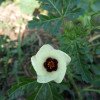
Hibiscus trionum (L.)
-
Hibiscus uncinatus (DC.)
-
Hibiscus uncinellus (ex DC.)
-
Hibiscus upingtoniae (Gürke ex Schinz)
-
Hibiscus urticifolius (A.St.-Hil. & Naudin)
-
Hibiscus varians (Splitg. ex de Vriese)
-
Hibiscus verbasciformis (Klotzsch ex Hochr.)
-
Hibiscus verdcourtii (Craven)
-
Hibiscus vitifolius (L.)
2 -
Hibiscus vohipahensis (M.M.Hanes & G.E.Schatz)
-
Hibiscus volkensii (Gürke)
-
Hibiscus waimeae (A.Heller)
2 -
Hibiscus waterbergensis (Exell)
-
Hibiscus watsonii (W.W.Sm.)
-
Hibiscus whytei (Stapf)
-
Hibiscus wilsonii (Fryxell)
-
Hibiscus windischii (Krapov. & Fryxell)
-
Hibiscus yunnanensis (S.Y.Hu)
-
Hibiscus zanzibaricus (Exell)
-
Hibiscus zonatus (F.Muell.)
-
Hibiscus zygomorphus (Fryxell & S.D.Koch)