
Genus Daphne in Family Thymelaeaceae
In botanical taxonomy, a genus (plural genera) is a rank used to group closely related species within a family. In the hierarchy, genus sits below family and above species.
Genera are defined by shared morphological, anatomical, and genetic characteristics (for example, features of flowers, fruits, seeds, or leaves) that indicate a close evolutionary relationship among the species they contain.
Each genus can include one or more species. Examples include Rosa (roses) and Solanum (nightshades, including tomato and eggplant).
Do you wish to read more about plant taxonomy? Click here!
Genus Description
Suggest a correction!Daphne (L.) is an evergreen shrub genus in the family Thymelaeaceae (Malvales, APG IV, 2016). About ninety‑five species are accepted (POWO, 2024; WFO, 2024). It occurs from the Mediterranean through Europe, the Caucasus, the Himalayas to Japan, in scrub, open woodland and rocky slopes. The type species is Daphne laureola L., lectotype designated later (Miller & Haines, 1988).
Daphne species are compact, often rhizomatous shrubs with opposite or whorled, leathery leaves lacking stipules. Small, fragrant flowers form dense terminal or axillary clusters; each flower has a tubular five‑lobed calyx and no corolla. Flowers are usually perfect, occasionally functionally unisexual (Miller & Haines, 1988). The ovary is superior to half‑inferior, unilocular, with a single basal ovule. Fruit is a fleshy drupe with a single seed.
Species richness peaks in two regions: a Mediterranean clade (e.g., D. cneorum, D. albowiana) and an East Asian clade (e.g., D. odora, D. longilobata). Many narrow endemics occur in the Himalayas, the Caucasus and the mountains of China. Populations span sea level to > 3 000 m, preferring well‑drained soils and sun to partial shade.
Pollination is mainly by small flies and bees attracted to scent and nectar; the tubular calyx aids access. Fleshy drupes are dispersed by birds and mammals, leading to widespread, sometimes patchy occurrences. Base chromosome number is x = 9; most taxa are diploid (2n = 18) or tetraploid (Miller & Haines, 1988).
Current treatments recognize informal sections (e.g., sect. Daphne and sect. Cneorum) that roughly match Mediterranean versus Asian lineages. Phylogenomics (Zhang et al., 2022) confirms monophyly but shows deep splits that may warrant formal sectional revision. Some taxa have been moved to segregate genera such as Pimelea, yet most recent sources keep them in Daphne (Miller & Haines, 1988; APG IV, 2016).
Many species are cultivated as ornamentals; D. odora, D. cneorum and D. laureola are prized for fragrance, evergreen foliage and winter flowering. D. mezereum occasionally escapes horticulture and has become naturalised in parts of North America. The genus offers no major timber or crop value.
Habitat degradation and over‑collection threaten several narrow endemics, while climate change may shift suitable zones upward. Targeted field surveys and ex situ propagation are priorities; continued phylogenetic research will improve conservation planning.
-
Daphne × hauseri (Halda)
-
Daphne × hendersonii (Hodgkin ex C.D.Brickell & B.Mathew)
-
Daphne × juraseki (Halda)
-
Daphne × reichsteinii (Landolt & E.Hauser)
-
Daphne × rossetii (H.Correvon & Halda)
-
Daphne × sillingeri (Halda)
-
Daphne acutiloba (Rehder)
-
Daphne alpina (L.)
2 -
Daphne altaica (Pall.)
-
Daphne angustiloba (Rehder)
-
Daphne arbuscula (Čelak.)
-
Daphne arisanensis (Hayata)
-
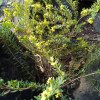
Daphne aurantiaca (Diels)
-
Daphne axillaris ((Merr. & Chun) Chun & Wei)
-
Daphne axilliflora ((Keissl.) Pobed.)
-
Daphne baksanica (Pobed.)
-
Daphne bholua (Buch.-Ham. ex D.Don)
2 -
Daphne blagayana (Freyer)
-
Daphne brevituba (H.F.Zhou ex C.Y.Chang)
-
Daphne caucasica (Pall.)
-
Daphne championii (Benth.)
-
Daphne chingshuishaniana (S.S.Ying)
-
Daphne cneorum (L.)
2 -
Daphne depauperata (H.F.Zhou ex C.Y.Chang)
-
Daphne domini (Halda)
-
Daphne emeiensis (C.Y.Chang)
-
Daphne erosiloba (C.Y.Chang)
-
Daphne esquirolii (H.Lév.)
-
Daphne feddei (H.Lév.)
2 -
Daphne gemmata (E.Pritz. ex Diels)
-
Daphne genkwa (Siebold & Zucc.)
-
Daphne giraldii (Nitsche)
-
Daphne glomerata (Lam.)
-
Daphne gnidioides (Jaub. & Spach)
-
Daphne gnidium (L.)
3 -
Daphne gracilis (E.Pritz.)
-
Daphne grueningiana (H.J.P.Winkl.)
-
Daphne hekouensis (H.W.Li & Y.M.Shui)
-
Daphne holosericea ((Diels) Hamaya)
2 -
Daphne houtteana (Lindl. & Paxton)
-
Daphne hybrida (Lindl.)
-
Daphne jarmilae (Halda)
-
Daphne jasminea (Sm.)
2 -
Daphne jejudoensis (M.Kim)
-
Daphne jezoensis (Maxim.)
-
Daphne jinyunensis (C.Yung Chang)
2 -
Daphne jinzhaiensis (D.C.Zhang & J.Z.Shao)
-
Daphne kamtschatica (Maxim.)
2 -
Daphne kingdon-wardii (Halda)
-
Daphne kiusiana (Miq.)
1 -
Daphne kosaninii ((Stoj.) Stoj.)
-
Daphne kurdica (Bornm.)
-
Daphne laciniata (Lecomte)
-
Daphne laureola (L.)
2 -
Daphne leishanensis (H.F.Zhou ex C.Y.Chang)
-
Daphne limprichtii (H.J.P.Winkl.)
-
Daphne longilobata ((Lecomte) Turrill)
-
Daphne longituba (C.Yung Chang)
-
Daphne ludlowii (D.G.Long & S.J.Rae)
-
Daphne luzonica (C.B.Rob.)
-
Daphne macrantha (Ludlow)
-
Daphne malyana (Blecie)
-
Daphne mezereum (L.)
2 -
Daphne miyabeana (Makino)
-
Daphne modesta (Rehder)
-
Daphne morrisonensis (C.E.Chang)
-
Daphne mucronata (Royle)
3 -
Daphne myrtilloides (Nitsche)
-
Daphne nana (Tagawa)
-
Daphne neapolitana ((Lindl.) Jacques)
-
Daphne odora (Thunb.)
-
Daphne ogisui (C.D.Brickell, B.Mathew & Yin Z.Wang)
-
Daphne oleoides (Schreb.)
-
Daphne pachyphylla (D.Fang)
-
Daphne papyracea (Wall. ex G.Don)
5 -
Daphne pedunculata (H.F.Zhou ex C.Y.Chang)
-
Daphne penicillata (Rehder)
-
Daphne petraea (Leybold)
-
Daphne pontica (L.)
2 -
Daphne pseudomezereum (A.Gray)
-
Daphne pseudosericea (Pobed.)
-
Daphne purpurascens (S.C.Huang)
-
Daphne retusa (Hemsl.)
-
Daphne rhynchocarpa (C.Y.Chang)
-
Daphne rodriguezii (Texidor)
-
Daphne rosmarinifolia (Rehder)
-
Daphne savensis (Daksk., Seliškar & Vreš)
-
Daphne sericea (Vahl)
-
Daphne skipetarum (Halda)
-
Daphne sojakii (Halda)
-
Daphne sophia (Kalen.)
-
Daphne souliei ((Lecomte & sine ref.) Aymonin)
-
Daphne stapfii (Bornm. & Keissl.)
-
Daphne striata (Tratt.)
-
Daphne sureil (W.W.Sm. & Cave)
-
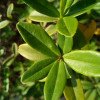
Daphne tangutica (Maxim.)
2 -
Daphne taurica (Kotov)
-
Daphne taylorii (Halda)
-
Daphne tenuiflora (Bureau & Franch.)
2 -
Daphne thanguensis (J.Ghosh, Midday, S.K.Dey & D.Maity)
-
Daphne thauma (Farrer)
-
Daphne transcaucasica (Pobed.)
-
Daphne tripartita (H.F.Zhou ex C.Y.Chang)
-
Daphne velenovskyi (Halda)
-
Daphne wangeana ((Hamaya) Halda)
-
Daphne wolongensis (C.D.Brickell & B.Mathew)
-
Daphne xichouensis (H.F.Zhou ex C.Y.Chang)
-
Daphne yangtoushanensis (S.S.Ying)
-
Daphne yunnanensis (H.F.Zhou ex C.Y.Chang)