
Genus Vaccinium in Subfamily Vaccinioideae
In botanical taxonomy, a genus (plural genera) is a rank used to group closely related species within a family. In the hierarchy, genus sits below family and above species.
Genera are defined by shared morphological, anatomical, and genetic characteristics (for example, features of flowers, fruits, seeds, or leaves) that indicate a close evolutionary relationship among the species they contain.
Each genus can include one or more species. Examples include Rosa (roses) and Solanum (nightshades, including tomato and eggplant).
Do you wish to read more about plant taxonomy? Click here!
Genus Description
Suggest a correction!Vaccinium (Ericaceae; tribe Vaccinieae) comprises roughly 450 accepted species worldwide, with centers of diversity in temperate–boreal Asia and tropical montane Asia, and secondary richness in North America and northern Europe; taxonomic estimates vary around the widely used figure of c. 450 species, and the type of the generic name is Vaccinium uliginosum (POWO, 2024; WFO, 2024). Diagnostic morphology includes shrubs, often low and rhizomatous, with alternate, usually evergreen or deciduous leaves lacking punctate glands, minute stipules that are soon lost, and terminal or axillary inflorescences of racemes or solitary flowers; flowers are actinomorphic with five sepals and a more or less globose to urn‑shaped corolla that is white, pink, or reddish, typically with five reflexed lobes, ten stamens each bearing two poricidal thecae that are usually exerted on curved filaments and sometimes awned, an inferior to semi‑inferior ovary typically with axile placentation and multiple ovules per locule, and berries with numerous minute seeds (Sleumer, 1941).
Diversity and range: species occur in boreal and cool‑temperate regions across the Northern Hemisphere and extend into the tropics at high elevations in East and Southeast Asia, the Malesian region, and the Andes, with notable endemism in southern China, the Himalayas, and New Guinea; many occupy acidic peat bogs, heathlands, open woodlands, and montane Ericaceae scrub, often on nutrient‑poor soils (POWO, 2024). Intrinsic biology: many species are buzz‑pollinated by bees and flies attracted to poricidal anthers, fruits are dispersed by birds and small mammals, and the genus shows a ploidy series with x=12 documented across major clades, including cultivated highbush blueberry and American cranberry (Rousi, 1963; Vander Kloet & Austin‑Smith, 1986). Taxonomy and phylogeny: Vaccinium is recognized as monophyletic within Vaccinieae (Kron et al., 2002), and a widely applied sectional framework has long distinguished groups such as Oxycoccus (cranberries, now retained as section Oxycoccus within Vaccinium), Pyxothamnus (western North America), and the North American “Cyanococcus” complex (blueberries); Sleumer’s 1941 monograph provided a comprehensive sectional treatment and remains a primary reference, while several Asian groups formerly treated as distinct genera (e.g., Agapetes, Pentapterygium, Thibaudia) are now accommodated within Vaccinium or excluded, reflecting ongoing refinements and ongoing taxonomic flux (Sleumer, 1941; Kron et al., 2002; Powell & Kron, 2002).
Human relevance (non‑medicinal): Vaccinium is globally important in horticulture and agriculture—highbush blueberry (formerly Vaccinium corymbosum and hybrids, now broadly V. sect. Cyanococcus), lowbush blueberries (V. angustifolium, V. myrtilloides), cranberry (V. macrocarpon = V. sect. Oxycoccus), and bilberry/lingonberry (V. myrtillus, V. vitis‑idaea)—with extensive cultivated production and breeding programs; many species are cultivated ornamentals, and some taxa are locally weedy, but the genus is not broadly invasive. Conservation and outlook: many narrow endemics are data‑deficient, and ongoing phylogenetic and taxonomic work is needed to resolve sectional boundaries and cryptic diversity, especially in tropical Asia.
-
Vaccinium × brunoense (P.W.Fritsch)
-
Vaccinium × intermedium (Ruthe)
-
Vaccinium absconditum (J.J.Sm.)
-
Vaccinium acosta (Raeusch.)
-
Vaccinium acrobracteatum (K.Schum.)
-
Vaccinium acutissimum (F.Muell.)
-
Vaccinium adenochaetum (Sleumer)
-
Vaccinium adenotrichum (Sleumer)
-
Vaccinium affinis (Klotzsch)
-
Vaccinium agusanense (Elmer)
-
Vaccinium aitapense (Sleumer)
-
Vaccinium alainii (Acuña & Roíg)
-
Vaccinium albicans (Sleumer)
-
Vaccinium albidens (H.Lév. & Vaniot)
-
Vaccinium almedae (Wilbur & Luteyn)
-
Vaccinium altiterrae (Veldkamp)
-
Vaccinium alvarezii (Merr.)
-
Vaccinium amakhangium (S.Panda & Sanjappa)
-
Vaccinium amazonicum (Pedraza & Luteyn)
-
Vaccinium ambivalens (Sleumer)
-
Vaccinium ambyandrum (F.Muell.)
-
Vaccinium amphoterum (Sleumer)
-
Vaccinium amplexicaule (J.J.Sm.)
-
Vaccinium ampullaceum (Sleumer)
-
Vaccinium andringitrense (H.Perrier)
-
Vaccinium angiense (Kaneh. & Hatus.)
-
Vaccinium angustifolium (Aiton)
-
Vaccinium apiculatum (Sleumer)
-
Vaccinium apophysatum (Sleumer)
-
Vaccinium appendiculatum (Schltr.)
-
Vaccinium arboreum (Marshall)
-
Vaccinium arbutoides (C.B.Clarke)
-
Vaccinium arctostaphylos (L.)
-
Vaccinium ardisioides (Hook.f. ex C.B.Clarke)
-
Vaccinium argentii (Danet)
-
Vaccinium aristatum (Luteyn & Pedraza)
-
Vaccinium arkansanum (Ashe)
-
Vaccinium artum (J.J.Sm.)
-
Vaccinium atlanticum (E.P.Bicknell)
-
Vaccinium atrococcum ((A.Gray) A.Heller)
-
Vaccinium aucupis (Sleumer)
-
Vaccinium auriculifolium (Sleumer)
-
Vaccinium bancanum (Miq.)
3 -
Vaccinium bangliangense (Y.S.Huang & Y.H.Tong)
-
Vaccinium banksii (Merr.)
-
Vaccinium barandanum (S.Vidal)
-
Vaccinium barbatum (J.J.Sm.)
-
Vaccinium bartlettii (Merr.)
-
Vaccinium beamanianum (Wilbur & Luteyn)
-
Vaccinium benguelense (S.Vidal)
-
Vaccinium benguetense (S.Vidal)
-
Vaccinium besagiense (J.J.Sm.)
-
Vaccinium bissei (R.Berazaín)
-
Vaccinium blepharocalyx (Schltr.)
-
Vaccinium blumeanum (Nied.)
-
Vaccinium bocatorense (Wilbur)
-
Vaccinium bocatorensis (Wilbur)
-
Vaccinium bodenii (Wernham)
-
Vaccinium boninense (Nakai)
-
Vaccinium boreale (I.V.Hall & Aalders)
-
Vaccinium brachyandrum (C.Y.Wu & R.C.Fang)
-
Vaccinium brachybotrys ((Franch.) Hand.-Mazz.)
-
Vaccinium brachycladum (Sleumer)
-
Vaccinium brachygyne (J.J.Sm.)
-
Vaccinium brachytrichum (Sleumer)
-
Vaccinium bracteatum (Thunb.)
1 -
Vaccinium brassii (Sleumer)
-
Vaccinium breedlovei (L.O.Williams)
-
Vaccinium brevipedicellatum (C.Y.Wu ex W.P.Fang & Z.H.Pan)
-
Vaccinium brevipedunculatum (J.J.Sm.)
-
Vaccinium bullatum ((Dop) Sleumer)
-
Vaccinium bulleyanum ((Diels) Sleumer)
-
Vaccinium burburan (M.N.Tamayo & P.W.Fritsch)
-
Vaccinium caesariense (Mack.)
-
Vaccinium caespitosum (Michx.)
-
Vaccinium calycinum (Sm.)
-
Vaccinium cambodianum (Dop)
-
Vaccinium camiguinense (Merr.)
-
Vaccinium campanense (Wilbur & Luteyn)
-
Vaccinium candicans ((C.Mohr) Sleumer)
-
Vaccinium candidum (Veldkamp)
-
Vaccinium capillatum (Sleumer)
-
Vaccinium cardiophorum (Sleumer)
-
Vaccinium cardonae (A.C.Sm.)
-
Vaccinium carlesii (Dunn)
-
Vaccinium carmesinum (M.N.Tamayo & P.W.Fritsch)
-
Vaccinium carneolum (Sleumer)
-
Vaccinium carolinianum (Ashe)
-
Vaccinium caudatum (Warb.)
-
Vaccinium cavendishioides (Sleumer)
-
Vaccinium cavinerve (C.Y.Wu)
-
Vaccinium cebuense (Salares & Pelser)
-
Vaccinium centrocelebicum (Sleumer)
-
Vaccinium ceraceum (Argent)
-
Vaccinium ceramense (Sleumer)
-
Vaccinium cercidifolium (J.J.Sm.)
-
Vaccinium cereum ((L.f.) G.Forst.)
-
Vaccinium chaetothrix (Sleumer)
-
Vaccinium chamaebuxus (C.Y.Wu)
-
Vaccinium chaozhouense (Y.H.Tong & J.H.Ding)
-
Vaccinium chengiae (W.P.Fang)
-
Vaccinium chevalieri (Dop)
-
Vaccinium chihuahuense (Wilbur & Luteyn)
-
Vaccinium chimantense (Maguire, Steyerm. & Luteyn)
-
Vaccinium chunii (Merr. ex Sleumer)
-
Vaccinium ciliatum (Thunb.)
-
Vaccinium claoxylon (J.J.Sm.)
-
Vaccinium clementis (Merr.)
-
Vaccinium coarctatum (M.N.Tamayo & Fernando)
-
Vaccinium coelorum (Wernham)
-
Vaccinium commutatum (Mabb. & Sleumer)
-
Vaccinium conchophyllum (Rehder)
-
Vaccinium confertum (Kunth)
-
Vaccinium consanguineum (Klotzsch)
-
Vaccinium continuum (Luteyn & Pedraza)
-
Vaccinium contractum (Sleumer)
-
Vaccinium convallariiflorum (J.J.Sm.)
-
Vaccinium convexifolium (J.J.Sm.)
-
Vaccinium cordifolium ((M.Martens & Galeotti) Hemsl.)
-
Vaccinium coriaceum (Hook.f.)
4 -
Vaccinium coroigerum (Sleumer)
-
Vaccinium corymbodendron (Dunal)
-
Vaccinium corymbosum (L.)
-
Vaccinium costaricense (Wilbur & Luteyn)
-
Vaccinium costerifolium (Sleumer)
-
Vaccinium craspedotum (Sleumer)
-
Vaccinium crassiflorum (J.J.Sm.)
-
Vaccinium crassifolium (Andrews)
-
Vaccinium crassistylum (Sleumer)
-
Vaccinium crassivenium (Sleumer)
-
Vaccinium crenatifolium (Sleumer)
-
Vaccinium crenatum ((G.Don) Sleumer)
-
Vaccinium cruentum (Sleumer)
-
Vaccinium cubense (Griseb.)
1 -
Vaccinium culminicola (Wernham)
-
Vaccinium cumingianum (S.Vidal)
-
Vaccinium cuneifolium ((Blume) Miq.)
-
Vaccinium cuspidifolium (C.Y.Wu & R.C.Fang)
-
Vaccinium cyclopense (J.J.Sm.)
-
Vaccinium cylindraceum (Sm.)
-
Vaccinium cyrtodon (Miq.)
-
Vaccinium damingshanense (Y.H.Tong & N.H.Xia)
-
Vaccinium daphniphyllum (Schltr.)
-
Vaccinium darrowii (Camp)
-
Vaccinium debilescens (Sleumer)
-
Vaccinium decorum (Ridl.)
-
Vaccinium decumbiens (J.J.Sm.)
-
Vaccinium dehongense (Y.H.Tong)
-
Vaccinium delavayi (Franch.)
2 -
Vaccinium deliciosum (Piper)
-
Vaccinium dempoense (Fawc.)
-
Vaccinium dendrocharis (Hand.-Mazz.)
-
Vaccinium densifolium (J.J.Sm.)
-
Vaccinium dentatum (Sm.)
-
Vaccinium dependens ((G.Don) Sleumer)
-
Vaccinium dialypetalum (J.J.Sm.)
-
Vaccinium dictyoneuron (Sleumer)
-
Vaccinium didymanthum (Dunal)
-
Vaccinium distichum (Luteyn)
-
Vaccinium dobbinii (Burnham)
-
Vaccinium dominans (Sleumer)
-
Vaccinium donianum (Miq.)
-
Vaccinium duclouxii ((H.Lév.) Hand.-Mazz.)
-
Vaccinium duhiosum (J.J.Sm.)
-
Vaccinium dulongense (H.Li)
-
Vaccinium dunalianum (Wight)
4 -
Vaccinium dunnianum (Sleumer)
-
Vaccinium ekmanii (R.Berazaín)
-
Vaccinium elegans (Elmer)
-
Vaccinium ellipticum ((Blume) Miq.)
-
Vaccinium elliptifolium (Merr.)
-
Vaccinium elvirae (Luteyn)
-
Vaccinium emarginatum (Hayata)
-
Vaccinium empetrum (Aver. & K.S.Nguyen)
-
Vaccinium endertii (J.J.Sm.)
-
Vaccinium epiphyticum (Merr.)
-
Vaccinium erythrocarpum (Michx.)
-
Vaccinium eugenioides (S.Moore)
-
Vaccinium euryanthum (A.C.Sm.)
-
Vaccinium evanidinervium (Sleumer)
-
Vaccinium exaristatum (Kurz)
-
Vaccinium exiguum (M.N.Tamayo, R.Bustam. & P.W.Fritsch)
-
Vaccinium exul (Bolus)
-
Vaccinium eymae (Sleumer)
-
Vaccinium fallax (M.N.Tamayo & P.W.Fritsch)
-
Vaccinium fastigiatum (S.Moore)
-
Vaccinium filipes (Schltr.)
-
Vaccinium fimbribracteatum (C.Y.Wu)
-
Vaccinium fimbricalyx (Chun & W.P.Fang)
-
Vaccinium finisterrae (Schltr.)
-
Vaccinium fissum (Schrank)
-
Vaccinium floccosum ((L.O.Williams) Wilbur & Luteyn)
-
Vaccinium floribundum (Kunth)
-
Vaccinium foetidissimum (H.Lév. & Vaniot)
-
Vaccinium formosum (Andrews)
-
Vaccinium foxworthyi (H.F.Copel.)
-
Vaccinium fragile (Franch.)
1 -
Vaccinium fraternum (Sleumer)
-
Vaccinium furfuraceum (Wilbur & Luteyn)
-
Vaccinium gamay (M.N.Tamayo & P.W.Fritsch)
-
Vaccinium gaultheriifolium ((Griff.) Hook.f. ex C.B.Clarke)
-
Vaccinium geminiflorum (Kunth)
-
Vaccinium gilvum (Meerb.)
-
Vaccinium gitigense (Elmer)
-
Vaccinium gjellerupii (J.J.Sm.)
-
Vaccinium glabrescens (King & Gamble)
-
Vaccinium glandellatum (Sleumer)
-
Vaccinium glaucoalbum (Hook.f. ex C.B.Clarke)
-
Vaccinium glaucophyllum (C.Y.Wu & R.C.Fang)
-
Vaccinium glaucorubrum ((C.Y.Wu) Y.H.Tong & P.W.Fritsch)
-
Vaccinium glaucum (W.Young)
-
Vaccinium globosum (J.J.Sm.)
-
Vaccinium goodenoughii (Sleumer)
-
Vaccinium gracile (J.J.Sm.)
-
Vaccinium gracilipes (Sleumer)
-
Vaccinium gracillimum (J.J.Sm.)
-
Vaccinium grandibracteatum (Schltr.)
-
Vaccinium griffithianum (Wight)
-
Vaccinium guadalupensis (Sw.)
-
Vaccinium gualtheriifolium (Hook.f. ex C.B.Clarke)
-
Vaccinium gualtherioides (Bigelow)
-
Vaccinium guangdongense (W.P.Fang & Z.H.Pan)
-
Vaccinium habbemae (Koord.)
-
Vaccinium haematinum (Standl. & Steyerm.)
-
Vaccinium haematochroum (Sleumer)
-
Vaccinium hagerupii ((Á.Löve & D.Löve) Rothm.)
-
Vaccinium hainanense (Sleumer)
-
Vaccinium haitangense (Sleumer)
-
Vaccinium halconense (Merr.)
-
Vaccinium halleriifolium (Lodd. ex G.Don)
-
Vaccinium hamiguitanense (P.W.Fritsch)
-
Vaccinium hansmeyeri (Argent)
-
Vaccinium hatamense (Becc.)
-
Vaccinium hellwigianum (Sleumer)
-
Vaccinium henryi (Hemsl.)
1 -
Vaccinium hiepii (Kloet)
-
Vaccinium hirsutum (Buckley)
-
Vaccinium hirtum (Thunb.)
3 -
Vaccinium hispidulissimum (Wernham)
-
Vaccinium hitchcockii (Camp)
-
Vaccinium hooglandii (Sleumer)
-
Vaccinium hopei (Argent)
-
Vaccinium horizontale (Sleumer)
-
Vaccinium hutchinsonii (Merr.)
-
Vaccinium hybridum (Czerep.)
-
Vaccinium idsuroei (Franch. & Sav.)
-
Vaccinium igneum (J.J.Sm.)
-
Vaccinium imbricans (J.J.Sm.)
-
Vaccinium impressinerve (C.Y.Wu)
-
Vaccinium inconspicuum (J.J.Sm.)
-
Vaccinium indutum (S.Vidal)
-
Vaccinium insigne ((Koord.) J.J.Sm.)
-
Vaccinium iragaense (Merr.)
-
Vaccinium iteophyllum (Hance)
-
Vaccinium jacobeanum (P.F.Stevens)
-
Vaccinium jagorii (Warb.)
-
Vaccinium japonicum (Miq.)
2 -
Vaccinium javanicum (Hook.)
-
Vaccinium jefense (J.L.Luteyn & Wilbur)
-
Vaccinium jevidalianum (Smitinand & P.H.Hô)
-
Vaccinium jiuwanshanense (Ying Qin, Yan Liu & Y.H.Tong)
-
Vaccinium jubatum (M.N.Tamayo & P.W.Fritsch)
-
Vaccinium kachinense (Brandis)
-
Vaccinium kengii (C.E.Chang)
-
Vaccinium kingdon-wardii (Sleumer)
-
Vaccinium kjellhergii (J.J.Sm.)
-
Vaccinium koreanum (Nakai)
-
Vaccinium korinchense (Ridl.)
-
Vaccinium korthalsii (Miq.)
-
Vaccinium kostermansii (Sleumer)
-
Vaccinium kunthianum (Klotzsch)
-
Vaccinium lageniforme (J.J.Sm.)
-
Vaccinium lamellatum (P.F.Stevens)
-
Vaccinium lamii (Danet)
-
Vaccinium lamprophyllum (C.Y.Wu & R.C.Fang)
-
Vaccinium lanceolatum (Koord.)
-
Vaccinium lanigerum (Sleumer)
-
Vaccinium lasiocarpum (Nakai)
-
Vaccinium lasiodiscus (Maxim.)
-
Vaccinium latifolium ((Griseb.) Benth. & Hook.f. ex B.D.Jacks.)
-
Vaccinium latissimum (J.J.Sm.)
-
Vaccinium laurifolium ((Blume) Miq.)
-
Vaccinium lenneanum (Warsz.)
-
Vaccinium leonis (Acuña & Roíg)
-
Vaccinium leptocladum (Sleumer)
-
Vaccinium leptomorphum (Sleumer)
-
Vaccinium leptospermoides (J.J.Sm.)
-
Vaccinium leucanthum (Schltdl.)
-
Vaccinium leucobotrys ((Nutt.) G.Nicholson)
-
Vaccinium ligustrifolium (J.J.Sm.)
-
Vaccinium littoreum (Miq.)
-
Vaccinium longicaudatum (Chun ex W.P.Fang & Z.H.Pan)
-
Vaccinium longipedicellatum (Sleumer)
-
Vaccinium longiporum (Schltr.)
-
Vaccinium longiracemosum (Franch. & Sav.)
-
Vaccinium longisepalum (J.J.Sm.)
-
Vaccinium loranthifolium (Ridl.)
-
Vaccinium lorentzii (Koord.)
-
Vaccinium lucidum ((Blume) Miq.)
-
Vaccinium lundellianum (L.O.Williams)
-
Vaccinium luteynii (Wilbur)
-
Vaccinium luzoniense (S.Vidal)
-
Vaccinium macgillivrayi (Seem.)
-
Vaccinium macrocarpon (Aiton)
-
Vaccinium macrophyllum (Piper)
-
Vaccinium madagascariense ((Thouars ex Poir.) Sleumer)
-
Vaccinium madanii (Argent ex M.N.Tamayo)
-
Vaccinium majusculum (Chass. ex Fridl.)
-
Vaccinium malacothrix (Sleumer)
-
Vaccinium maliauense (M.N.Tamayo)
-
Vaccinium mandarinorum (Diels)
-
Vaccinium manipurense ((Watt ex Brandis) Sleumer)
-
Vaccinium marginellum (Sleumer)
-
Vaccinium marianum (P.Watson)
-
Vaccinium mathewsii (Sleumer)
-
Vaccinium megalophyes (Sleumer)
-
Vaccinium membranaceum (Douglas ex Torr.)
-
Vaccinium meridionale (Sw.)
-
Vaccinium microcarpum ((Turcz. ex Rupr.) Schmalh.)
-
Vaccinium microphyllum (Reinw. ex Blume)
-
Vaccinium minusculum (Sleumer)
-
Vaccinium minuticalcaratum (J.J.Sm.)
-
Vaccinium miquelii (Boerl.)
-
Vaccinium mjoebergii (J.J.Sm.)
-
Vaccinium modestum (W.W.Sm.)
-
Vaccinium molle (J.J.Sm.)
-
Vaccinium mollissimum (Sleumer)
-
Vaccinium monetarium (Sleumer)
-
Vaccinium monteverdense (Wilbur & J.L.Luteyn)
-
Vaccinium montis-ericae (Sleumer)
-
Vaccinium morobense (Kloet)
-
Vaccinium motuoense (Y.H.Tong & Y.J.Guo)
-
Vaccinium moupinense (Franch.)
-
Vaccinium muriculatum (J.J.Sm.)
-
Vaccinium myodianum (S.Panda & Sanjappa)
-
Vaccinium myrsinites (Lam.)
-
Vaccinium myrsinoides (Schltr.)
-
Vaccinium myrtilloides (Michx.)
-
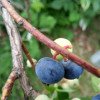
Vaccinium myrtillus (L.)
-
Vaccinium myrtoides (Miq.)
-
Vaccinium nagamasu (Argent)
-
Vaccinium nagurae (Makino)
-
Vaccinium napoense (Y.H.Tong & N.H.Xia)
-
Vaccinium neilgherrense (Wight)
-
Vaccinium nhatrangense (Dop)
-
Vaccinium nikkoense (Nakai)
-
Vaccinium nitens (Sleumer)
-
Vaccinium nubigenum (Fernald)
-
Vaccinium nummularia (Hook.f. & Thomson ex C.B.Clarke)
-
Vaccinium nuttallii ((C.B.Clarke) Sleumer)
-
Vaccinium obatapaquiniorum (Takeuchi)
-
Vaccinium obedii (Veldkamp)
-
Vaccinium obversum (Miq.)
-
Vaccinium oldhamii (Miq.)
-
Vaccinium omeiense (W.P.Fang)
-
Vaccinium omeiensis (W.P.Fang)
-
Vaccinium onimense (Argent)
-
Vaccinium oranjense (J.J.Sm.)
-
Vaccinium oreites (Sleumer)
-
Vaccinium oreogenes (W.W.Sm.)
-
Vaccinium oreomyrtus (Sleumer)
-
Vaccinium orientale (Sw.)
-
Vaccinium orosiense (Wilbur & J.L.Luteyn)
-
Vaccinium ortizii (Luteyn & Pedraza)
-
Vaccinium oscarlopezianum (Co)
-
Vaccinium otophyllum (Sleumer)
-
Vaccinium ovale (W.Young)
-
Vaccinium ovalifolium (Sm.)
-
Vaccinium ovatum (Pursh)
-
Vaccinium oxycoccos (L.)
-
Vaccinium pachydermum (Stapf)
-
Vaccinium paddywoodsii (Argent)
-
Vaccinium padifolium (Sm.)
-
Vaccinium palawanense (Merr.)
-
Vaccinium pallidum (Aiton)
-
Vaccinium papillatum (P.F.Stevens)
-
Vaccinium papulosum (C.Y.Wu & R.C.Fang)
-
Vaccinium paradisearum (Becc.)
-
Vaccinium parvibaccatum (J.J.Sm.)
-
Vaccinium parvifolium (Sm.)
-
Vaccinium parvulifolium (F.Muell.)
-
Vaccinium paucicrenatum (Sleumer)
-
Vaccinium pensile (S.Moore)
-
Vaccinium perakense (Ridl.)
-
Vaccinium perrigidum (Elmer)
-
Vaccinium petelotii (Merr.)
-
Vaccinium philippinense (Warb.)
-
Vaccinium phillippsiae (Argent)
-
Vaccinium phillyreoides (Sleumer)
-
Vaccinium piceifolium (Wernham)
-
Vaccinium pilosilobum (J.J.Sm.)
-
Vaccinium pipolyi (Luteyn)
-
Vaccinium platyphyllum (Merr.)
-
Vaccinium poasanum (Donn.Sm.)
-
Vaccinium podocarpoideum (W.P.Fang & Z.H.Pan)
-
Vaccinium politum (Koidz.)
-
Vaccinium polyanthum (Kuntze)
-
Vaccinium praeces (P.F.Stevens)
-
Vaccinium praestans (Lamb.)
-
Vaccinium pratense (P.C.Tam ex C.Y.Wu & R.C.Fang)
-
Vaccinium prostratum (Sleumer)
-
Vaccinium psammogenes (Sleumer)
-
Vaccinium pseudobullatum (W.P.Fang & Z.H.Pan)
-
Vaccinium pseudocaracasanum (Sleumer)
-
Vaccinium pseudocaudatum (Sleumer)
-
Vaccinium pseudodialypetalum (Ng)
-
Vaccinium pseudonanum (Keller)
-
Vaccinium pseudopubicalyx (X.H.Ye, Q.L.Wang & Y.H.Tong)
-
Vaccinium pseudorobustum (Sleumer)
-
Vaccinium pseudospadiceum (Dop)
-
Vaccinium pseudotonkinense (Sleumer)
-
Vaccinium pterocalyx (Luteyn)
-
Vaccinium pterocarpum (Nakai)
-
Vaccinium puberulum (Klotzsch ex Meisn.)
-
Vaccinium pubicalyx (Franch.)
1 -
Vaccinium pubicarpum (Ridl.)
-
Vaccinium pugionifolium (Sleumer)
-
Vaccinium pullei (J.J.Sm.)
-
Vaccinium pumilum (Kurz)
-
Vaccinium puxophyllum (F.Muell.)
-
Vaccinium pyriforme (Merr.)
-
Vaccinium quinquefidum (J.J.Sm.)
-
Vaccinium racemosum ((Vahl) Wilbur & Luteyn)
-
Vaccinium raiateense (J.W.Moore)
-
Vaccinium randaiense (Hayata)
-
Vaccinium rapae (Skottsb.)
-
Vaccinium reptans (A.Rojas)
-
Vaccinium reticulatovenosum (Sleumer)
-
Vaccinium reticulatum (Sm.)
-
Vaccinium retivenium (Sleumer)
-
Vaccinium retusifolium (J.J.Sm.)
-
Vaccinium retusum ((Griff.) Hook.f. ex C.B.Clarke)
-
Vaccinium rigidifolium (Sleumer)
-
Vaccinium robustum (Ridl.)
-
Vaccinium rollisonii (Hook.)
-
Vaccinium roraimense (N.E.Br.)
-
Vaccinium roseiflorum (J.J.Sm.)
-
Vaccinium rubescens (R.C.Fang)
-
Vaccinium rubeum (P.Fourn.)
-
Vaccinium rubroviolaceum (Sleumer)
-
Vaccinium rubrum (Dulac)
-
Vaccinium salicifolium (Steud.)
-
Vaccinium salviifolium (Steud.)
-
Vaccinium sandsii (Argent)
-
Vaccinium sanguineum (Schltr.)
-
Vaccinium santafeense (Wilbur & J.L.Luteyn)
-
Vaccinium sarawakense (Merr.)
2 -
Vaccinium saxatile (Luteyn & Pedraza)
-
Vaccinium saxicola (Chun)
-
Vaccinium saxicolum (Chun ex Sleumer)
-
Vaccinium scandens (Schltr.)
-
Vaccinium schimperi (Koord.)
-
Vaccinium schlechterianum (Sleumer)
-
Vaccinium schultzei (Schltr.)
-
Vaccinium sciaphilum (C.Y.Wu)
-
Vaccinium sclerophyllum (Sleumer)
-
Vaccinium scoparium (Leiberg ex Coville)
-
Vaccinium scopulorum (W.W.Sm.)
-
Vaccinium scortechinii (King & Gamble)
-
Vaccinium scyphocalyx (Sleumer)
-
Vaccinium secundum (Klotzsch)
-
Vaccinium selerianum ((Loes.) Sleumer)
-
Vaccinium serrulatum (W.P.Fang & Z.H.Pan)
-
Vaccinium serum (Ashe)
-
Vaccinium setipes (Airy Shaw)
-
Vaccinium shaferi (Acuña & Roíg)
-
Vaccinium shastense (J.K.Nelson & Lindstrand)
-
Vaccinium shikokianum (Nakai)
-
Vaccinium shoddei (Sleumer)
-
Vaccinium siamense (H.R.Fletcher)
-
Vaccinium sibiricum (Steud.)
-
Vaccinium sieboldii (Miq.)
-
Vaccinium sikangense (Y.C.Yang)
-
Vaccinium sikkimense (C.B.Clarke)
-
Vaccinium simulans (Sleumer)
2 -
Vaccinium singularis (N.R.Salinas & Betancur)
-
Vaccinium sinicum (Sleumer)
-
Vaccinium smallii (A.Gray)
-
Vaccinium sororium (J.J.Sm.)
-
Vaccinium sorsogonense (Elmer)
-
Vaccinium spaniotrichum (Sleumer)
-
Vaccinium sparsicapillum (Sleumer)
-
Vaccinium sparsum (Sleumer)
-
Vaccinium spathulatum (Camp & A.C.Sm.)
-
Vaccinium sphyrospennoides (Sleumer)
-
Vaccinium spicatum ((Lour.) Poir.)
-
Vaccinium spiculatum (C.Y.Wu & R.C.Fang)
-
Vaccinium sprengelii ((G.Don) Sleumer)
-
Vaccinium stamineum (L.)
-
Vaccinium stanleyi (Schweinf.)
-
Vaccinium staufferianum (Danet)
-
Vaccinium steinii (Sleumer)
-
Vaccinium stellae-montis (Sleumer)
-
Vaccinium stenanthum (Sleumer)
-
Vaccinium stenolobum (Schltr.)
-
Vaccinium stenophyllum (Steud.)
-
Vaccinium steyermarkii (Luteyn)
-
Vaccinium striicaule (Sleumer)
-
Vaccinium subdissitifolium (P.F.Stevens)
-
Vaccinium subfalcatum (Merr. ex Sleumer)
-
Vaccinium subobovatum (H.R.Fletcher)
-
Vaccinium subulisepalum (J.J.Sm.)
-
Vaccinium sulawesiense (Mustaqim & P.W.Fritsch)
-
Vaccinium sumatranum (Jack)
-
Vaccinium summifaucis (Sleumer)
-
Vaccinium superum (Danet)
-
Vaccinium supracostatum (Hand.-Mazz.)
-
Vaccinium sylvaticum (Elmer)
-
Vaccinium symplocifolium ((D.Don ex G.Don) Alston)
-
Vaccinium talamancense ((Wilbur & Luteyn) J.L.Luteyn)
-
Vaccinium tanjungii (Argent)
-
Vaccinium taquetii (H.Lév.)
-
Vaccinium taxifolium (Sleumer)
-
Vaccinium tectiflorum (Danet)
-
Vaccinium tenellum (Aiton)
-
Vaccinium tentaculatum (J.J.Sm.)
-
Vaccinium tenuiflorum (R.C.Fang)
-
Vaccinium tenuipes (Merr.)
-
Vaccinium tepuiense (Camp & A.C.Sm.)
-
Vaccinium tescorum (P.Fourn.)
-
Vaccinium teysmannii (Miq.)
-
Vaccinium thibaudifolium (Wernham)
-
Vaccinium thibautii (Regel)
-
Vaccinium thiniorum (Dorr)
-
Vaccinium thysanocalyx (Dop)
-
Vaccinium timonioides (Wernham)
-
Vaccinium timorense (Fawc.)
-
Vaccinium tomicipes (J.J.Sm.)
-
Vaccinium tonkinense (Dop)
-
Vaccinium trichocarpum (Sleumer)
-
Vaccinium trichocladum (Merr. & F.P.Metcalf)
-
Vaccinium triflorum (Rehder)
-
Vaccinium truncatocalyx (Chun ex W.P.Fang & Z.H.Pan)
-
Vaccinium tubiflorum (J.J.Sm.)
-
Vaccinium turbinatum (Merr.)
-
Vaccinium turfosum (Sleumer)
-
Vaccinium uliginosum (L.)
1 -
Vaccinium urceolatum (Hemsl.)
-
Vaccinium urubambense (Luteyn & Pedraza)
-
Vaccinium usneoides (Y.H.Tong, Y.J.Guo & Ting Zhang)
-
Vaccinium utteridgei (Argent)
-
Vaccinium vacciniaceum ((Roxb.) Sleumer)
1 -
Vaccinium varingiifolium ((Blume) Miq.)
-
Vaccinium veldkampii (Danet)
-
Vaccinium venosum (Wight)
-
Vaccinium versteegii (Koord.)
-
Vaccinium verticillatum (Kurz)
-
Vaccinium vidalii (Merr. & Rolfe)
-
Vaccinium vietnamense (Smitinand & P.H.Hô)
-
Vaccinium villosiflorum (J.J.Sm.)
-
Vaccinium viridiflorum (J.J.Sm.)
-
Vaccinium viscifolium (King & Gamble)
-
Vaccinium vitis-idaea (L.)
-
Vaccinium vomicum (M.N.Tamayo & P.W.Fritsch)
-
Vaccinium vonroemeri (Koord.)
-
Vaccinium vulcanorum (Kom.)
-
Vaccinium warburgii (Sleumer)
-
Vaccinium whiteanum (Sleumer)
-
Vaccinium whitfordii (Merr.)
-
Vaccinium whitmeei (F.Muell.)
-
Vaccinium whitmorei (Ng)
-
Vaccinium wilburii (Almeda & Breedlove)
-
Vaccinium wisselianum (Sleumer)
-
Vaccinium wollastonii (Wernham)
-
Vaccinium wondiwoiense (J.J.Sm.)
-
Vaccinium woodianum (H.F.Copel.)
-
Vaccinium wrightii (A.Gray)
1 -
Vaccinium xerampelinum (Sleumer)
-
Vaccinium yakushimense (Makino)
-
Vaccinium yaoshanicum (Sleumer)
-
Vaccinium yatabei (Makino)
-
Vaccinium yesoense (Koidz.)
-
Vaccinium youngii (Pedraza & Luteyn)
-
Vaccinium zhangzhouense (Y.H.Tong, Y.Y.Zhu & N.H.Xia)
-
Vaccinium zollingeri (Miq.)