
Genus Yucca in Family Asparagaceae
In botanical taxonomy, a genus (plural genera) is a rank used to group closely related species within a family. In the hierarchy, genus sits below family and above species.
Genera are defined by shared morphological, anatomical, and genetic characteristics (for example, features of flowers, fruits, seeds, or leaves) that indicate a close evolutionary relationship among the species they contain.
Each genus can include one or more species. Examples include Rosa (roses) and Solanum (nightshades, including tomato and eggplant).
Do you wish to read more about plant taxonomy? Click here!
Genus Description
Suggest a correction!Yucca L. is placed in the Asparagaceae, subfamily Agavoideae, with an estimated 45–50 species (Ruth 1978; Powell 2000; POWO, 2024). The genus ranges from the United States to Mexico and Guatemala, extending into the Caribbean, with a center of diversity in the southwestern US and northern Mexico and additional diversity in the southeastern US and the Caribbean. Its major habitat is arid to semiarid scrub, grassland, woodland and dunes, with some species at high elevations (e.g., to c. 2500–3000 m in Mexico). Y. filamentosa L. is often treated as the type species (e.g., Kew Catalogue, accessed 2024).
Diagnostic morphology includes arborescent or stemless rosette habits; fibrous, sometimes woody bases; and linear to lanceolate, evergreen leaves with sharp tips and often fibrous margins. Inflorescences are large terminal panicles (sometimes spicate) rising above the rosette. Flowers are bell-shaped with six tepals; the stamens have expanded filaments that form a staminal column, and the ovary is superior with axile placentation (Trelease 1902;嗜好 Freid 2014). Fruits are fleshy berries in most species or dry, dehiscent capsules in Y. whipplei and its allies (Trelease 1902).
Diversity and range: species richness is highest in Mexico and the US Southwest, with numerous local endemics, and a distinct southeastern North American clade (Y. filamentosa, Y. gloriosa). Typical habitats span desert scrub, chaparral, prairie, coastal dunes and high-elevation grasslands; some taxa are edaphically specialized (Powell 2000;Freid 2014; Smith & Barker 2019). Biogeographically, the genus shows strong localization, and some Caribbean taxa are island endemics.
Intrinsic biology: Yucca is obligately pollinated by Tegeticula and Parategeticula yucca moths, which collect pollen, deposit it on stigmas and oviposit into developing ovules; larvae usually consume only a fraction of seeds (Riley 1892; Powell 1999). Dispersal is primarily by frugivorous vertebrates that ingest fleshy berries (Freid 2014). Seed germination is stimulated by fire in some southwestern taxa; lateral cloning by offsets is common. The base chromosome number is consistently x=30 (2n=60), widely reported (e.g., McKown 1953; T何时 1984).
Taxonomy and phylogeny: sectional treatments recognize Chaenocarpa (capsule-fruited; including Y. whipplei clade), Scripta (brittle, inflated capsules; southeastern species), and Sarcocarpa (fleshy berries; southwestern and Mexican species; Trelease 1902). Molecular phylogenies consistently resolve these clades and confirm monophyly (Smith & Barker 2019; Hargrave et al. 2021; Höglind et al. 2021). The formerly segregated Hesperoyucca (including Y. whipplei) nests within Yucca, though a few authors maintain it (e.g., Turner 2019). No alternative treatments have current consensus support (APG IV 2016; POWO 2024; WFO 2024).
Human relevance: Y. filamentosa and Y. gloriosa are widely cultivated ornamentals; Y. filamentosa, Y. angustissima* and other species are used for fiber; and fleshy-fruited species provide wildlife fruit (Wunderlin 2016; Freid 2014). Several taxa are naturalized in the Mediterranean Basin and elsewhere, but no major invasive impacts are documented.
Conservation and outlook: while many species are stable, several narrow endemics are threatened by land-use change, hybridization with cultivars and climate stress. A coordinated taxonomic update and targeted conservation assessments are needed to ensure long-term persistence of Yucca diversity.
-
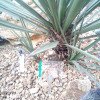
Yucca × schottii (Engelm.)
-
Yucca aloifolia (L.)
-
Yucca angustissima (Engelm. ex Trel.)
4 -
Yucca arkansana (Trel.)
-
Yucca baccata (Torr.)
2 -
Yucca baileyi (Wooton & Standl.)
-
Yucca brevifolia (Engelm.)
-
Yucca campestris (McKelvey)
-
Yucca capensis (L.W.Lenz)
-
Yucca carnerosana ((Trel.) McKelvey)
-
Yucca cernua (E.L.Keith)
-
Yucca coahuilensis (Matuda & I.L.Pina)
-
Yucca constricta (Buckley)
-
Yucca de-smetiana (Baker)
-
Yucca decipiens (Trel.)
-
Yucca declinata (Laferr.)
-
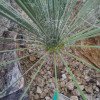
Yucca elata ((Engelm.) Engelm.)
2 -
Yucca endlichiana (Trel.)
-
Yucca faxoniana (Sarg.)
-
Yucca feeanoukiae (Hochstätter)
-
Yucca filamentosa (L.)
-
Yucca filifera (Chabaud)
-
Yucca flaccida (Haw.)
-
Yucca gigantea (Lem.)
-
Yucca glauca (Nutt.)
-
Yucca gloriosa (L.)
2 -
Yucca grandiflora (Gentry)
-
Yucca harrimaniae (Trel.)
-
Yucca intermedia (McKelvey)
-
Yucca jaliscensis ((Trel.) Trel.)
-
Yucca lacandonica (Gómez Pompa & J.Valdés)
-
Yucca linearifolia (Clary)
-
Yucca luminosa (ined.)
-
Yucca madrensis (Gentry)
-
Yucca mixtecana (García-Mend.)
-
Yucca necopina (Shinners)
-
Yucca neomexicana (Wooton & Standl.)
-
Yucca pallida (McKelvey)
-
Yucca periculosa (Baker)
-
Yucca potosina (Rzed.)
-
Yucca queretaroensis (Piña Luján)
-
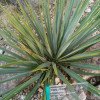
Yucca reverchonii (Trel.)
-
Yucca rostrata (Engelm. ex Trel.)
-
Yucca rupicola (Scheele)
-
Yucca schidigera (Roezl ex Ortgies)
-
Yucca sterilis ((Neese & S.L.Welsh) S.L.Welsh & L.C.Higgins)
-
Yucca tenuistyla (Trel.)
-
Yucca thompsoniana (Trel.)
-
Yucca treculeana (Carrière)
-
Yucca utahensis (McKelvey)
-
Yucca valida (Brandegee)