
Genus Paeonia in Family Paeoniaceae
In botanical taxonomy, a genus (plural genera) is a rank used to group closely related species within a family. In the hierarchy, genus sits below family and above species.
Genera are defined by shared morphological, anatomical, and genetic characteristics (for example, features of flowers, fruits, seeds, or leaves) that indicate a close evolutionary relationship among the species they contain.
Each genus can include one or more species. Examples include Rosa (roses) and Solanum (nightshades, including tomato and eggplant).
Do you wish to read more about plant taxonomy? Click here!
Genus Description
Suggest a correction!The genus Paeonia L. (authority: L.) constitutes the sole recognized, monogeneric family Paeoniaceae within order Saxifragales (APG IV, 2016). It encompasses approximately 33 species distributed across temperate Eurasia and western North America, with the type species standardly cited as Paeonia officinalis L. (Hong, 2010; WFO, 2024). These rhizomatous or woody perennials inhabit forest margins, grasslands, and mountainous habitats, primarily at mid to high elevations.
Diagnostic morphological features reliably distinguish the genus. Individuals exhibit a herbaceous or shrubby habit (section Onaepia is shrubby), with alternate, compound leaves typically divided into leaflets or lobes. Indumentum varies from glabrous to villous. Inflorescences are generally terminal solitary flowers or rarely cymes, bearing five or more conspicuous, often showy petals. Numerous stamens surround a unique, deeply lobed superior ovary composed of typically two to five carpels with axile placentation; styles are short. The fruit is a follicle, usually splitting along one suture; seeds are large and possess a prominent aril, facilitating dispersal (Stebbins, 1950; WFO, 2024).
Diversity centers include East Asia (major center of endemism, particularly China), the Mediterranean region (especially section Paeonia), and the North American disjunct distribution of species in section Onaepia (WFO, 2024; GBIF, 2024). Habitats range from forest edges and grasslands to alpine meadows. Biogeographically, an East Asian clade shows species-rich diversification, the Mediterranean clade has a clear temperate pattern, and section Onaepia represents an intriguing long-distance disjunction.
Intrinsic biology often involves insect pollination (although anthocyanin-rich petal variations suggest some scent-based attraction; Guo et al., 2019). Seeds possess a conspicuous fleshy aril, an adaptation promoting dispersal by ants (myrmecochory), although other agents may also contribute (Raven et al., 1964). Wood anatomy is distinctive within the order. Well-established base chromosome numbers include x=5 (particularly for section Paeonia and Moutan) and x=10 (section Onaepia), supported by cytological data (Dark, 1936; Sang et al., 1997).
Taxonomy and phylogeny have stabilized significantly. Modern treatments recognize three major sections: Paeonia (herbaceous, Eurasia), Moutan DC. (woody P. suffruticosa complex, East Asia), and Onaepia Lindley (woody species, western North America) (Hong, 2010). Historical synonymizations, such as the inclusion of P. mlokosewitschii within P. daurica subsp. mlokosewitschii, reflect updated phylogenetic understanding (Hong & Pan, 2004; WFO, 2024). Alternative treatments exist, such as proposals for additional sections (Anomalae, Delavayanae) by some authors (Stern, 1946), but these are not universally accepted (Hong, 2010; WFO, 2024). Phylogenetic relationships have been robustly clarified through molecular analyses (Sang et al., 1997).
Human relevance is substantial in horticulture and ornamentals. Many species, especially P. lactiflora Pall. (Chinese peony) and P. suffruticosa Andrews (tree peony), have immense aesthetic and cultural value, with centuries of breeding producing thousands of cultivars. P. officinalis is historically significant in European cultivation. Species like P. mlokosewitschii Lomakin are valued rock garden plants. Their use is primarily ornamental; medicinal uses, prominent in historical contexts like Traditional Chinese Medicine (P. lactiflora), are not considered here. Species may be locally collected from the wild (WFO, 2024).
Conservation and outlook reflect habitat threats like overgrazing, urbanization, and climate change impacts on alpine/endemic species (CITES, 2023). Robust taxonomic frameworks support targeted conservation efforts, yet improved research on population dynamics and species-specific threats remains crucial to safeguard these horticulturally significant plants and their unique evolutionary lineages.
-
Paeonia × kayae (Özhatay)
-
Paeonia × maleevii (Kem.-Nath. ex Mordak & Punina)
-
Paeonia × saundersii (Stebbins)
2 -
Paeonia × suffruticosa (Andrews)
1 -
Paeonia algeriensis (Chab.)
-
Paeonia anomala (L.)
1 -
Paeonia archibaldii (Rukšāns)
-
Paeonia arietina (G.Anderson)
-
Paeonia baokangensis (Z.L.Dai & T.Hong)
-
Paeonia broteri (Boiss. & Reut.)
-
Paeonia brownii (Douglas ex Hook.)
-
Paeonia californica (Nutt.)
-
Paeonia cambessedesii ((Willk.) Willk.)
-
Paeonia cathayana (D.Y.Hong & K.Y.Pan)
-
Paeonia clusii (Stern & Stearn)
2 -
Paeonia coriacea (Boiss.)
-
Paeonia corsica (Sieber ex Tausch)
-
Paeonia daurica (Andrews)
8 -
Paeonia decomposita (Hand.-Mazz.)
2 -
Paeonia delavayi (Franch.)
-
Paeonia emodi (Royle)
-
Paeonia intermedia (C.A.Mey.)
-
Paeonia jishanensis (T.Hong & W.Z.Zhao)
-
Paeonia kesrouanensis (J.Thiébaut)
-
Paeonia lactiflora (Pall.)
-
Paeonia ludlowii ((Stern & G.Taylor) D.Y.Hong)
-
Paeonia mairei (H.Lév.)
-
Paeonia mascula ((L.) Mill.)
4 -
Paeonia obovata (Maxim.)
3 -
Paeonia officinalis (L.)
5 -
Paeonia ostii (T.Hong & J.X.Zhang)
-
Paeonia parnassica (Tzanoud.)
-
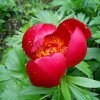
Paeonia peregrina (Mill.)
-
Paeonia qiui (Y.L.Pei & D.Y.Hong)
-
Paeonia rockii ((S.G.Haw & Lauener) T.Hong & J.J.Li ex D.Y.Hong)
2 -
Paeonia sandrae (Camarda)
-
Paeonia saueri (D.Y.Hong, Xiao Q.Wang & D.M.Zhang)
-
Paeonia sterniana (H.R.Fletcher)
-
Paeonia suffruticosa (Andrews)
-
Paeonia tenuifolia (L.)
-
Paeonia veitchii (Lynch)
-
Paeonia wendelboi (Rukšāns & Zetterl.)
-
Paeonia yananensis (T.Hong & M.R.Li)