
Genus Stachys in Family Lamiaceae
In botanical taxonomy, a genus (plural genera) is a rank used to group closely related species within a family. In the hierarchy, genus sits below family and above species.
Genera are defined by shared morphological, anatomical, and genetic characteristics (for example, features of flowers, fruits, seeds, or leaves) that indicate a close evolutionary relationship among the species they contain.
Each genus can include one or more species. Examples include Rosa (roses) and Solanum (nightshades, including tomato and eggplant).
Do you wish to read more about plant taxonomy? Click here!
Genus Description
Suggest a correction!The genus Stachys (family Lamiaceae) comprises roughly 330 species worldwide, a number that remains fairly stable across recent taxonomic updates (POWO, 2024). Its type species, designated under the International Code, is Stachys officinalis (L.) (WFO, 2024). The plants are mainly herbaceous perennials and annuals distributed across temperate zones of Eurasia and North America, with secondary centres in the Mediterranean basin, the Himalaya, and parts of Africa, occurring from low‑land meadows to sub‑alpine scree.
Diagnostic characters separating Stachys from related Lamiaceae are the opposite, usually hairy leaves, absent or reduced stipules, and inflorescences that form dense terminal spikes or verticillasters of paired flowers. The calyx is tubular with five short teeth, the corolla is bilabiate (upper lip two‑lobed, lower three‑lobed) and typically pink to purple, and the four stamens are paired, with the anthers concealed under the upper lip. The ovary is superior and deeply four‑parted; each compartment bears a single ovule on an axile placenta, and the fruit consists of four smooth nutlets (Harley & Paton, 2019).
Diversity peaks in the Mediterranean–Southwest Asian region, where numerous narrow endemics occupy limestone cliffs, scrubland, and riverbanks; in the Himalayas species reach up to 3500 m (Drew & Sytsma, 2012). A few temperate taxa extend into North America, while isolated African species occur in montane grasslands. Within the genus, populations often show morphological variation correlated with elevation and habitat moisture.
Pollination is principally by bees and flies; nectar‑rich flowers and subtle scent cues are recorded for several European species (Harley & Paton, 2019). Seed dispersal is mainly wind‑mediated, although some South‑African taxa exhibit myrmecochory. Chromosome counts frequently base on x = 16, a number reported across sections by early cytogenetic surveys (Stebbins, 1970).
Historically Stachys was split into subgenera Stachys and Betonica, and sections such as Stachys and Erythrostachys. Molecular phylogenetics supports three major clades and a recircumscription that merges Betonica and Erythrostachys into a broadened Stachys (Drew & Sytsma, 2012). Alternative treatments still recognize Betonica as a distinct genus (APG IV, 2016), underscoring a modest but persistent taxonomic debate. POWO and WFO presently adopt the wide‑circumscribed concept.
Several species are cultivated as ornamentals: S. byzantina (“lamb’s‑ear”) for its silvery foliage, and S. officinalis for its herbal appeal. No Stachys species is a major crop, although some are used locally as forage. A few weedy taxa, such as S. palustris, can invade disturbed habitats.
Conservation assessments remain patchy; many narrow endemics are vulnerable to habitat loss and climate change. Expanded surveys and updated Red‑List evaluations will be essential for safeguarding the genus in the coming decades.
-
Stachys × ambigua (Sm.)
-
Stachys × burrii (P.H.Davis)
-
Stachys × cryptadenia (Rech.f.)
-
Stachys × medebachensis (Feld & O.Koenen)
-
Stachys acerosa (Boiss.)
-
Stachys aculeolata (Hook.f.)
3 -
Stachys adulterina (Hemsl.)
-
Stachys aegyptiaca (Pers.)
-
Stachys aethiopica (L.)
-
Stachys affinis (Bunge)
-
Stachys agraria (Schltdl. & Cham.)
-
Stachys ahmetsavranii (Doğu & Bağcı)
-
Stachys ajugoides (Benth.)
-
Stachys alabamica (B.R.Keener & L.J.Davenp.)
-
Stachys albanica (Markgr.)
-
Stachys albens (A.Gray)
-
Stachys albicaulis (Lindl.)
-
Stachys albiflora (N.E.Br.)
-
Stachys albotomentosa (Ramamoorthy)
2 -
Stachys aleurites (Boiss. & Heldr.)
-
Stachys alpigena (T.C.E.Fr.)
2 -
Stachys alpina (L.)
2 -
Stachys amanica (P.H.Davis)
-
Stachys anamurensis (Sümbül)
-
Stachys andongensis (Hiern)
-
Stachys angustifolia (M.Bieb.)
-
Stachys anisochila (Vis. & Pančić)
-
Stachys annua (L.)
3 -
Stachys antalyensis (Ayasligil & P.H.Davis)
-
Stachys aperta (Epling)
-
Stachys appalachiana (D.B.Poind. & J.B.Nelson)
-
Stachys arabica (Hornem.)
-
Stachys arachnoidea (Codd)
-
Stachys araucana (Phil.)
-
Stachys arenaria (Vahl)
-
Stachys arenariiformis (Rouy)
-
Stachys argillicola (Sebsebe)
2 -
Stachys aristata (Greenm.)
-
Stachys arrecta (L.H.Bailey)
-
Stachys arriagana (B.L.Turner)
-
Stachys arvensis (L.)
-
Stachys aspera (Michx.)
-
Stachys asperata (Hedge)
-
Stachys atherocalyx (K.Koch)
-
Stachys aucheri (Benth.)
-
Stachys aurea (Benth.)
-
Stachys babunensis (Micevski)
-
Stachys bakeri (Briq.)
-
Stachys balansae (Boiss. & Kotschy ex Boiss.)
-
Stachys balensis (Sebsebe)
-
Stachys bayburtensis (R.Bhattacharjee & Hub.-Mor.)
-
Stachys baytopiorum (Kit Tan & Yıldız)
-
Stachys beckeana (Dörfl. & Hayek)
-
Stachys benthamiana (Boiss.)
-
Stachys bergii (G.A.Mulligan & D.B.Munro)
-
Stachys betoniciflora (Rupr.)
-
Stachys biflora (Hook. & Arn.)
-
Stachys bigelovii (A.Gray)
-
Stachys bithynica (Boiss.)
-
Stachys bizensis (Schweinf. ex Baker)
-
Stachys bodeana (Bunge)
-
Stachys bogotensis (Kunth)
-
Stachys bolusii (Skan)
-
Stachys bombycina (Boiss.)
-
Stachys boraginoides (Schltdl. & Cham.)
-
Stachys brachiata (Bojer ex Benth.)
-
Stachys brachyclada (de Noé ex Coss.)
-
Stachys bridgesii (Benth.)
-
Stachys bullata (Benth.)
-
Stachys burchelliana (Launert)
-
Stachys burgsdorffioides (Boiss.)
2 -
Stachys buttleri (R.R.Mill)
-
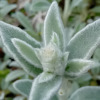
Stachys byzantina (K.Koch)
-
Stachys caffra (E.Mey. ex Benth.)
-
Stachys calcicola (Epling)
-
Stachys candida (Bory & Chaub.)
-
Stachys canescens (Bory & Chaub.)
-
Stachys carduchorum ((R.Bhattacharjee) Rech.f.)
-
Stachys caroliniana (J.B.Nelson & D.A.Rayner)
-
Stachys cataonica (R.Bhattacharjee & Hub.-Mor.)
-
Stachys chamissonis (Benth.)
2 -
Stachys chasmosericea (Ayasligil & P.H.Davis)
-
Stachys chinensis (Bunge ex Benth.)
-
Stachys choruhensis (Kit Tan & Sorger)
-
Stachys chrysantha (Boiss. & Heldr.)
-
Stachys circinata (L'Hér.)
-
Stachys citrina (Boiss. & Heldr. ex Benth.)
3 -
Stachys clingmanii (Small)
-
Stachys coccinea (Ortega)
-
Stachys collina (Brandegee)
-
Stachys comosa (Codd)
-
Stachys cordata (Riddell)
-
Stachys cordifolia (Prain)
-
Stachys corsica (Pers.)
-
Stachys costaricensis (Briq.)
-
Stachys cretica (L.)
13 -
Stachys cudiensis (Fırat & Ö.Güner)
-
Stachys cuneata (Banks ex Benth.)
-
Stachys cydni (Kotschy ex Gemici & Leblebici)
-
Stachys cymbalaria (Briq.)
-
Stachys darcyana (A.Pool)
-
Stachys debilis (Kunth)
-
Stachys didymantha (Brenan)
-
Stachys digenea (Legué)
-
Stachys dinteri (Launert)
-
Stachys distans (Benth.)
2 -
Stachys diversifolia (Boiss.)
-
Stachys dregeana (Benth.)
-
Stachys drummondii (Benth.)
-
Stachys durandiana (Coss.)
-
Stachys duriaei (de Noé)
-
Stachys ehrenbergii (Boiss.)
-
Stachys elliptica (Kunth)
-
Stachys eplingii (J.B.Nelson)
-
Stachys erectiuscula (Gürke)
-
Stachys eremicola (Epling)
-
Stachys eriantha (Benth.)
-
Stachys euadenia (P.H.Davis)
-
Stachys euboica (Rech.f.)
-
Stachys fendleri (Briq.)
-
Stachys filifolia (Hedge)
-
Stachys flavescens (Benth.)
-
Stachys flexuosa (Skan)
-
Stachys floccosa (Benth.)
-
Stachys floridana (Shuttlew. ex Benth.)
-
Stachys fominii (Sosn. ex Grossh.)
-
Stachys fontqueri (Pau)
-
Stachys forsythii (Hedge)
-
Stachys fragillima (Bornm.)
-
Stachys fruticulosa (M.Bieb.)
-
Stachys gaziantepensis (Dinç & Dogu)
-
Stachys geobombycis (C.Y.Wu)
-
Stachys germanica (L.)
4 -
Stachys gilliesii (Benth.)
-
Stachys glandulibracteata (Y.B.Harv.)
-
Stachys glandulifera (Post)
-
Stachys glandulosa (Hutch. & E.A.Bruce)
-
Stachys glandulosissima (Floden)
-
Stachys glechomifolia (Nábelek)
-
Stachys globosa (Epling)
-
Stachys glutinosa (L.)
-
Stachys gossweileri (G.Taylor)
-
Stachys goulimyi (Rech.f.)
-
Stachys graciliflora (C.Presl)
-
Stachys graeca (Boiss. & Heldr.)
-
Stachys grandidentata (Lindl.)
-
Stachys grandifolia (E.Mey.)
-
Stachys graveolens (Nábělek)
-
Stachys guyoniana (de Noé ex Munby)
-
Stachys hakkariensis (Akçiçek & Fırat)
-
Stachys hamata (Epling)
-
Stachys harkerae (J.G.González)
-
Stachys harleyana (A.Pool)
-
Stachys hebens (Epling)
-
Stachys heraclea (All.)
-
Stachys herrerae (Epling)
-
Stachys herrerana (Rzed. & Calderón)
-
Stachys hians (Briq.)
-
Stachys hildebrandtii (Vatke)
-
Stachys hintoniorum (B.L.Turner)
-
Stachys hispida (Pursh)
-
Stachys hissarica (Regel)
-
Stachys huber-morathii (R.Bhattacharjee)
-
Stachys huetii (Boiss.)
-
Stachys huillensis (Hiern)
-
Stachys humbertii (Hedge)
-
Stachys humifusa (Burch. ex Benth.)
-
Stachys hydrophila (Boiss.)
-
Stachys hyssopifolia (Michx.)
-
Stachys hyssopoides (Burch. ex Benth.)
-
Stachys iberica (M.Bieb.)
4 -
Stachys iltisii (J.B.Nelson)
-
Stachys inanis (Hausskn. & Bornm.)
-
Stachys inflata (Benth.)
2 -
Stachys intermedia (Aiton)
-
Stachys ionica (Halácsy)
-
Stachys iraqensis (R.Bhattacharjee)
-
Stachys iva (Griseb.)
-
Stachys jaimehintonii (B.L.Turner)
-
Stachys jijigaensis (Sebsebe)
-
Stachys keerlii (Benth.)
-
Stachys kermanshahensis (Rech.f.)
-
Stachys ketenoglui (Kaynak, Daşkın & Yılmaz)
-
Stachys komarovii (Knorring)
-
Stachys kotschyi (Boiss. & Hohen.)
-
Stachys kouyangensis ((Vaniot) Dunn)
-
Stachys kulalensis (Sebsebe)
-
Stachys kuntzei (Gürke)
-
Stachys kurdica (Boiss. & Hohen.)
3 -
Stachys lamarckii (Benth.)
-
Stachys lamioides (Benth.)
-
Stachys langmaniae (Rzed. & Calderón)
-
Stachys lanigera ((Bornm.) Rech.f.)
-
Stachys latidens (Small in Britton)
-
Stachys lavandulifolia (Vahl)
-
Stachys laxa (Boiss. & Buhse)
-
Stachys leucoglossa (Griseb.)
2 -
Stachys leucomalla (Bornm. & Gauba)
-
Stachys libanotica (Benth.)
-
Stachys lindenii (Benth.)
-
Stachys linearis (Burch. ex Benth.)
-
Stachys longespicata (Boiss. & Kotschy ex Boiss.)
-
Stachys longiflora (Boiss. & Balansa)
-
Stachys lurestanica (Jamzad)
-
Stachys lyallii (Benth.)
-
Stachys macraei (Benth.)
-
Stachys macrotricha (Rech.f. & Goulimy)
-
Stachys manantlanensis (B.L.Turner)
-
Stachys mandoniana (Briq.)
-
Stachys marashica (İlçim, Çenet & Dadandı)
-
Stachys mardinensis ((Post) R.R.Mill)
-
Stachys maritima (Gouan)
-
Stachys marrubiifolia (Viv.)
-
Stachys matthewsii (G.P.Fleming, J.B.Nelson & J.F.Towns.)
-
Stachys megalodonta (Hausskn. & Bornm. ex P.H.Davis)
2 -
Stachys melampyroides (Hand.-Mazz.)
-
Stachys menthifolia (Vis.)
-
Stachys menthoides (Kotschy & Boiss.)
-
Stachys mexicana (Benth.)
-
Stachys mialhesii (de Noé)
-
Stachys milani (Petrov. ex Magnier)
-
Stachys milasensis (Ö.Güner)
-
Stachys minor ((Boiss.) Akçiçek & Dirmenci)
-
Stachys mirabilis (Rouy)
-
Stachys mohinora (B.L.Turner)
-
Stachys mollissima (Willd.)
-
Stachys moorei (B.L.Turner)
-
Stachys mouretii (Batt. & Pit.)
-
Stachys mucronata (Sieber ex Spreng.)
-
Stachys multicaulis (Benth.)
-
Stachys munzurdagensis (R.Bhattacharjee)
-
Stachys namazdaghensis (Yıld.)
-
Stachys natalensis (Hochst.)
2 -
Stachys nelsonii (B.R.Keener & L.J.Davenp.)
-
Stachys nemorivaga (Briq.)
-
Stachys nepetifolia (Desf.)
-
Stachys nephrophylla (Rech.f.)
-
Stachys neurocalycina (Boiss.)
-
Stachys nigricans (Benth.)
-
Stachys nivea (Labill.)
-
Stachys nubilorum (Epling)
-
Stachys obliqua (Waldst. & Kit.)
-
Stachys oblongifolia (Wall.)
2 -
Stachys obscura (Boiss. & Balansa)
-
Stachys obtusicrena (Boiss.)
-
Stachys obtusifolia (MacOwan)
-
Stachys ochroleuca (Phil.)
-
Stachys ocymastrum (Briq.)
-
Stachys oligantha (Baker)
-
Stachys oreophila (Hedge)
-
Stachys palaestina (L.)
-
Stachys palustris (L.)
-
Stachys paneiana (Mouterde)
-
Stachys pannosa (Phil.)
-
Stachys parolinii (Vis.)
-
Stachys pauli (Grossh.)
-
Stachys penanevada (B.L.Turner)
-
Stachys peruviana (Domb. ex Benth.)
-
Stachys petrokosmos (Rech.f.)
-
Stachys philippiana (Vatke)
-
Stachys pilifera (Benth.)
2 -
Stachys pilosa (Nutt.)
2 -
Stachys pilosissima (M.Martens & Galeotti)
-
Stachys pinardi (Boiss.)
-
Stachys pinetorum (Boiss. & Balansa)
-
Stachys pittieri (Briq.)
-
Stachys plumosa (Griseb.)
2 -
Stachys pringlei (Greenm.)
-
Stachys pseudohumifusa (Sebsebe)
3 -
Stachys pseudonigricans (Gürke)
-
Stachys pseudophlomis (C.Y.Wu)
-
Stachys pseudopinardii (R.Bhattacharjee & Hub.-Mor.)
-
Stachys pumila ([Soland.])
-
Stachys pusilla (Briq.)
-
Stachys pycnantha (Benth.)
-
Stachys pyramidalis (J.K.Morton)
-
Stachys radicans (Epling)
-
Stachys ramosissima (Montbret & Aucher ex Benth.)
-
Stachys recta (L.)
9 -
Stachys rehmannii (Skan)
-
Stachys reptans (Hedge)
-
Stachys reticulata (Codd)
-
Stachys riederi (Benth.)
3 -
Stachys rigida (Nutt. ex Benth.)
2 -
Stachys riparia (A.Pool)
-
Stachys rivularis (J.M.Wood & M.S.Evans)
-
Stachys rizeensis (R.Bhattacharjee)
-
Stachys rosea (Boiss.)
-
Stachys rothrockii (A.Gray)
-
Stachys rotundifolia (Moc. & Sessé ex Benth.)
-
Stachys rubella (Hedge)
-
Stachys rudatisii (Skan)
-
Stachys rugosa (Aiton)
-
Stachys rupestris (Montbret & Aucher ex Benth.)
-
Stachys salisii (Jord. & Fourr.)
-
Stachys sanchezii (Rzed. & A.García)
-
Stachys sandersii (B.L.Turner)
-
Stachys saturejoides (Montbret & Aucher ex Benth.)
-
Stachys saxicola (Coss. & Balansa)
4 -
Stachys scaberula (Vatke)
-
Stachys scabrida (Skan)
-
Stachys scardica (Griseb.)
-
Stachys schimperi (Vatke)
-
Stachys semsurensis (Firat)
-
Stachys serbica (Pančić)
-
Stachys sericantha (P.H.Davis)
-
Stachys sericea (Cav.)
-
Stachys sericophylla (Halácsy)
-
Stachys sessilifolia (E.Mey.)
-
Stachys sessilis (Gürke)
-
Stachys setifera (C.A.Mey.)
2 -
Stachys siirtensis (Ö.Güner & Akçiçek)
-
Stachys simplex (Schltr.)
-
Stachys sintenisii (Gand.)
-
Stachys sivasica (Kit Tan & Yıldız)
-
Stachys sparsipilosa (R.Bhattacharjee & Hub.-Mor.)
-
Stachys spathulata (Burch. ex Benth.)
-
Stachys spectabilis (Choisy ex DC.)
-
Stachys speluncarum (Contandr. & Quézel)
-
Stachys sphaerodonta (Baker)
-
Stachys spinosa (L.)
-
Stachys spinulosa (Sm.)
-
Stachys splendens (Wall. ex Benth.)
-
Stachys spreitzenhoferi (Heldr.)
2 -
Stachys sprucei (Briq.)
-
Stachys spruneri (Boiss.)
-
Stachys stebbinsii (G.A.Mulligan & D.B.Munro)
-
Stachys stricta (Greene)
-
Stachys strictiflora (C.Y.Wu)
2 -
Stachys subaphylla (Rech.f.)
-
Stachys sublobata (Skan)
-
Stachys subnuda (Montbret & Aucher ex Benth.)
-
Stachys swainsonii (Benth.)
3 -
Stachys sylvatica (L.)
-
Stachys taliensis (C.Y.Wu)
-
Stachys talyschensis (Kapell.)
-
Stachys tamaulipana (B.L.Turner)
-
Stachys tenerrima (Epling)
-
Stachys tenuifolia (Willd.)
-
Stachys tetragona (Boiss. & Heldr. ex Boiss.)
-
Stachys thirkei (K.Koch)
-
Stachys thracica (Davidov)
-
Stachys thunbergii (Benth.)
-
Stachys tlaxiacana (B.L.Turner)
-
Stachys tmolea (Boiss.)
-
Stachys torresii (B.L.Turner)
-
Stachys tournefortii (Poir.)
-
Stachys trichophylla (Baker)
-
Stachys trinervis (Aitch. & Hemsl.)
-
Stachys truncata (Kunze ex Benth.)
-
Stachys tubulosa (MacOwan)
-
Stachys tundjeliensis (Kit Tan & Sorger)
-
Stachys turcomanica (Trautv.)
-
Stachys turkestanica ((Regel) Popov ex Knorring)
-
Stachys turneri (Rzed. & Calderón)
-
Stachys tymphaea (Hausskn.)
-
Stachys tysonii (Skan)
-
Stachys uniflora (A.Pool)
-
Stachys urticoides (Epling)
-
Stachys venezuelana (Briq.)
-
Stachys venulosa (Greene)
-
Stachys veroniciformis (Rech.f.)
-
Stachys virgata (Bory & Chaub.)
-
Stachys viscosa (Montbret & Aucher ex Benth.)
-
Stachys viticina (Boiss.)
-
Stachys vulnerabilis (Rzed. & Calderón)
-
Stachys vuralii (Yıldız, Dirmenci & Akçiçek)
-
Stachys willemsei (Kit Tan & Hedge)
-
Stachys woronowii ((Schischk. ex Grossh.) R.R.Mill)
-
Stachys xanthantha (C.Y.Wu)
-
Stachys yemenensis (Hedge)
-
Stachys yildirimlii (Dinç)
-
Stachys zepcensis (Formánek)
-
Stachys zeyheri (Skan)
-
Stachys zoharyana (Eig)