
Genus Opuntia in Family Cactaceae
In botanical taxonomy, a genus (plural genera) is a rank used to group closely related species within a family. In the hierarchy, genus sits below family and above species.
Genera are defined by shared morphological, anatomical, and genetic characteristics (for example, features of flowers, fruits, seeds, or leaves) that indicate a close evolutionary relationship among the species they contain.
Each genus can include one or more species. Examples include Rosa (roses) and Solanum (nightshades, including tomato and eggplant).
Do you wish to read more about plant taxonomy? Click here!
Genus Description
Suggest a correction!Opuntia (Mill.) belongs to the Cactaceae, subfamily Opuntioideae, and comprises approximately 180–200 accepted species (POWO, 2024; WFO, 2024). The genus is native to arid and semi‑arid regions of the Americas, ranging from the southwestern United States and Mexico through Central America into the Andes and southern South America, and has been introduced to the Mediterranean basin, Australia, Africa, and other temperate‑subtropical areas where it often naturalises. The type species is Opuntia ficus‑indica (L.) Mill., the cultivated prickly‑pear whose inflorescence and fruit are the classic reference for the generic name (Anderson & Salywon, 2004).
Morphologically Opuntia is distinguished by jointed, often flattened cladodes that bear minute, early‑deciduous leaves and conspicuous areoles armed with spines and tiny, detachable glochids. Flowers are solitary, radially symmetrical, with numerous stamens surrounding an inferior ovary that matures into a fleshy, indehiscent berry; the ovary wall is typically thin and the seeds are embedded in a mucilaginous pulp (Bennett & Leitch, 2005). The stems may be cylindrical in some sections, but the presence of glochids and the characteristic pad‑like habit remain diagnostic.
Species richness peaks in the Mexican highlands, where numerous narrow endemics occur, while additional centres of diversity extend to the Andean foothills and the Caribbean islands. Typical habitats include desert scrub, grassland, and rocky slopes up to about 4000 m altitude in the Andes; many taxa occupy disturbed sites such as roadsides and agricultural margins (Hernández‑López et al., 2020). The genus exhibits a strong pattern of vicariance, with sister lineages often confined to distinct biogeographic provinces.
Pollination is primarily by native bees and other insects, while fruits are dispersed by birds and mammals; vegetative propagation via detached pads is common and underlies rapid local spread (Griffith et al., 2021). The base chromosome number is x = 11, with most species diploid (2n = 22), although polyploidy has been recorded in several lineages (Bennett & Leitch, 2005).
Taxonomically, Opuntia has been divided historically into subgenera such as Opuntia (flattened pads), Nopalea (cylindrical stems), and Cylindropuntia (highly spiny, cylindrical segments). Molecular phylogenies support three major clades roughly matching these groups but also reveal extensive synonymy and recurrent homoplasy (Griffith et al., 2021). Anderson & Salywon (2004) merged many previously recognised segregates, while Hernández‑López et al. (2020) advocated a broader circumscription that includes Nopalea and Cylindropuntia within Opuntia s.l.; both treatments remain in use, reflecting ongoing uncertainty.
Human relevance is significant: Opuntia ficus‑indica is cultivated worldwide for its edible fruit (tunas) and pads (nopales), while other species are prized ornamentals in xeriscaping. Several taxa, notably Opuntia stricta, have become invasive in parts of Australia and Africa, prompting control programmes (WFO, 2024). Minor uses include timber for small‑scale carving and forage for livestock.
Conservation concerns centre on habitat loss, over‑harvesting, and climate change, with many narrow‑endemic species lacking formal assessments. Continued integrative taxonomy and updated distribution modelling will be essential to inform management and preserve the evolutionary diversity of Opuntia for the future.
-
Opuntia × aequatorialis (Britton & Rose)
-
Opuntia × andersonii (H.M.Hern., Gómez-Hin. & Bárcenas)
-
Opuntia × carstenii (R.Puente & C.Hamann)
-
Opuntia × cervicornis (Späth)
-
Opuntia × charlestonensis (Clokey)
-
Opuntia × cochinera (Griffiths)
-
Opuntia × coloradensis (D.J.Barnett & Donnie Barnett)
-
Opuntia × columbiana (Griffiths)
-
Opuntia × debreczyi (Szutorisz)
-
Opuntia × demissa (Griffiths)
-
Opuntia × edwardsii (V.E.Grant & K.A.Grant)
-
Opuntia × elisae (D.Guillot & P.Van der Meer)
-
Opuntia × occidentalis (Engelm. & J.M.Bigelow)
-
Opuntia × rooneyi (M.P.Griff.)
-
Opuntia × spinosibacca (M.S.Anthony)
-
Opuntia × vaseyi ((J.M.Coult.) Britton & Rose)
-
Opuntia × wootonii (Griffiths)
-
Opuntia abjecta (Small ex Britton & Rose)
-
Opuntia aciculata (Griffiths)
-
Opuntia albispinosa (Mieckley ex Lindemuth & Dams)
-
Opuntia alpicola (K.Schum. ex Dams)
-
Opuntia altomagdalenensis (Xhonneux)
-
Opuntia amarilla (Griffiths)
-
Opuntia ambigua (Link ex Ten.)
-
Opuntia anacantha (Speg.)
4 -
Opuntia angusta (Meinsh.)
-
Opuntia antillana (Britton & Rose)
-
Opuntia arechavaletae (Speg.)
-
Opuntia arenaria (Engelm.)
-
Opuntia atrispina (Griffiths)
-
Opuntia auberi (Pfeiff.)
-
Opuntia aurantiaca (Lindl.)
-
Opuntia aurea (E.M.Baxter)
-
Opuntia aureispina ((S.Brack & K.D.Heil) Pinkava & B.D.Parfitt)
-
Opuntia austrina (Small)
-
Opuntia azurea (Rose)
4 -
Opuntia bahamana (Britton & Rose)
-
Opuntia basilaris (Engelm. & J.M.Bigelow)
5 -
Opuntia boldinghii (Britton & Rose)
-
Opuntia bonaerensis (Speg.)
-
Opuntia bonplandii ((Kunth) F.A.C.Weber)
-
Opuntia brachydelphis (K.Schum.)
-
Opuntia bravoana (Baxter)
-
Opuntia calacantha (Forbes ex W.H.Baxter)
-
Opuntia canterae (Arechav.)
-
Opuntia caracassana (Salm-Dyck)
-
Opuntia carnosa (A.Usteri)
-
Opuntia carolina (J.Forbes)
-
Opuntia cespitosa (Raf.)
-
Opuntia chaffeyi (Britton & Rose)
-
Opuntia chata (Griffiths)
-
Opuntia chella (F.A.C.Weber)
-
Opuntia chiangiana (Scheinvar & Manzanero)
-
Opuntia chisosensis ((M.S.Anthony) D.J.Ferguson)
-
Opuntia chlorotica (Engelm. & J.M.Bigelow)
-
Opuntia clarkiorum (Rebman)
-
Opuntia cochenillifera ((L.) Mill.)
-
Opuntia colubrina (A.Cast.)
-
Opuntia comonduensis ((J.M.Coult.) Britton & Rose)
-
Opuntia cristalensis (Oakley, Font & M.Köhler)
-
Opuntia crystalenia (Griffiths)
-
Opuntia cubensis (Britton & Rose)
-
Opuntia cuija ((Griffiths & Hare) Britton & Rose)
-
Opuntia curassavica ((L.) Mill.)
-
Opuntia curvispina (Griffiths)
-
Opuntia cyanea (Griffiths)
-
Opuntia cymochila (Engelm. & J.M.Bigelow)
-
Opuntia deamii (Rose)
-
Opuntia decumbens (Salm-Dyck)
-
Opuntia dejecta (Salm-Dyck)
-
Opuntia delafuentiana (Martínez-Gonz., Luna-Vega, Gallegos & García-Sand.)
-
Opuntia demorenia (Forbes)
-
Opuntia demoriana (C.F.Först.)
-
Opuntia depauperata (Britton & Rose)
-
Opuntia deppei (H.L.Wendl. ex C.F.Först.)
-
Opuntia depressa (Rose)
-
Opuntia dichotoma (J.Forbes)
-
Opuntia dillenii ((Ker Gawl.) Haw.)
-
Opuntia discolor (Britton & Rose)
-
Opuntia diversispina (Griffiths)
-
Opuntia drummondii (Graham)
-
Opuntia echios (Howell)
5 -
Opuntia effulgia (Griffiths)
-
Opuntia eichlamii (Rose)
-
Opuntia ekmanii (Werderm.)
-
Opuntia elata (Link & Otto ex Salm-Dyck)
2 -
Opuntia elatior (Mill.)
-
Opuntia elizondoana (E.Sánchez & Villaseñor)
-
Opuntia ellisiana (Griffiths)
-
Opuntia engelmannii (Salm-Dyck ex Engelm.)
6 -
Opuntia erecta (K.Schum.)
-
Opuntia eruca (Millán-Otero, R.Puente & Pío-León)
-
Opuntia excelsa (Sánchez-Mej.)
-
Opuntia feracantha (Britton & Rose)
-
Opuntia festiva (Sencke ex Haage)
-
Opuntia ficus-indica ((L.) Mill.)
-
Opuntia flavispina (C.F.Först.)
-
Opuntia fortanelli (Reyes-Agüero, Orta & Heindorf)
-
Opuntia fragilis ((Nutt.) Haw.)
-
Opuntia fuliginosa (Griffiths)
-
Opuntia galapageia (Hemsl.)
3 -
Opuntia gallegiana (Scheinvar & Olalde)
-
Opuntia gaumeri ((Britton & Rose) R.Puente & Majure)
-
Opuntia glaucophylla (H.L.Wendl. ex Pfeiff.)
-
Opuntia gosseliniana (F.A.C.Weber)
-
Opuntia guatemalensis (Britton & Rose)
-
Opuntia guilanchi (Griffiths)
-
Opuntia helleri (K.Schum. ex B.L.Rob.)
-
Opuntia hitchcockii (G.J.Ortega)
-
Opuntia hitchenii (J.Forbes)
-
Opuntia hondurensis (Standl.)
-
Opuntia horstii (Heinrich)
-
Opuntia howeyi (J.A.Purpus)
-
Opuntia huajuapensis (Bravo)
-

Opuntia humifusa ((Raf.) Raf.)
-
Opuntia hyptiacantha (F.A.C.Weber)
-
Opuntia inaequilateralis (A.Berger)
-
Opuntia inaperta ((A.Schott ex Griffiths) D.R.Hunt)
-
Opuntia insularis (A.Stewart)
-
Opuntia intermedia (A.Gray)
-
Opuntia irrorata (Mart. ex Pfeiff.)
-
Opuntia ithypetala (Griffiths)
-
Opuntia jaliscana (Bravo)
-
Opuntia joconostle (F.A.C.Weber)
-
Opuntia jussieui (J.N.Haage ex C.F.Först.)
-
Opuntia karwinskiana (Salm-Dyck)
-
Opuntia kuehnrichii (Backeb.)
-
Opuntia lagunae (Baxter ex Bravo)
-
Opuntia laiglonii (Frič)
-
Opuntia lasiacantha (Pfeiff.)
-
Opuntia leoglossa (Font & M.Köhler)
-
Opuntia leucotricha (DC.)
-
Opuntia littoralis ((Engelm.) Cockerell)
-
Opuntia longiglochia (C.Z.Nelson)
-
Opuntia longispina (Pfeiff.)
-
Opuntia loomsii (Peebles)
-
Opuntia lucida (Hort.)
-
Opuntia lutea ((Rose) D.R.Hunt)
-
Opuntia macbridei (Britton & Rose)
-
Opuntia mackensenii (Rose)
-
Opuntia macrantha (Gibbes)
-
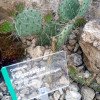
Opuntia macrocentra (Engelm.)
-
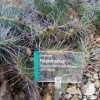
Opuntia macrorhiza (Engelm.)
-
Opuntia martiniana ((L.D.Benson) B.D.Parfitt)
-
Opuntia megacantha (Salm-Dyck)
-
Opuntia megapotamica (Arechav.)
3 -
Opuntia megarrhiza (Rose)
-
Opuntia megasperma (J.T.Howell)
3 -
Opuntia mesacantha (Raf.)
2 -
Opuntia microdasys ((Lehm.) Pfeiff.)
-
Opuntia militaris (Britton & Rose)
-
Opuntia monacantha ((Willd.) Haw.)
-
Opuntia montana (Sencke ex Haage)
-
Opuntia morenoi (K.Schum.)
-
Opuntia myriacantha (Link & Otto ex Steud.)
-
Opuntia nemoralis (Griffiths)
-
Opuntia neorutila (Y.Itô)
-
Opuntia ochrocentra (Small ex Britton & Rose)
-
Opuntia olmeca (Pérez Crisanto, J.Reyes & F.Brachet)
-
Opuntia opuntia (J.M.Coult.)
-
Opuntia orbiculata (Salm-Dyck ex Pfeiff.)
-
Opuntia oricola (Philbrick)
-
Opuntia pachyrrhiza (H.M.Hern., Gómez-Hin. & Bárcenas)
-
Opuntia pailana (Weing.)
-
Opuntia papyracantha (K.Schum.)
-
Opuntia parviclada (S.Arias & Gama)
-
Opuntia peckii (J.A.Purpus)
-
Opuntia penicilligera (Speg.)
-
Opuntia pennellii (Britton & Rose)
-
Opuntia perotensis (Scheinvar, Olalde & Gallegos)
-
Opuntia phaeacantha (Engelm.)
-
Opuntia phyllacantha (Salm-Dyck ex C.F.Först.)
-
Opuntia piccolomini (Hort.)
-
Opuntia pilifera (F.A.C.Weber)
-
Opuntia pinkavae (B.D.Parfitt)
-
Opuntia pittieri (Britton & Rose)
-
Opuntia polyacantha (Haw.)
4 -
Opuntia pottsii (Salm-Dyck)
-
Opuntia praecox (J.Forbes)
-
Opuntia preciadoae (Scheinvar, Olalde, Gallegos & J.Morales S.)
-
Opuntia protracta (Lem. ex C.F.Först.)
-
Opuntia pseudo-tuna (Salm-Dyck)
-
Opuntia puberula (Pfeiff.)
-
Opuntia pubescens (H.L.Wendl. ex Pfeiff.)
-
Opuntia pumila (Rose)
-
Opuntia pusilla ((Haw.) Haw.)
-
Opuntia pycnantha (Engelm.)
-
Opuntia quimilo (K.Schum.)
-
Opuntia quitensis (F.A.C.Weber)
-
Opuntia rastrera (F.A.C.Weber)
-
Opuntia repens (Bello)
-
Opuntia reptans (Karw. ex W.H.Baxter)
-
Opuntia rioplatense (Font)
-
Opuntia ritteri (A.Berger)
-
Opuntia robinsonii (G.J.Ortega)
-
Opuntia robusta (Pfeiff.)
-
Opuntia rufida (Engelm.)
-
Opuntia salicornoides (Spreng. ex Pfeiff.)
-
Opuntia salmii (J.Forbes)
-
Opuntia sanguinea (Proctor)
-
Opuntia santa-rita ((Griffiths & Hare) Rose)
-
Opuntia saxicola (Howell)
-
Opuntia scheeri (F.A.C.Weber)
-
Opuntia schomburgkii (Salm-Dyck)
-
Opuntia schumannii (F.A.C.Weber ex A.Berger)
-
Opuntia securigera (Borg)
-
Opuntia setispina (Engelm. ex Salm-Dyck)
-
Opuntia setocarpa (Arreola-Nava, Guzm.-Hern. & Cuevas)
-
Opuntia soederstromiana (Britton & Rose)
-
Opuntia spinulifera (Salm-Dyck)
-
Opuntia spinulosa (Salm-Dyck)
-
Opuntia stenarthra (K.Schum.)
-
Opuntia stenopetala (Engelm.)
-
Opuntia straminea (Sencke ex Haage)
-
Opuntia streptacantha (Lem.)
-
Opuntia stricta ((Haw.) Haw.)
-
Opuntia strigil (Engelm.)
-
Opuntia sulphurea (Gillies ex Salm-Dyck)
-
Opuntia tapona (Engelm. ex J.M.Coult.)
-
Opuntia taylorii (Britton & Rose)
-
Opuntia tehuacana (S.Arias & U.Guzmán)
-
Opuntia tehuantepecana ((Bravo) Bravo)
-
Opuntia tezontepecana (Gallegos & Scheinvar)
-
Opuntia tomentosa (Salm-Dyck)
-
Opuntia tortispina (Engelm. & J.M.Bigelow)
-
Opuntia triacantha ((Willd.) Sweet)
-
Opuntia tuna ((L.) Mill.)
-
Opuntia undulata (Griffiths)
-
Opuntia velizii (Lodé)
-
Opuntia velutina (F.A.C.Weber)
-
Opuntia ventanensis (M.A.Long)
-
Opuntia virens (Ten.)
-
Opuntia wilcoxii (Britton & Rose)
-
Opuntia woodsii (Backeb.)