
Genus Ruta in Family Rutaceae
In botanical taxonomy, a genus (plural genera) is a rank used to group closely related species within a family. In the hierarchy, genus sits below family and above species.
Genera are defined by shared morphological, anatomical, and genetic characteristics (for example, features of flowers, fruits, seeds, or leaves) that indicate a close evolutionary relationship among the species they contain.
Each genus can include one or more species. Examples include Rosa (roses) and Solanum (nightshades, including tomato and eggplant).
Do you wish to read more about plant taxonomy? Click here!
Genus Description
Suggest a correction!The genus Ruta (authority L.) belongs to the Rutaceae, the citrus family. It comprises roughly 30 species that are predominantly shrubs of the Mediterranean region, extending into southwestern Europe, North Africa, and Macaronesia, with occasional representatives in southwestern Asia. The type species is Ruta graveolens L.
Plants are aromatic, woody perennials bearing leaves that are typically alternate, gland‑dotted, and either simple or deeply divided; stipules are absent. The inflorescences are terminal or axillary cymes of small, actinomorphic flowers with four or five yellow‑green petals and a similar number of sepals. The stamens are as many as the petals. The ovary is syncarpous, usually four‑loculed (rarely five) with axile placentation, and matures into a dehiscent capsule that splits into four valves; seeds are small, brown, angular and lack obvious appendages.
The greatest concentration of species is found in the western Mediterranean and the Macaronesian archipelagos, where narrow endemics such as R. macrophylla in the Balearic Islands, R. canariensis in the Canary Islands and R. maderensis in Madeira occur. Typical habitats include dry limestone slopes, garrigue, open maquis and forest margins from sea level to about 1500 m altitude. Few taxa are widespread – R. graveolens is naturalised across much of the Mediterranean basin.
Flowers are visited by bees and hoverflies, indicating entomophilous pollination. The capsule opens passively, allowing the tiny seeds to fall near the parent plant or be dispersed short distances by wind; long‑distance dispersal mechanisms remain poorly documented. Chromosome counts consistently give a base number of x = 9, with diploids (2n = 18) and tetraploids (2n = 36) recorded (Stace, 1979).
Molecular phylogenetic analyses place Ruta as a monophyletic lineage within Rutaceae (Salvo et al., 2021; Govaerts & Kreutz, 2023). Although most treatments retain a single genus, a minority segregate the Macaronesian species as Rhabdodiscus (Govaerts, 2024), a view not widely accepted. Recent revisions clarified synonymy; R. chalepensis is now recognised as distinct from R. graveolens (Salvo et al., 2021). Species totals are given by WFO (2024) and POWO (2024). Subgeneric classification remains unsettled, and most floras treat Ruta as a uniform group.
The ornamental value of Ruta graveolens has led to its cultivation for fragrance, culinary use and as a garden herb, while a few other species are occasionally grown in rock‑garden collections. No Ruta taxa are listed as invasive, though R. graveolens can become weedy in disturbed sites.
Several endemic taxa face habitat loss from urbanisation, overgrazing and climate change, and their conservation status is incompletely documented. Continued field surveys, ex situ cultivation and integration into protected‑area planning are needed to safeguard the genus’s genetic diversity.
-
Ruta angustifolia (Pers.)
-
Ruta chalepensis (L.)
2 -
Ruta corsica (DC.)
-
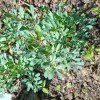
Ruta graveolens (L.)
-
Ruta lamarmorae (Bacch., Brullo & Giusso)
-
Ruta lindsayi (Turrill)
-
Ruta microcarpa (Svent.apud Agullo et al.)
-
Ruta montana (Mill.)
-
Ruta museocanariensis (Marrero Rodr., Vidal-Matutano, Delg.-Darias & Jaén-Molina)
-
Ruta oreojasme (Webb)
-
Ruta pinnata (L.f.)