
Genus Adonis in Family Ranunculaceae
In botanical taxonomy, a genus (plural genera) is a rank used to group closely related species within a family. In the hierarchy, genus sits below family and above species.
Genera are defined by shared morphological, anatomical, and genetic characteristics (for example, features of flowers, fruits, seeds, or leaves) that indicate a close evolutionary relationship among the species they contain.
Each genus can include one or more species. Examples include Rosa (roses) and Solanum (nightshades, including tomato and eggplant).
Do you wish to read more about plant taxonomy? Click here!
Genus Description
Suggest a correction!Adonis (L.) in Ranunculaceae comprises annual and herbaceous perennial taxa totaling about 20–25 species (POWO, 2024; WFO, 2024). It spans temperate Eurasia into North Africa, occurring from sea level to high elevations in steppe, grassland, open woodland, and rocky habitats (Meusel et al., 1976; Pignatti, 2017). The type species is Adonis annua L., the familiar annual Adonis often called pheasant’s-eye (Clapham et al., 1987).
Plants form taprooted clumps or are short-lived; stems are erect, with finely divided, often silky leaves. Flowers are solitary and terminal, with five to many conspicuous yellow to scarlet petals, numerous stamens, and free carpels that develop into an aggregate of beaked achenes. The erect habit, dissected leaves, and large solitary blooms distinguish Adonis within Ranunculaceae, which otherwise encompass genera like Ranunculus and Anemone.
Species richness concentrates in East Asia and the Mediterranean–Irano‑Turanian region, with numerous narrow endemics in mountains of Turkey, the Caucasus, and Iran (Meusel et al., 1976; POWO, 2024). The annuals (e.g., A. aestivalis L., A. annua L., A. flammea Jacq.) occupy dry open ground and cultivated fields, whereas perennials (e.g., A. vernalis L., A. villosa Ledeb.) favor steppe, meadow, and scrub on calcareous or sandy soils at mid to high latitudes (Pignatti, 2017). Fossil evidence shows a pre‑Miocene presence in Europe, indicating persistence through Pleistocene cycles with subsequent eastward expansion (Mai, 1995).
Pollination is by generalist insects attracted to the showy perianth; achenes disperse locally by gravity and, in some cases, by ants (Franz‑Skarabis, 1967). Life history is predominantly hermaphroditic and herbaceous; chromosome numbers for diploid taxa are commonly 2n=16, indicative of base number x=8 (Křiž, 1960). No firmly established alkaloids have been documented for the genus.
Taxonomically, Adonis has long been placed in Ranunculaceae and is widely accepted in that position (APG IV, 2016). Adonis is treated as monophyletic in recent molecular analyses of the family and forms part of a core ranunculoid clade; it is not closely related to Corydalis or Papaver, despite historical suggestions of similarity (Hansen et al., 2006; Wang et al., 2009). Within Adonis, subgeneric or sectional treatments (e.g., Adonis sect. Adoniastrum) have been applied to separate annuals and perennials, but comprehensive phylogenies supporting formal sectional revisions remain pending (POWO, 2024; WFO, 2024; POWO, 2024; GBIF, 2024).
Humans value several perennials (A. vernalis, A. pyrenaica DC.) as ornamentals for early spring flowers, while annuals occasionally appear as weedy volunteers in arable land without widespread negative impact (Pignatti, 2017; GBIF, 2024). No major timber or crop significance is documented.
Conservation priorities center on protecting endemic perennials in Mediterranean and Irano‑Turanian mountain systems, where habitat loss and over‑collection threaten localized populations; standardized IUCN assessments for many taxa remain a gap (POWO, 2024). Continued field surveys and integrative taxonomy will clarify species limits and guide future conservation strategies.
-
Adonis × hybrida (G.Wolff ex Simonk.)
-
Adonis aestivalis (L.)
2 -
Adonis aleppica (Boiss.)
-
Adonis amurensis (Regel & Radde)
-
Adonis annua (L.)
1 -
Adonis apennina (L.)
-
Adonis bobroviana (Simonovich)
-
Adonis chrysocyathus (Hook.f. & Thomson ex Hook.f.)
-
Adonis coerulea (Maxim.)
-
Adonis creticus ((Huth) M.Imam, Chrtek & Slavíková)
-
Adonis cyllenea (Boiss., Heldr. & Orph.)
-
Adonis davidii (Franch.)
-
Adonis dentata (Delile)
-
Adonis distorta (Ten.)
-
Adonis eriocalycina (Boiss.)
-
Adonis flammea (Jacq.)
1 -
Adonis globosa (C.H.Steinb. ex Rech.f.)
-
Adonis hybrida (G.Wolff ex Nyman)
-
Adonis leiosepala (Butkov)
-
Adonis microcarpa (DC.)
1 -
Adonis mongolica (Simonovich)
-
Adonis multiflora (Nishikawa & Koji Ito)
-
Adonis nepalensis (Simonovich)
-
Adonis palaestina (Boiss.)
-
Adonis pseudoamurensis (W.T.Wang)
-
Adonis pyrenaica (DC.)
-
Adonis ramosa (Franch.)
1 -
Adonis shikokuensis (Nishikawa & Koji Ito)
-
Adonis sutchuenensis (Franch.)
-
Adonis tianschanicus ((Adolf) Lipsch.)
-
Adonis turkestanica (Adolf)
-
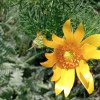
Adonis vernalis (L.)
-
Adonis villosa (Ledeb.)
-
Adonis volgensis (DC.)
-
Adonis wolgensis (Steven ex DC.)