
Adonis vernalis
Table of Contents
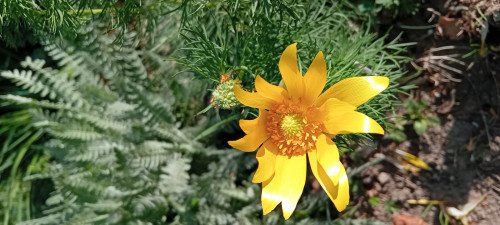
Details Top
| Internal ID | UUID64400787cfb10056194667 |
| Scientific name | Adonis vernalis |
| Authority | L. |
| First published in | Sp. Pl. : 547 (1753) |
Ethnobotanical Use Top
Suggest a correction!
Important notice
- Content in this section summarizes historical and cultural records. It is not medical advice.
- Do not use plants for self-treatment. Safety, efficacy, and appropriate use are not established here.
- Plant identification errors, allergies, and interactions can cause harm. Consult qualified professionals for health questions.
- Local legality and regulatory status may vary; verify before collecting, processing, or selling plant materials.
In the mountainous villages of the Carpathians, herbalists in Romania have long prepared a mild tea from the dried aerial parts of Adonis vernalis, using the leaves, stems and young flower buds to treat mild cardiac insufficiency (Krzysztof & Ziółkowski, 2018). Ukrainian Hutsul healers in the western Carpathians traditionally boiled the whole herb in water for fifteen minutes, drinking the decoction as a diuretic and to support a weak heart (EMA, 2020). In Russian folk medicine, the same dried herb is macerated in 70 % ethanol at a ratio of 1 g to 5 ml, producing a tincture that is taken in small drops for arrhythmia and palpitations (Grieve, 1931). Across the border in Hungary, a poultice of freshly crushed leaves applied to bruises or sprains has been recorded in regional ethnobotanical surveys (Kohler, 1995). These preparations consistently involve the aerial parts of the plant, which contain the well‑documented cardioactive glycosides.
Preparation of a mild infusion (tea) of Adonis vernalis: Place 2 g of dried aerial parts (leaves, stems and buds) in a small pot, pour 250 ml of freshly boiled water over the herb, cover and let steep for 5–10 minutes, then strain. The resulting tea should be consumed warm, not more than one cup per day. Because the plant contains potent cardiac glycosides, it should be avoided by pregnant or nursing women, children under twelve, and patients already taking digitalis‑type drugs; if taken, the dose should be kept low and a practitioner consulted.
The cardioactivity of Adonis vernalis is attributed to a suite of cardiac glycosides known collectively as adonidin, which includes adonitoxin and related cardenolides. Phytochemical analyses of the herb also reveal flavonoid glycosides such as quercetin‑3‑O‑glucoside and luteolin‑7‑O‑glucoside, as well as phenolic acids like caffeic acid and chlorogenic acid (Shikov et al., 2015). These compounds have been repeatedly isolated from the aerial parts and are considered the main contributors to its traditional tonic and diuretic effects.
Today, small‑scale production of the 1 : 5 ethanol tincture continues in Eastern Europe and extracts are sold in herbal shops as “Adonis tincture” under strict labeling because of its toxicity. Recent pharmacological studies in Russia and the Czech Republic have confirmed the inotropic and anti‑arrhythmic activity of adonidin in isolated heart preparations, prompting interest in developing standardized, low‑dose formulations for adjunct therapy in mild heart failure. Nevertheless, because of its narrow therapeutic window, the plant remains largely a traditional remedy and is not a mainstream phytopharmaceutical.
General Uses Top
Suggest a correction!Common products:
- Cultivated ornamental perennials sold by commercial horticultural nurseries for garden and landscape use. The species is valued for its early‑spring, bright yellow to orange, cup‑shaped flowers and its low‑maintenance, clump‑forming habit, making it suitable for rock gardens, alpine beds, scree plantings, and naturalistic plantings in temperate regions.
- Propagation is achieved primarily by seed sowing in autumn or early spring; division of mature clumps is occasionally used for vegetative increase.
- A limited number of ornamental selections, chosen for traits such as flower colour, size, or compact habit, are offered by growers in Europe and North America (e.g., RHS Plant Finder, specialty nursery catalogues).
Properties relevant to use:
- Morphology and cultivation: herbaceous rosette 20–30 cm tall; flowering from March to May depending on climate; tolerates full sun to partial shade and well‑drained, calcareous soils; cold‑hardy in temperate climates.
- Phytochemistry: aerial parts contain cardenolide glycosides such as adonitoxin and convallatoxin. These compounds have been isolated and structurally characterised and serve as model molecules for biochemical studies of plant defence chemistry, cardenolide biosynthesis pathways, and comparative phytochemistry (Hegnauer, Chemotaxonomie der Pflanzen, 1992; Tschudi, Phytochemistry, 1995).
Standards and regulation:
- The species is listed in Annex IV of the European Union Habitats Directive (Directive 92/43/EEC), which protects it from wild collection for commercial purposes and requires that any horticultural trade be sourced from cultivated material.
- EU Member States implement complementary national legislation (e.g., Germany’s Federal Nature Conservation Act, Czech Republic’s Nature Protection Act) that restricts harvesting of wild plants and mandates plant‑passport documentation for traded horticultural material.
- Adonis vernalis is not listed in the CITES Appendices, but national authorities monitor trade to ensure compliance with the EU Directive.
Sustainability and sourcing:
- Commercial supply is largely met by controlled propagation in commercial nurseries, reducing pressure on natural populations.
- Regional Red‑List assessments (e.g., national Red Lists of Germany, the Czech Republic) classify the species as threatened, reinforcing the importance of cultivated sourcing.
- Botanical gardens and conservation organisations maintain ex‑situ collections, seed banks, and cultivation trials to support sustainable horticultural use and habitat protection.
Synonyms Top
| Scientific name | Authority | First published in |
|---|---|---|
| Adonanthe vernalis | Spach | Hist. Nat. Vég. 7: 228 (1838) |
| Adoniastrum vernale | Schur | Verh. Naturf. Vereins Brünn 15(2): 27 (1877) |
| Adonis davurica | Ledeb. | Iconogr. Bot. Pl. Crit. 4: 21, t. 321. 1826 |
| Adonis helleborus | Crantz | Stirp. Austr. Fasc. 2: 82 (1763) |
| Adonis parviflora | Janka ex Nyman | Consp. Fl. Eur. 1: 4. 1878 [Sep 1878] |
| Adonis pratensis | Ledeb. | Fl. Ross. 1: 24 (1841) |
| Anemone consiligo | Baill. | Icon. Fl. Fr. : t. 327 (1890) |
| Chrysocyathus vernalis | (L.) Holub | Preslia 70: 103 (1998) |
Common names Top
Add a new one! Suggest a correction!| Language | Common/alternative name |
|---|---|
| English | false hellebore |
| English | spring pheasant's eye |
| English | yellow pheasant's eye |
| English | pheasant's eye |
| English | yellow pheasants-eye |
| Spanish | flor de adonis |
| Spanish | ojo de perdiz |
| Spanish | eléboro falso con flor de buftalmo |
| Spanish | eleboro falso con flor de buftalmo |
| Arabic | أدونيس ربيعي |
| Azerbaijani | bahar xoruzgülü |
| ba | Һары умырзая |
| Belarusian | чараквет |
| Belarusian | жаўтацвет вясенні |
| Bulgarian | пролетен гороцвет |
| Bulgarian | пролетен горицвет |
| ce | БӀаьстенан маьлхабӀаьрг |
| Czech | hlaváček jarní |
| cv | Ăншăрт курăкĕ |
| Danish | vår-adonis |
| German | teufelsauge |
| German | frühlingsteufelsauge |
| German | frühlingsadonisröschen |
| German | frühlingsadonis |
| German | frühlings-adonis |
| German | frühlings-adonisröschen |
| Estonian | kevadadoonis |
| Basque | udaberriko adonis |
| Persian | چشم قرقاول |
| Finnish | kevätruusuleinikki |
| Upper Sorbian | nalětnja horiwka |
| Hungarian | tavaszi hérics |
| Italian | adonide primaverile |
| Kazakh | Көктем жанаргүлі |
| lb | däiwelsa |
| li | veurjaorsadonisruueske |
| Lithuanian | pavasarinis adonis |
| Macedonian | Пролетен гороцвет |
| Norwegian Bokmål | våradonis |
| Dutch | voorjaarsadonis |
| os | Æндæдзаг кæрдæг |
| Polish | miłek wiosenny |
| Romanian | rușcuță de primăvară |
| Russian | горицвет весенний |
| Russian | стародубка |
| Russian | черная трава |
| Russian | черногорка |
| Russian | адонис весенний |
| Serbo-Croatian | zečji mak |
| Serbo-Croatian | gospina vlas |
| Serbo-Croatian | gorocvet |
| Serbo-Croatian | gorocvat |
| Slovak | hlaváčik jarný |
| Albanian | adonida |
| Serbian | Гороцвет |
| Serbian | adonidis vernalis herba |
| Swedish | våradonis |
| Swedish | arontorpsros |
| Turkish | keklikgözü çiçeği |
| tt | сары умырзая |
| tt | Язгы утчәчәк |
| tt | язгы аучы үләне |
| Ukrainian | горицвіт весняний |
| Chinese | 雉眼草 |
| Chinese | 春侧金盏花 |
| Chinese | 春福寿草 |
| Chinese | 春福壽草 |
| Chinese | 春側金盞花 |
Germination/Propagation Top
Suggest a correction or add new data!| Expose seeds to natural outdoor winter conditions for 3 months, then gradually increase light and temperature in the spring. |
| Sow seeds immediately as their viability decreases rapidly, or they best germinate when fresh. If stored, seeds might need temperature cycling and patience to germinate. |
| hydrophilic, much chaff and nonviable seed is typical |
Distribution (via POWO/KEW) Top
Legend for the distribution data:
- Doubtful data
- Extinct
- Introduced
- Native
-
Asia-temperate click to expand
-
Caucasus
- North Caucasus
- Transcaucasus
-
Middle Asia
- Kazakhstan
-
Siberia
- Altay
- Chita
- Krasnoyarsk
- West Siberia
- Yakutskiya
-
Caucasus
-
Europe click to expand
-
Eastern Europe
- Belarus
- Central European Russia
- East European Russia
- Krym
- South European Russia
- Ukraine
-
Middle Europe
- Austria
- Czechoslovakia
- Germany
- Hungary
- Poland
- Switzerland
-
Northern Europe
- Sweden
-
Southeastern Europe
- Bulgaria
- Italy
- Romania
- Yugoslavia
-
Southwestern Europe
- France
- Spain
-
Eastern Europe
-
Northern America click to expand
-
Northeastern U.S.A.
- New York
-
Northeastern U.S.A.
Links to other databases Top
Suggest others/fix!| Database | ID/link to page |
|---|---|
| World Flora Online | wfo-0000521287 |
| UNII | DX3ZNI25WK |
| USDA Plants | ADVE |
| Tropicos | 27100867 |
| INPN | 80240 |
| Flora of Italy | 1074 |
| KEW | urn:lsid:ipni.org:names:305359-2 |
| The Plant List | kew-2623208 |
| Plantarium | 773 |
| Open Tree Of Life | 693556 |
| NCBI Taxonomy | 46985 |
| Nature Serve | 2.131799 |
| IPNI | 305359-2 |
| iNaturalist | 158030 |
| GBIF | 5371711 |
| Freebase | /m/08g6t4 |
| EPPO | ADOVE |
| EOL | 595629 |
| Elurikkus | 2558 |
| USDA GRIN | 1505 |
| Wikipedia | Adonis_vernalis |
| PFAF | Adonis vernalis |
Genomes (via NCBI) Top
No reference genome is available on NCBI yet. We are constantly monitoring for new data.
Scientific Literature Top
Below are displayed the latest 15 articles published in PMC (PubMed Central®) and other sources (DOI number only)!
If you wish to see all the related articles click here.
If you wish to see all the related articles click here.
| Title | Authors | Publication | Released | IDs | ||||||
|---|---|---|---|---|---|---|---|---|---|---|
| Karyotypes and Physical Mapping of Ribosomal DNA with Oligo-Probes in Eranthis sect. Eranthis (Ranunculaceae) | Mitrenina EY, Alekseeva SS, Badaeva ED, Peruzzi L, Artemov GN, Krivenko DA, Pinzani L, Aytaç Z, Çeçen Ö, Baasanmunkh S, Choi HJ, Mesterházy A, Tashev AN, Bancheva S, Lian L, Xiang K, Wang W, Erst AS | Plants (Basel) | 22-Dec-2023 |
|
||||||
| Yellow oleander (Thevetia peruviana) toxicosis in 4 goats | Sykes CA, Filigenzi M, Uzal FA, Poppenga RH | J Vet Diagn Invest | 26-Jul-2023 |
|
||||||
| Intermediate complex morphophysiological dormancy in seeds of Aconitum barbatum (Ranunculaceae) | Zhang L, Xu C, Liu H, Wu Q, Tao J, Zhang K | BMC Plant Biol | 05-Jul-2023 |
|
||||||
| New and Interesting Fungi. 6 | Crous PW, Akulov A, Balashov S, Boers J, Braun U, Castillo J, Delgado MA, Denman S, Erhard A, Gusella G, Jurjević Ž, Kruse J, Malloch DW, Osieck ER, Polizzi G, Schumacher RK, Slootweg E, Starink-Willemse M, van Iperen AL, Verkley GJ, Groenewald JZ | Fungal Syst Evol | 16-Jun-2023 |
|
||||||
| Identification and pathogenicity analysis of leaf brown spot of Juglans regia in China | Wang F, Liu C, Zeng Q, Zhou Y, Liu F, Xu X, Yang H, Liu Y, Yang C | Sci Rep | 22-Apr-2023 |
|
||||||
| Homeopathy—A lively relic of the prescientific era | Borkens Y, Endruscheit U, Lübbers CW | Wien Klin Wochenschr | 24-Mar-2023 |
|
||||||
| Living on the edge: morphological, karyological and genetic diversity studies of the Hungarian Plantago maxima populations and established ex situ collection | Kovács Z, Mlinarec J, Höhn M | Bot Stud | 24-Jan-2023 |
|
||||||
| Taxonomy and Distribution of Spiraea hypericifolia in Italy and Typification of the Name S. flabellata (Rosaceae) | Conti F, Bartolucci F | Plants (Basel) | 24-Jan-2023 |
|
||||||
| Natural Compounds in Liposomal Nanoformulations of Potential Clinical Application in Glioblastoma | Piwowarczyk L, Mlynarczyk DT, Krajka-Kuźniak V, Majchrzak-Celińska A, Budzianowska A, Tomczak S, Budzianowski J, Woźniak-Braszak A, Pietrzyk R, Baranowski M, Goslinski T, Jelinska A | Cancers (Basel) | 16-Dec-2022 |
|
||||||
| Genotyping-by-sequencing reveals range expansion of Adonis vernalis (Ranunculaceae) from Southeastern Europe into the zonal Euro-Siberian steppe | Seidl A, Tremetsberger K, Pfanzelt S, Lindhuber L, Kropf M, Neuffer B, Blattner FR, Király G, Smirnov SV, Friesen N, Shmakov AI, Plenk K, Batlai O, Hurka H, Bernhardt KG | Sci Rep | 09-Nov-2022 |
|
||||||
| The potential of Valeriana as a traditional Chinese medicine: traditional clinical applications, bioactivities, and phytochemistry | Li J, Li X, Wang C, Zhang M, Ye M, Wang Q | Front Pharmacol | 21-Sep-2022 |
|
||||||
| Fungal Planet description sheets: 1383–1435 | Crous PW, Boers J, Holdom D, Osieck ER, Steinrucken TV, Tan YP, Vitelli JS, Shivas RG, Barrett M, Boxshall AG, Broadbridge J, Larsson E, Lebel T, Pinruan U, Sommai S, Alvarado P, Bonito G, Decock CA, De la Peña-Lastra S, Delgado G, Houbraken J, Maciá-Vicente JG, Raja HA, Rigueiro-Rodríguez A, Rodríguez A, Wingfield MJ, Adams SJ, Akulov A, AL-Hidmi T, Antonín V, Arauzo S, Arenas F, Armada F, Aylward J, Bellanger JM, Berraf-Tebbal A, Bidaud A, Boccardo F, Cabero J, Calledda F, Corriol G, Crane JL, Dearnaley JD, Dima B, Dovana F, Eichmeier A, Esteve-Raventós F, Fine M, Ganzert L, García D, Torres-Garcia D, Gené J, Gutiérrez A, Iglesias P, Istel Ł, Jangsantear P, Jansen GM, Jeppson M, Karun NC, Karich A, Khamsuntorn P, Kokkonen K, Kolařík M, Kubátová A, Labuda R, Lagashetti AC, Lifshitz N, Linde C, Loizides M, Luangsa-ard JJ, Lueangjaroenkit P, Mahadevakumar S, Mahamedi AE, Malloch DW, Marincowitz S, Mateos A, Moreau PA, Miller AN, Molia A, Morte A, Navarro-Ródenas A, Nebesářová J, Nigrone E, Nuthan BR, Oberlies NH, Pepori AL, Rämä T, Rapley D, Reschke K, Robicheau BM, Roets F, Roux J, Saavedra M, Sakolrak B, Santini A, Ševčíková H, Singh PN, Singh SK, Somrithipol S, Spetik M, Sridhar KR, Starink-Willemse M, Taylor VA, van Iperen AL, Vauras J, Walker AK, Wingfield BD, Yarden O, Cooke AW, Manners AG, Pegg KG, Groenewald JZ | Persoonia | 12-Jul-2022 |
|
||||||
| Structural and Functional Properties of Activator Protein-1 in Cancer and Inflammation | Bhosale PB, Kim HH, Abusaliya A, Vetrivel P, Ha SE, Park MY, Lee HJ, Kim GS | Evid Based Complement Alternat Med | 26-May-2022 |
|
||||||
| Vegetation Dynamics in a Loess Grassland: Plant Traits Indicate Stability Based on Species Presence, but Directional Change When Cover Is Considered | Csontos P, Tamás J, Kovács Z, Schellenberger J, Penksza K, Szili-Kovács T, Kalapos T | Plants (Basel) | 13-Mar-2022 |
|
||||||
| FTIR Photoacoustic and ATR Spectroscopies of Soils with Aggregate Size Fractionation by Dry Sieving | Krivoshein PK, Volkov DS, Rogova OB, Proskurnin MA | ACS Omega | 04-Jan-2022 |
|
Phytochemical Profile Top
Add a new one!
Below are displayed the proven (via scientific papers) natural compounds!
You can also contribute to this by clicking here.
You can also contribute to this by clicking here.

Collections Top
| In private collections | 0 |
| In public collections | 0 |