
Genus Agave in Family Asparagaceae
In botanical taxonomy, a genus (plural genera) is a rank used to group closely related species within a family. In the hierarchy, genus sits below family and above species.
Genera are defined by shared morphological, anatomical, and genetic characteristics (for example, features of flowers, fruits, seeds, or leaves) that indicate a close evolutionary relationship among the species they contain.
Each genus can include one or more species. Examples include Rosa (roses) and Solanum (nightshades, including tomato and eggplant).
Do you wish to read more about plant taxonomy? Click here!
Genus Description
Suggest a correction!Agave L., a large and iconic genus in Asparagaceae, comprises approximately 200–240 species distributed from the southwestern United States through Mexico and Central America to northern South America and the Caribbean, occupying arid deserts, rocky slopes, and semiarid woodlands up to alpine elevations. Agave americana L. is commonly cited as the type, providing the nomenclatural anchor for the genus (APG IV, 2016; POWO, 2024; WFO, 2024).
Agave typically forms rosettes of thick, succulent leaves, which bear marginal teeth and a stout apical spine. Leaves may be glaucous, smooth, or covered with wax; indumentum is usually sparse, and stipules are absent. Plants are monocarpic: rosettes flower once after years to decades, then die, producing a tall, often branched inflorescence. Flowers are tubular to narrow-campanulate, with tepals fused for part of their length; the inferior ovary is 3-locular with axile placentation. Fruit is a loculicidal capsule with flattened, black seeds that possess a marginal wing (Rentería et al., 2005).
Diversity peaks in the Mexican Highlands, with numerous narrowly endemic species in volcanic highlands, canyonlands, and limestone outcrops; secondary centers occur in the southwestern US and the Caribbean. Habitats range from desert scrub to pine–oak woodlands and cloud forest margins; many species occur at elevations of 500–3000 m. The group shows classic desert adaptations and disjunct patterns consistent with Pliocene–Pleistocene climatic oscillations (Olson et al., 2012).
pollination varies by lineage: panicle-bearing species (e.g., A. palmeri) are visited by bats, while spike-flowered taxa (e.g., A. victoriae-reginae) are frequented by birds and insects. In the broader clade including formerly segregate Manfreda and Polianthes, nocturnal hawkmoth pollination is also common (Rentería et al., 2005; Good-Avila et al., 2006). Seeds are wind-dispersed, and chromosome counts cluster around x = 30, with polyploidy frequent in some lineages (García-Mendoza, 2010).
Taxonomically, Agave is most stable when treated in the broad sense to include the former Manfreda and Polianthes; within this concept, subgenera Littaea (spicate inflorescences) and Agave (paniculate inflorescences) and sections such as Sapraefoliae are recognized. Recent phylogenetic analyses have resolved several major clades and supported the placement of previously separated taxa within Agave, although aspects of sectional delimitation and species limits remain unsettled (Good-Avila et al., 2002006; García-Mendoza, 2010; Thiede & Govaerts, 2020). Alternative treatments recognizing Manfreda persist in some databases and floras, reflecting ongoing taxonomic debate (POWO, 2024; WFO, 2024).
Culturally and economically, Agave is central to beverage production (e.g., A. tequilana), fiber (e.g., A. sisalana), ornamentals, and landscape horticulture. Some species are weedy in non-native contexts but are not broadly invasive in native regions. Conservation concerns arise from habitat loss, illegal collection, and climate stress, and many range-restricted taxa require status assessments. Robust phylogenetic frameworks, refined taxonomy, and targeted field surveys are improving management, but formal conservation and monitoring need further development (Olson et al., 2012; POWO, 2024; WFO, 2024).
-
Agave × ajoensis (W.C.Hodgs.)
-
Agave × arizonica (Gentry & J.H.Weber)
-
Agave × glomeruliflora ((Engelm.) A.Berger)
-
Agave × leopoldii (W.Watson)
-
Agave × pumila (De Smet ex Baker)
-
Agave abisaii (A.Vázquez & Nieves)
-
Agave acicularis (Trel.)
-
Agave acklinicola (Trel.)
-
Agave aktites (Gentry)
-
Agave albescens (Trel.)
-
Agave alboaustralis ((E.Solano & Ríos-Gómez) Thiede)
-
Agave albomarginata (Gentry)
-
Agave albopilosa (I.Cabral, Villarreal & A.E.Estrada)
-
Agave americana (L.)
6 -
Agave amica ((Medik.) Thiede & Govaerts)
-
Agave andreae (Sahagún & A.Vázquez)
-
Agave angustiarum (Trel.)
-
Agave angustifolia (Haw.)
5 -
Agave anomala (Trel.)
-
Agave antillarum (Descourt.)
2 -
Agave apedicellata (Thiede & Eggli)
-
Agave applanata (Lem. ex Jacobi)
-
Agave arcedianoensis (Cházaro, O.M.Valencia & A.Vázquez)
-
Agave arubensis (Hummelinck)
-
Agave asperrima (Jacobi)
4 -
Agave atrovirens (Karw. ex Salm-Dyck)
2 -
Agave attenuata (Salm-Dyck)
2 -
Agave aurea (Brandegee)
2 -
Agave avellanidens (Trel.)
-
Agave azurea (R.H.Webb & G.D.Starr)
-
Agave bahamana (Trel.)
-
Agave bicolor ((E.Solano & García-Mend.) Thiede & Eggli)
-
Agave boldinghiana (Trel.)
-
Agave bovicornuta (Gentry)
-
Agave braceana (Trel.)
-
Agave bracteosa (S.Watson ex Engelm.)
-
Agave brevipetala (Trel.)
-
Agave brevispina (Trel.)
-
Agave brittoniana (Trel.)
-
Agave brunnea (S.Watson)
-
Agave bulbulifera ((Castillejos & E.Solano) Thiede)
-
Agave bulliana ((Baker) Thiede & Eggli)
-
Agave cacozela (Trel.)
-
Agave cajalbanensis (A.Álvarez)
-
Agave calodonta (A.Berger)
-
Agave cantala ((Haw.) Roxb.)
2 -
Agave capensis (Gentry)
-
Agave caribaeicola (Trel.)
-
Agave caymanensis (Proctor)
-
Agave cerulata (Trel.)
4 -
Agave chamelensis ((E.J.Lott & Verh.-Will.) Thiede & Eggli)
-
Agave chazaroi (A.Vázquez & O.M.Valencia)
-
Agave chiapensis (Jacobi)
-
Agave chrysantha (Peebles)
-
Agave chrysoglossa (I.M.Johnst.)
-
Agave cocui (Trel.)
-
Agave coetocapnia ((M.Roem.) Govaerts & Thiede)
3 -
Agave collina (Greenm.)
-
Agave colorata (Gentry)
-
Agave confertiflora (Thiede & Eggli)
-
Agave congesta (Gentry)
-
Agave convallis (Trel.)
-
Agave cundinamarcensis (A.Berger)
-
Agave cupreata (Trel. & A.Berger)
-
Agave datylio (F.A.C.Weber)
2 -
Agave de-meesteriana (Jacobi)
-
Agave dealbata (É.Morren ex K.Koch)
-
Agave debilis (A.Berger)
-
Agave decipiens (Baker)
-
Agave delamateri (W.C.Hodgs. & Slauson)
-
Agave deserti (Engelm.)
3 -
Agave difformis (A.Berger)
-
Agave doctorensis (L.Hern. & Magallán)
-
Agave dolichantha (Thiede & Eggli)
-
Agave durangensis (Gentry)
-
Agave dussiana (Trel.)
-
Agave eggersiana (Trel.)
-
Agave ellemeetiana (Jacobi)
1 -
Agave ensifera (Jacobi)
-
Agave evadens (Trel.)
-
Agave felgeri (Gentry)
-
Agave filifera (Salm-Dyck)
-
Agave flexispina (Trel.)
-
Agave fortiflora (Gentry)
-
Agave fourcroydes (Lem.)
-
Agave funkiana (K.Koch & C.D.Bouché)
-
Agave fusca ((Ravenna) Thiede & Eggli)
-
Agave galvaniae ((A.Castañeda, S.Franco & García-Mend.) Etter & Kristen)
-
Agave garciae-mendozae (Galván & L.Hern.)
-
Agave geminiflora ((Tagl.) Ker Gawl.)
-
Agave gentryi (B.Ullrich)
-
Agave ghiesbreghtii (Verschaff.)
-
Agave gigantensis (Gentry)
-
Agave gilbertii (A.Berger)
-
Agave gomezpompae (Cházaro & Jimeno-Sevilla)
-
Agave gracilipes (Trel.)
-
Agave gracillima (A.Berger)
-
Agave graminifolia ((Rose) Govaerts & Thiede)
-
Agave grisea (Trel.)
-
Agave guadalajarana (Trel.)
-
Agave guerrerensis ((Matuda) G.D.Rowley)
-
Agave guiengola (Gentry)
-
Agave guttata (Jacobi & C.D.Bouché)
-
Agave gypsophila (Gentry)
-
Agave harrisii (Trel.)
-
Agave hauniensis (J.B.Petersen)
-
Agave havardiana (Trel.)
-
Agave hiemiflora (Gentry)
-
Agave hookeri (Jacobi)
-
Agave horrida (Lem. ex Jacobi)
2 -
Agave howardii ((Verh.-Will.) Thiede & Eggli)
-
Agave hurteri (Trel.)
-
Agave impressa (Gentry)
-
Agave inaequidens (K.Koch)
2 -
Agave inaguensis (Trel.)
-
Agave indagatorum (Trel.)
-
Agave intermixta (Trel.)
-
Agave involuta ((McVaugh) Thiede & Eggli)
-
Agave isthmensis (A.García-Mend. & F.Palma)
-
Agave jaiboli (Gentry)
-
Agave jaliscana ((Rose) A.Berger)
-
Agave jarucoensis (A.Álvarez)
-
Agave jimenoi (Cházaro & A.Vázquez)
-
Agave justosierrana ((García-Mend.) Thiede)
-
Agave karatto (Mill.)
-
Agave karwinskii (Zucc.)
-
Agave kavandivi (García-Mend. & C.Chávez)
-
Agave kerchovei (Lem.)
-
Agave kewensis (Jacobi)
-
Agave kristenii (A.Vázquez & Cházaro)
-
Agave lagunae (Trel.)
-
Agave lechuguilla (Torr.)
-
Agave littoralis ((García-Mend., A.Castañeda & S.Franco) Thiede & Eggli)
-
Agave longibracteata ((Verh.-Will.) Thiede & Eggli)
-
Agave longiflora ((Rose) G.D.Rowley)
-
Agave longipes (Trel.)
-
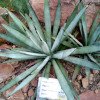
Agave macroacantha (Zucc.)
-
Agave maculata (Regel)
-
Agave madrensis (Villarreal, Ram.-Gam. & A.E.Estrada)
-
Agave manantlanicola (Cuevas & Santana-Michel)
-
Agave mapisaga (Trel.)
-
Agave margaritae (Brandegee)
-
Agave marmorata (Roezl)
-
Agave maximiliana (Baker)
2 -
Agave mckelveyana (Gentry)
-
Agave melanacantha (Lem. ex Jacobi)
-
Agave michoacana ((M.Cedano, Delgad. & Enciso) Thiede & Eggli)
-
Agave microceps ((Kimnach) A.Vázquez & Cházaro)
-
Agave millspaughii (Trel.)
-
Agave minor (Proctor)
-
Agave missionum (Trel.)
-
Agave mitis (Mart.)
1 -
Agave montana (Villarreal)
-
Agave montium-sancticaroli (García-Mend.)
-
Agave moranii (Gentry)
-
Agave multicolor ((E.Solano & Dávila) Thiede)
-
Agave multifilifera (Gentry)
-
Agave murpheyi (Gibson)
-
Agave nanchititlensis ((Matuda) ined.)
-
Agave nashii (Trel.)
-
Agave nayaritensis (Gentry)
-
Agave neocernua (Thiede)
-
Agave neonelsonii (Thiede & Eggli)
-
Agave neopringlei (Thiede & Eggli)
-
Agave nickelsii (Rol.-Goss.)
-
Agave nizandensis (Cutak)
-
Agave nuusaviorum (García-Mend.)
2 -
Agave oaxacana ((García-Mend. & E.Solano) Thiede)
-
Agave obscura (Schiede ex Schltdl.)
-
Agave ocahui (Gentry)
1 -
Agave offoyana (De Smet ex Jacobi)
-
Agave origiesiana ((Roezl) Trel.)
-
Agave ornithobroma (Gentry)
-
Agave oroensis (Gentry)
-
Agave ortgiesiana ((Baker) Trel.)
-
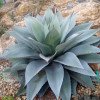
Agave ovatifolia (G.D.Starr & Villarreal)
-
Agave pablocarrilloi (A.Vázquez, Muñiz-Castro & Padilla-Lepe)
-
Agave pachycentra (Trel.)
-
Agave palmeri (Engelm.)
-
Agave palustris ((Rose) Thiede & Eggli)
-
Agave panamana (Trel.)
-
Agave paniculata ((L.Hern., R.A.Orellana & Carnevali) Thiede)
-
Agave papyrocarpa (Trel.)
1 -
Agave parrasana (A.Berger)
-
Agave parryi (Engelm.)
5 -
Agave parva ((Aarón Rodr.) Thiede)
-
Agave parvidentata (Trel.)
-
Agave parviflora (Torr.)
3 -
Agave peacockii (Croucher)
-
Agave pelona (Gentry)
-
Agave pendula (Schnittsp.)
-
Agave petiolata (Trel.)
-
Agave petrophila (A.García-Mend. & E.Martínez)
-
Agave petskinil ((R.A.Orellana, L.Hern. & Carnevali) Thiede)
-
Agave phillipsiana (W.C.Hodgs.)
-
Agave pintilla (S.González, M.González & L.Reséndiz)
-
Agave planifolia (S.Watson)
-
Agave platyphylla ((Rose) Thiede & Eggli)
-
Agave polianthiflora (Gentry)
-
Agave polyacantha (Haw.)
-
Agave potatorum (Zucc.)
-
Agave potreriana (Trel.)
-
Agave pratensis (A.Berger)
-
Agave pringlei (Engelm. ex Baker)
-
Agave producta (Thiede & Eggli)
-
Agave pubescens (Regel & Ortgies)
-
Agave quilae ((Art.Castro & Aarón Rodr.) Thiede & Govaerts)
-
Agave revoluta (Klotzsch)
-
Agave rhodacantha (Trel.)
-
Agave rosei (Thiede & Eggli)
-
Agave rovelliana (Tod.)
-
Agave rutteniae (Hummelinck)
-
Agave rzedowskiana (P.Carrillo, Vega & R.Delgad.)
-
Agave salmiana (Otto ex Salm-Dyck)
3 -
Agave scabra (Ortega)
-
Agave scaposa (Gentry)
-
Agave schidigera (Lem.)
-
Agave schneideriana (A.Berger)
-
Agave schottii (Engelm.)
2 -
Agave sebastiana (Greene)
-
Agave seemanniana (Jacobi)
-
Agave shaferi (Trel.)
-
Agave shawii (Engelm.)
2 -
Agave shrevei (Gentry)
3 -
Agave sileri ((Verh.-Will.) Thiede & Eggli)
-
Agave singuliflora ((S.Watson) A.Berger)
-
Agave sisalana (Perrine)
-
Agave sobolifera (Houtt.)
-
Agave sobria (Brandegee)
3 -
Agave spicata (Cav.)
-
Agave stictata (Thiede & Eggli)
-
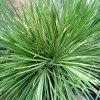
Agave striata (Zucc.)
2 -
Agave stricta (Salm-Dyck)
-
Agave stringens (Trel.)
-
Agave subsimplex (Trel.)
-
Agave tecta (Trel.)
-
Agave temacapulinensis (A.Vázquez & Cházaro)
-
Agave tenuifolia (Zamudio & E.Sánchez)
-
Agave tequilana (F.A.C.Weber)
-
Agave thomasiae (Trel.)
-
Agave titanota (Gentry)
-
Agave toumeyana (Trel.)
2 -
Agave triangularis (Jacobi)
-
Agave tubulata (Trel.)
-
Agave turneri (R.H.Webb & Salazar-Ceseña)
-
Agave umbrophila ((García-Mend.) Thiede)
-
Agave underwoodii (Trel.)
-
Agave undulata (Klotzsch)
-
Agave univittata (Haw.)
-
Agave utahensis (Engelm.)
4 -
Agave valenciana (Cházaro & A.Vázquez)
-
Agave variegata (Jacobi)
-
Agave vazquezgarciae (Cházaro & J.A.Lomelí)
-
Agave vera-cruz (Mill.)
-
Agave verdensis (W.C.Hodgs. & Salywon)
-
Agave verhoekiae ((García-Mend.) Thiede)
-
Agave vicina (Trel.)
-
Agave victoriae-reginae (T.Moore)
2 -
Agave vilmoriniana (A.Berger)
-
Agave virginica (L.)
-
Agave vivipara (L.)
-
Agave vizcainoensis (Gentry)
-
Agave wallisii (Jacobi)
-
Agave warelliana (De Smet ex T.Moore & Mast.)
-
Agave weberi (J.F.Cels ex J.Poiss.)
-
Agave wendtii (Cházaro)
-
Agave wercklei (F.A.C.Weber ex Wercklé)
-
Agave wildingii (Tod.)
-
Agave wocomahi (Gentry)
-
Agave xylonacantha (Salm-Dyck)
-
Agave yavapaiensis (W.C.Hodgs. & Salywon)
-
Agave zapopanensis ((E.Solano & Ríos-Gómez) Thiede)
-
Agave zebra (Gentry)