
Genus Coffea in Family Rubiaceae
In botanical taxonomy, a genus (plural genera) is a rank used to group closely related species within a family. In the hierarchy, genus sits below family and above species.
Genera are defined by shared morphological, anatomical, and genetic characteristics (for example, features of flowers, fruits, seeds, or leaves) that indicate a close evolutionary relationship among the species they contain.
Each genus can include one or more species. Examples include Rosa (roses) and Solanum (nightshades, including tomato and eggplant).
Do you wish to read more about plant taxonomy? Click here!
Genus Description
Suggest a correction!The genus Coffea L. (family Rubiaceae) comprises approximately 124 species of evergreen shrubs and small trees native to tropical Africa and Madagascar, with Coffea arabica L. designated as the type species. These plants typically inhabit understory forests and forest margins across diverse tropical biomes.
Diagnostic morphology distinguishes Coffea through opposite, elliptic to obovate leaves with entire margins and prominent stipules, often bearing a characteristic interpetiolar or intrapetiolar position. The inflorescences are typically axillary cymes bearing white, fragrant flowers with five-parted corollas. Crucially, the ovary is inferior and bilocular, with each locule containing a single ovule borne on an axile placenta—a key diagnostic feature within Rubiaceae. The fruits are drupes containing two seeds (coffee beans) surrounded by pulp and parchment layers.
Species diversity concentrates in Madagascar (approximately 60 species) and tropical East Africa, with notable centers in the Congo Basin and West Africa. Most species occur in lowland to montane tropical forests between sea level and 2000 meters elevation, though some occupy specialized microhabitats like riverine forests or forest margins.
Intrinsic biology reveals specialized pollination by bees and other insects attracted to the nocturnal fragrance bursts. Seed dispersal occurs primarily through gravity and vertebrate frugivory. Chromosome base number consistently appears as x=11 across well-studied species. The genus exhibits shade tolerance with specialized arbuscular mycorrhizal associations facilitating nutrient acquisition in nutrient-poor forest soils.
Recent molecular phylogenetics (Davis et al., 2006; Maurin et al., 2007) has clarified Coffea relationships, revealing two major clades corresponding to African mainland versus Madagascan species. Traditional sectional classifications have been largely abandoned in favor of monophyletic groups. Alternative taxonomic treatments recognizing Psilanthus as distinct from Coffea remain controversial, with molecular evidence supporting their merger (Anthony et al., 2010).
Human relevance centers entirely on coffee production, primarily through cultivated C. arabica and C. canephora (robusta). While economically vital, wild relatives remain largely underexploited for breeding programs. The genus contributes significantly to global horticulture through ornamental species and maintains cultural importance in producing regions.
Conservation concerns focus on habitat loss affecting wild populations, particularly in Madagascar and East Africa, where deforestation threatens numerous narrow endemics. Research gaps persist in understanding reproductive biology and population genetics of wild species to inform future conservation strategies.
-
Coffea × heterocalyx (Stoff.)
-
Coffea abbayesii (J.-F.Leroy)
-
Coffea affinis (De Wild.)
-
Coffea alleizettei (Dubard)
-
Coffea ambanjensis (J.-F.Leroy)
-
Coffea ambongensis (J.-F.Leroy ex A.P.Davis & Rakotonas.)
-
Coffea andrambovatensis (J.-F.Leroy)
-
Coffea ankaranensis (J.-F.Leroy ex A.P.Davis & Rakotonas.)
-
Coffea anthonyi (Stoff. & F.Anthony)
-
Coffea arabica (L.)
-
Coffea arenesiana (J.-F.Leroy)
-
Coffea augagneuri (Dubard)
-
Coffea bakossii (Cheek & Bridson)
-
Coffea benghalensis (B.Heyne ex Schult.)
2 -
Coffea bertrandi (A.Chev.)
-
Coffea betamponensis (Portères & J.-F.Leroy)
-
Coffea bissetiae (A.P.Davis & Rakotonas.)
-
Coffea boinensis (A.P.Davis & Rakotonas.)
-
Coffea boiviniana ((Baill.) A.Chev.)
2 -
Coffea bonnieri (Dubard)
-
Coffea brassii ((J.-F.Leroy) A.P.Davis)
-
Coffea brevipes (Hiern)
-
Coffea bridsoniae (A.P.Davis & Mvungi)
-
Coffea buxifolia (A.Chev.)
-
Coffea callmanderi (A.P.Davis & Rakotonas.)
-
Coffea canephora (Pierre ex A.Froehner)
-
Coffea carrissoi (A.Chev.)
-
Coffea charrieriana (Stoff. & F.Anthony)
-
Coffea cochinchinensis (Pierre ex Pit.)
-
Coffea commersoniana ((Baill.) A.Chev.)
-
Coffea congensis (A.Froehner)
-
Coffea costatifructa (Bridson)
-
Coffea coursiana (J.-F.Leroy)
2 -
Coffea dactylifera (Robbr. & Stoff.)
-
Coffea darainensis (A.P.Davis & Rakotonas.)
-
Coffea decaryana (J.-F.Leroy)
-
Coffea dubardi (Jum.)
-
Coffea ebracteolata ((Hiern) Brenan)
-
Coffea eugenioides (S.Moore)
-
Coffea fadenii (Bridson)
-
Coffea farafanganensis (J.-F.Leroy)
-
Coffea floresiana (Boerl.)
-
Coffea fotsoana (Stoff. & Sonké)
-
Coffea fragilis (J.-F.Leroy)
-
Coffea fragrans (Wall. ex Hook.f.)
-
Coffea gallienii (Dubard)
-
Coffea grevei (Drake ex A.Chev.)
2 -
Coffea heimii (J.-F.Leroy)
-
Coffea heterocalyx (Stoff.)
-
Coffea homollei (J.-F.Leroy)
-
Coffea horsfieldiana (Miq.)
-
Coffea humbertii (J.-F.Leroy)
-
Coffea humblotiana (Baill.)
-
Coffea humilis (A.Chev.)
-
Coffea jumellei (J.-F.Leroy)
-
Coffea kalobinonensis (A.P.Davis & Rakotonas.)
-
Coffea kapakata ((A.Chev.) Bridson)
-
Coffea kianjavatensis (J.-F.Leroy)
-
Coffea kihansiensis (A.P.Davis & Mvungi)
-
Coffea kimbozensis (Bridson)
-
Coffea kivuensis (Lebrun)
-
Coffea labatii (A.P.Davis & Rakotonas.)
-
Coffea lancifolia (A.Chev.)
2 -
Coffea lebruniana (R.Germ. & Kesler)
-
Coffea leonimontana (Stoff.)
-
Coffea leroyi (A.P.Davis)
-
Coffea liaudii (J.-F.Leroy ex A.P.Davis)
-
Coffea liberica (W.Bull ex Hiern)
3 -
Coffea ligustroides (S.Moore)
-
Coffea littoralis (A.P.Davis & F.Rakotonasolo)
-
Coffea lulandoensis (Bridson)
-
Coffea mabesae ((Elmer) J.-F.Leroy)
-
Coffea macrocarpa (A.Rich.)
-
Coffea madurensis (Teijsm. & Binn. ex Koord.)
-
Coffea magnistipula (Stoff. & Robbr.)
-
Coffea malabarica ((Sivar., Biju & P.Mathew) A.P.Davis)
-
Coffea mangoroensis (Portères)
-
Coffea mannii ((Hook.f.) A.P.Davis)
-
Coffea manombensis (A.P.Davis)
-
Coffea mapiana (Sonké, Nguembou & A.P.Davis)
-
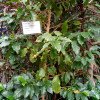
Coffea mauritiana (Lam.)
-
Coffea mayombensis (A.Chev.)
-
Coffea mcphersonii (A.P.Davis & F.Rakotonasolo)
-
Coffea melanocarpa (Welw. ex Hiern)
-
Coffea merguensis (Ridl.)
-
Coffea microdubardii (A.P.Davis & Rakotonas.)
-
Coffea millotii (J.-F.Leroy)
-
Coffea minutiflora (A.P.Davis & Rakotonas.)
-
Coffea mogeneti (Dubard)
-
Coffea mongensis (Bridson)
-
Coffea montekupensis (Stoff.)
-
Coffea montis-sacri (A.P.Davis)
-
Coffea moratii (J.-F.Leroy ex A.P.Davis & Rakotonas.)
-
Coffea mufindiensis (Hutch. ex Bridson)
4 -
Coffea myrtifolia ((A.Rich. ex DC.) J.-F.Leroy)
-
Coffea namorokensis (A.P.Davis & Rakotonas.)
-
Coffea neobridsoniae (A.P.Davis)
-
Coffea neoleroyi (A.P.Davis)
-
Coffea perrieri (Drake ex Jum. & H.Perrier)
-
Coffea pervilleana (Drake)
-
Coffea pocsii (Bridson)
-
Coffea pseudozanguebariae (Bridson)
-
Coffea pterocarpa (A.P.Davis & Rakotonas.)
-
Coffea pustulata (A.P.Davis & Rakotonas.)
-
Coffea racemosa (Lour.)
-
Coffea rakotonasoloi (A.P.Davis)
-
Coffea ratsimamangae (J.-F.Leroy ex A.P.Davis & F.Rakotonasolo)
-
Coffea resinosa ((Hook.f.) Radlk.)
-
Coffea rhamnifolia ((Chiov.) Bridson)
-
Coffea richardii (J.-F.Leroy)
-
Coffea rizetiana (Stoff. & Noirot)
-
Coffea rupicola (A.P.Davis & Rakotonas.)
-
Coffea sahafaryensis (J.-F.Leroy)
-
Coffea sakarahae (J.-F.Leroy)
-
Coffea salvatrix (Swynn. & Philipson)
-
Coffea sambavensis (J.-F.Leroy ex A.P.Davis & Rakotonas.)
-
Coffea sapinii ((De Wild.) A.P.Davis)
-
Coffea schliebenii (Bridson)
-
Coffea semsei ((Bridson) A.P.Davis)
-
Coffea sessiliflora (Bridson)
2 -
Coffea stenophylla (G.Don)
-
Coffea tetragona (Jum. & H.Perrier)
-
Coffea togoensis (A.Chev.)
-
Coffea toshii (A.P.Davis & Rakotonas.)
-
Coffea travancorensis (Wight & Arn.)
-
Coffea tricalysioides (J.-F.Leroy)
-
Coffea tsirananae (J.-F.Leroy)
-
Coffea vatovavyensis (J.-F.Leroy)
-
Coffea vavateninensis (J.-F.Leroy)
-
Coffea vianneyi (J.-F.Leroy)
-
Coffea vohemarensis (A.P.Davis & Rakotonas.)
-
Coffea wightiana (Wall.)
-
Coffea zanguebariae (Lour.)