
Genus Pulmonaria in Family Boraginaceae
In botanical taxonomy, a genus (plural genera) is a rank used to group closely related species within a family. In the hierarchy, genus sits below family and above species.
Genera are defined by shared morphological, anatomical, and genetic characteristics (for example, features of flowers, fruits, seeds, or leaves) that indicate a close evolutionary relationship among the species they contain.
Each genus can include one or more species. Examples include Rosa (roses) and Solanum (nightshades, including tomato and eggplant).
Do you wish to read more about plant taxonomy? Click here!
Genus Description
Suggest a correction!Pulmonaria (type species P. officinalis L.) is a herbaceous, spring-flowering genus in Boraginaceae comprising approximately 20 species native to Europe and western Asia, with a few extending into the Caucasus (POWO, 2024; WFO, 2024). Most taxa occupy damp, shaded woodlands and margins on base-rich soils at low to mid elevations, though a few occupy rocky or meadow edges.
Diagnostic features are clear at first encounter: long-lived perennials with a basal rosette of decumbent, bristly-hairy leaves that lack true prickles, and typically show conspicuous pale spots or mottling. Stems are unbranched or sparingly branched cymes with distinct, reduced bracts. Flowers are heterostylous, with tubular, funnel-shaped corollas opening to a five-lobed limb that ranges from pale pink at anthesis to violet-blue afterward; stamens are included and nectar is absent. The ovary is tetralocular with a single ovule per locule, leading to a four-parted schizocarp that matures into smooth or very finely hairy nutlets bearing a small basal aril that facilitates ant dispersal (Boros et al., 2021). These traits collectively distinguish Pulmonaria from most boraginaceous herbaceous genera (WFO, 2024).
Diversity is centered in temperate Europe; centers of endemism occur in the Alps, Carpathians, and other Euro-Mediterranean mountains, with limited westward representation (APG IV, 2016; POWO, 2024). Typical habitats are calcareous beech and oak woodlands, stream edges, and scrub margins. Biogeographically, the genus shows a Eurocentric pattern with eastern representatives extending into the Caucasus and Anatolia.
Intrinsic biology highlights classic heterostyly that promotes outcrossing and specialized long-tongued bees as principal pollinators; once set, nutlets are shed and attract ants by the aril (Boros et al., 2021). The base chromosome number is x = 7, with documented counts of 2n = 14, 16, 18, and occasional higher polyploids (Ferek & Kuta, 2009).
Taxonomy is relatively stable but historically variably treated at sectional level. Pulmonaria has been divided into three sections—P. sect. Pulmonaria, P. sect. Angustifoliae, and P. sect. Cylindricae—based on corolla shape, indumentum, and habit (Merxmüller et al., 1972), although a single broad treatment recognizing informal groups has also been widely adopted (WFO, 2024). Phylogenetic studies align Pulmonaria within the Boraginoideae, closely related to Brunnera and a “Mertensia” clade, without requiring genus-level recircumscription (Weigend et al., 2016). As delimited in standard floras and checklists, the genus is monophyletic with circumscription largely concordant across treatments (Weigend et al., 2016; WFO, 2024; POWO, 2024).
Humans value Pulmonaria as shade-tolerant ornamentals, especially P. officinalis and P. angustifolia, widely cultivated for early-season floral display; seedlings sometimes escape gardens and locally naturalize (POWO, 2024). In native ranges they can be locally abundant, but are not widely invasive outside cultivation.
Conservation outlook is generally favorable for widespread species, yet many narrow endemics are vulnerable to woodland degradation and climate-driven drying of habitats; targeted field surveys are still needed in some mountain systems (Ferek & Kuta, 2009).
-
Pulmonaria × digenea (A.Kern.)
-
Pulmonaria × heinrichii (Sabr.)
-
Pulmonaria × hybrida (A.Kern.)
-
Pulmonaria × intermedia (Palla)
-
Pulmonaria × notha (A.Kern.)
-
Pulmonaria × ovalis (Bastard)
-
Pulmonaria affinis (Jord.)
-
Pulmonaria angustifolia (L.)
-
Pulmonaria australis ((Murr) W.Sauer)
-
Pulmonaria carnica (W.Sauer)
-
Pulmonaria cesatiana ((Fenzl & Friedr.) Selvi, Bigazzi, Hilger & Papini)
-
Pulmonaria collina (W.Sauer)
-
Pulmonaria filarczkyana (Jáv.)
-
Pulmonaria heinrichii (Sabr.)
-
Pulmonaria helvetica (Bolliger)
-
Pulmonaria kerneri (Wettst.)
-
Pulmonaria landoziana (Péterfi)
-
Pulmonaria longifolia (Bast. ex Boreau)
-
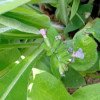
Pulmonaria mollis (Wolff ex F.Heller)
1 -
Pulmonaria montana (Lej.)
-
Pulmonaria norica (Teyber)
-
Pulmonaria obscura (Dumort.)
-
Pulmonaria officinalis (L.)
-
Pulmonaria rubra (Schott)
-
Pulmonaria saccharata (Mill.)
-
Pulmonaria stiriaca (A.Kern.)
-
Pulmonaria vallarsae (A.Kern.)
1 -
Pulmonaria visianii (Degen & Lengyel)