
Genus Anchusa in Family Boraginaceae
In botanical taxonomy, a genus (plural genera) is a rank used to group closely related species within a family. In the hierarchy, genus sits below family and above species.
Genera are defined by shared morphological, anatomical, and genetic characteristics (for example, features of flowers, fruits, seeds, or leaves) that indicate a close evolutionary relationship among the species they contain.
Each genus can include one or more species. Examples include Rosa (roses) and Solanum (nightshades, including tomato and eggplant).
Do you wish to read more about plant taxonomy? Click here!
Genus Description
Suggest a correction!Anchusa (Boraginaceae) is a temperate Eurasian genus of about 30 species that are most diverse in the Mediterranean Basin and the Near East and extend eastward to western Asia; it is absent from the Americas and Australasia (POWO, 2024; WFO, 2024). The type species is Anchusa officinalis L., and most species are annuals, biennials, or herbaceous perennials adapted to dry, open, often disturbed sites (Meikle, 1977). Diagnostic features include coarse, usually retrorse indumentum, undivided alternate leaves without stipules, and a compact, leafy-bracted inflorescence derived from a scorpioid cyme. The calyx is deeply divided and persists at fruiting; the corolla is typically blue with a truncate limb and a fornix of dense hairs guarding the throat; the ovary is tetralocular, with one basal ovule per locule, and the fruit is a schizocarp of four ovoid, laterally attached nutlets with a raised basal rim and a concave attachment scar (Chater, 1972). These characters distinguish Anchusa from common boreal congeners such as Myosotis (small, yellow-throated corollas) and Lithospermum (whitish to pale corollas, usually glabrous fornix and smooth nutlets).
Centers of diversity lie in the Eastern Mediterranean, the Aegean, Turkey, and the Levant, with notable regional endemics (Meikle, 1977; WCSP, 2017). Typical habitats are open grasslands, fields, roadsides, and rocky slopes, from sea level to moderate elevations; some species occur in drier steppe margins and temperate semi-deserts. Phylogenetic work places Anchusa within the Boragineae and consistently resolves it as monophyletic (Weigend et al., 2016; Luebert et al., 2016). Species boundaries remain unsettled in several complexes (e.g., A. officinalis sensu lato), and the status of A. capensis and A. azurea has sometimes shifted, with some authors treating the latter in Buglossoides; however, Anchusa azurea Mill. is widely accepted in the genus and has also been used horticulturally as a garden ornamental (WCSP, 2017). Regional treatments (Flora Europaea, Turkish Flora, and Palestinian Flora) treat Anchusa as a distinct unit, but differ in sectional delimitations, and molecular infrageneric resolution is incomplete (Chater, 1972; Davis, 1978; Feinbrun-Dothan, 1978). In cultivation, Anchusa is occasionally grown for its vivid blue flowers; the genus includes no major crops or timbers and is not regarded as invasive. Conservation assessments are sparse, but habitat loss from agriculture and urbanization is a concern; targeted surveys and stable taxonomic consensus would improve conservation planning and ecological understanding of the group.
-
Anchusa × digenea (Gusul.)
-
Anchusa × thirkeana (Gusul.)
-
Anchusa aegyptiaca (DC.)
-
Anchusa affinis (R.Br.)
-
Anchusa aggregata (Lehm.)
-
Anchusa arvensis ((L.) M.Bieb.)
1 -
Anchusa atlantica (Ball)
-
Anchusa aucheri (A.DC.)
-
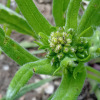
Anchusa azurea (Mill.)
2 -
Anchusa calcarea (Boiss.)
-
Anchusa capensis (Thunb.)
-
Anchusa cespitosa (Lam.)
-
Anchusa cretica (Mill.)
-
Anchusa crispa (Viv.)
1 -
Anchusa digenea (Gușul.)
-
Anchusa dinsmorei (Rech.f.)
-
Anchusa formosa (Selvi, Bigazzi & Bacch.)
-
Anchusa gmelinii (Ledeb. ex Spreng.)
-
Anchusa hybrida (Ten.)
-
Anchusa iranica (Rech.f. & Esfand.)
-
Anchusa konyaensis (Yıld.)
1 -
Anchusa leptophylla (Roem. & Schult.)
3 -
Anchusa leucantha (Selvi & Bigazzi)
-
Anchusa limbata (Boiss.)
-
Anchusa milleri (Lam. ex Spreng.)
-
Anchusa montelinasana (Angius, Pontec. & Selvi)
-
Anchusa negevensis (Danin)
-
Anchusa ochroleuca (M.Bieb.)
-
Anchusa officinalis (L.)
1 -
Anchusa procera (Besser ex Link)
-
Anchusa pseudoochroleuca (Des.-Shost.)
-
Anchusa puechi (Valdés)
-
Anchusa puechii (Valdés)
-
Anchusa pusilla (Gușul.)
-
Anchusa riparia (DC.)
-
Anchusa samothracica (Bigazzi & Selvi)
-
Anchusa strigosa ([Soland.])
2 -
Anchusa stylosa (M.Bieb.)
1 -
Anchusa thessala (Boiss. & Spruner)
-
Anchusa thirkeana (Gușul.)
-
Anchusa tiberiadis (Post)
-
Anchusa undulata (L.)
4 -
Anchusa variegata (Lehm.)