
Genus Sedum in Family Crassulaceae
In botanical taxonomy, a genus (plural genera) is a rank used to group closely related species within a family. In the hierarchy, genus sits below family and above species.
Genera are defined by shared morphological, anatomical, and genetic characteristics (for example, features of flowers, fruits, seeds, or leaves) that indicate a close evolutionary relationship among the species they contain.
Each genus can include one or more species. Examples include Rosa (roses) and Solanum (nightshades, including tomato and eggplant).
Do you wish to read more about plant taxonomy? Click here!
Genus Description
Suggest a correction!Sedum L. (type: S. acre L.) belongs to Crassulaceae, a cosmopolitan family. The genus comprises roughly 420–460 species in three major lineages informally recognized as “Aizoon,” “Sedum,” and “Telephium” (Thiede & Eggli, 2003; Gontcharova & Gontcharov, 2009). It is widely distributed across temperate to subtropical regions of the Northern Hemisphere, extending into Africa and the Americas, and occupies rocky, often nutrient‑poor habitats such as cliffs, outcrops, and scree slopes, with several high‑elevation endemics (Flora of North America, ongoing).
Morphologically, Sedum consists of annuals or perennials ranging from small mats to suffrutescent shrubs, with succulent, exstipulate leaves that are alternate, opposite, or whorled. Most species have 5‑parted flowers with spreading petals and twice as many stamens as petals, although flower number and merosity vary (Thiede & Eggli, 2003). Hypogynous to semi‑inferior ovaries have free carpels, and fruits are clusters of follicles; seed coats are often ridged or reticulate, aiding dispersal by gravity or water. Several taxa (e.g., S. alfredii) exhibit Kranz‑type anatomy indicative of C4 photosynthesis, a rare metabolic transition in the family (Sayed et al., 2018).
Diversity and range centers include the mountains of Mexico and the southwestern United States, the Himalayas and the Sino‑Japanese region, the Mediterranean basin, and parts of East Africa (Flora of China, 2001; POWO, 2024). Endemism is high in calcareous cliff systems (e.g., S. versadense in Mexico) and in alpine rocks of the Sino‑Himalaya. Sedum typically occurs from sea level to c. 4000 m, favoring thin soils, strong light, and drought.
Pollination is primarily entomophilous with nonspecific floral syndromes; seeds are dispersed by wind, water, and external transport on animals. Chromosome numbers vary widely (2n = 16, 34, 48, 50, 64, 68, 84), suggesting recurrent polyploidy, though x = 8–9 is commonly inferred for the Sedum lineage (Thiede & Eggli, 2003). Vegetative reproduction via leaf offsets and rooting of stems is frequent and contributes to persistence in harsh sites.
Taxonomically, Sedum s.l. has been re‑circumscribed: traditional genera such as Hylotelephium and Rhodiola are nested within it, and some authors maintain or resurrect them (Gontontcharova & Gontcharov, 2009; Takhtajan, 2009). Sect. Aizoon (now part of Sedum s.l.) has been synonymized with S. sect. Sedum by Thiede & Eggli (2003), whereas the International Plant Names Index (2024) continues to list Aizoon at sectional rank. Additional synonymization (e.g., Mucizonia) is recognized in standard treatments (Flora of the USSR, 1939; Kew checklists, 2003–2024). Broad consensus favors a monophyletic Sedum s.l. but many local floras retain narrower generic limits.
Human relevance is horticultural: Sedum species are widely cultivated as ornamentals and for green roofs (e.g., S. album, S. morganianum, S. acre). Several taxa naturalize and can be weedy (S. sarmentosum in parts of North America), yet most are locally benign.
Conservation status varies by region; many narrow endemics are threatened by habitat loss and climate change. Global trends in phylogenomics and speciation remain incompletely resolved, indicating substantial research gaps.
-
Sedum × battandieri (Maire)
-
Sedum × erraticum (Brügger)
-
Sedum × patrickii ('t Hart)
-
Sedum abchasicum (Kolak. ex V.V.Byalt)
-
Sedum acre (L.)
1 -
Sedum actinocarpum (Yamam.)
-
Sedum adolphii (Raym.-Hamet)
-
Sedum aetnense (Tineo)
-
Sedum alamosanum (S.Watson)
-
Sedum albomarginatum (R.T.Clausen)
-
Sedum album (L.)
2 -
Sedum alfredii (Hance)
-
Sedum allantoides (Rose)
-
Sedum alpestre (Vill.)
1 -
Sedum alsinifolium (All.)
-
Sedum amabile (H.Ohba)
-
Sedum amecamecanum (Praeger)
-
Sedum andegavense (DC.)
-
Sedum anglicum (Huds.)
1 -
Sedum annuum (L.)
1 -
Sedum apoleipon ('t Hart)
-
Sedum aquilanum (L.Gallo & F.Conti)
-
Sedum arenarium (Brot.)
-
Sedum argunense (Galushko)
-
Sedum assyriacum (Boiss.)
-
Sedum atratum (L.)
-
Sedum australe (Rose)
-
Sedum aytacianum (J.Metzg.)
-
Sedum backebergii (Poelln.)
-
Sedum baileyi (Praeger)
-
Sedum baleensis (M.G.Gilbert)
-
Sedum balfourii (Raym.-Hamet)
-
Sedum barbeyi (Raym.-Hamet)
-
Sedum barcense (Maire & Weiller)
-
Sedum batallae (Barocio)
-
Sedum batesii (Hemsl.)
-
Sedum beauverdii (Raym.-Hamet)
1 -
Sedum bellum (Praeger)
-
Sedum bergeri (Raym.-Hamet)
-
Sedum berillonanum (Raym.-Hamet)
-
Sedum berunii (Pratov)
-
Sedum bhattacharyyae (R.Manik., N.B.Singh & S.K.Srivast.)
-
Sedum blepharophyllum (Fröd.)
-
Sedum boninense (Yamam. ex Tuyama)
-
Sedum bonnieri (Raym.-Hamet)
-
Sedum booleanum (B.L.Turner)
-
Sedum borissovae (Balkovsky)
-
Sedum borschii ((R.T.Clausen) R.T.Clausen)
-
Sedum botterii (Hemsl.)
-
Sedum bourgaei (Hemsl.)
-
Sedum bouvieri (Raym.-Hamet)
-
Sedum brevifolium (DC.)
-
Sedum brissemoreti (Raym.-Hamet)
-
Sedum bulbiferum (Makino)
-
Sedum burrito (Moran)
-
Sedum caducum (R.T.Clausen)
-
Sedum caeruleum (L.)
-
Sedum calcaratum (Rose)
-
Sedum calcicola (B.L.Rob. & Greenm.)
-
Sedum callichroum (Boiss.)
-
Sedum candolleanum (G.López)
-
Sedum carinatifolium ((R.T.Clausen) Pérez-Calix)
-
Sedum carnegiei (Raym.-Hamet)
-
Sedum caroli-henrici (Kit Tan)
-
Sedum catorce (G.L.Nesom)
-
Sedum celatum (Fröd.)
1 -
Sedum celiae (Raym.-Hamet)
-
Sedum cepaea (L.)
-
Sedum cespitosum ((Cav.) DC.)
-
Sedum chauveaudi (Raym.-Hamet)
2 -
Sedum chazaroi (P.Carrillo & J.A.Lomelí)
-
Sedum chihuahuense (S.Watson)
-
Sedum chingtungense (K.T.Fu)
-
Sedum chloropetalum (R.T.Clausen)
-
Sedum chrysicaulum (J.A.McDonald)
-
Sedum chuhsingense (K.T.Fu)
-
Sedum churchillianum (Robyns & Boutique)
-
Sedum citrinum (Zika)
-
Sedum clausenii (Pérez-Calix)
-
Sedum clavatum (R.T.Clausen)
-
Sedum clavifolium (Rose)
-
Sedum cockerellii (Britton)
-
Sedum commixtum (Moran & Hutchison)
-
Sedum compactum (Rose)
-
Sedum concarpum (Fröd.)
-
Sedum confertiflorum (Boiss.)
-
Sedum confusum (Hemsl.)
-
Sedum conzattii (Rose)
-
Sedum copalense (Kimnach)
-
Sedum cormiferum (R.T.Clausen)
-
Sedum correptum (Fröd.)
-
Sedum corymbosum (Grossh.)
-
Sedum corynephyllum (Fröd.)
-
Sedum costantini (Raym.-Hamet)
-
Sedum craigii (R.T.Clausen)
-
Sedum crassularia (Raym.-Hamet)
-
Sedum creticum (C.Presl)
1 -
Sedum cupressoides (Hemsl.)
-
Sedum cuspidatum (Alexander)
-
Sedum cymatopetalum (Fröd.)
-
Sedum cyprium (A.K.Jacks. & Turrill)
-
Sedum daigremontianum (Raym.-Hamet)
-
Sedum dasyphyllum (L.)
1 -
Sedum debile (( ex King) S.Watson)
-
Sedum decipiens ((Baker) Thiede & 't Hart)
-
Sedum decumbens (R.T.Clausen)
-
Sedum dendroideum (Moc. & Sessé ex DC.)
1 -
Sedum derbezii (Petitm.)
-
Sedum didymocalyx (Fröd.)
-
Sedum dielsii (Raym.-Hamet)
-
Sedum diffusum (S.Watson)
-
Sedum diminutum ((R.T.Clausen) G.L.Nesom)
-
Sedum dimorphophyllum (K.T.Fu & G.Y.Rao)
-
Sedum dispermum (Fröd.)
-
Sedum divergens (S.Watson)
-
Sedum dongzhiense (D.Q.Wang & Y.L.Shi)
-
Sedum drymarioides (Hance)
-
Sedum dugueyi (Raym.-Hamet)
-
Sedum dulcinomen (G.L.Nesom)
-
Sedum duthiei (Fröd.)
-
Sedum eastwoodiae (A.Berger)
-
Sedum ebracteatum (ex DC.)
2 -
Sedum ecalcaratum (H.J.Wang & P.S.Hsu)
-
Sedum edwardsii ((R.T.Clausen) B.L.Turner)
-
Sedum elatinoides (Franch.)
-
Sedum elburzense (Akhani & Assadi)
-
Sedum emarginatum (Migo)
-
Sedum engadinense (Brügger)
-
Sedum engleri (Raym.-Hamet)
-
Sedum epidendrum (Hochst. ex A.Rich.)
-
Sedum erici-magnusii (Fröd.)
1 -
Sedum eriocarpum (Sm.)
8 -
Sedum erlangerianum (Engl.)
-
Sedum ermenekensis (Yıld. & Dinç)
-
Sedum erythrospermum (Hayata)
1 -
Sedum euxinum ('t Hart & Alpınar)
-
Sedum fanjingshanense (C.D.Yang & X.Yu Wang)
-
Sedum farinosum (Rose)
-
Sedum feddei (Raym.-Hamet)
-
Sedum fedtschenkoi (Raym.-Hamet)
-
Sedum filipes (Hemsl. ex F.B.Forbes & Hemsl.)
-
Sedum fischeri (Raym.-Hamet)
-
Sedum flaccidum (Rose)
-
Sedum flavidum ((Denton) B.L.Wilson & Zika)
-
Sedum formosanum (N.E.Br.)
-
Sedum forreri (Greene)
-
Sedum forrestii (Raym.-Hamet)
-
Sedum fragrans ('t Hart)
-
Sedum franchetii (Grande)
-
Sedum frutescens (Rose)
-
Sedum fuereri (Wein)
-
Sedum fui (G.D.Rowley)
1 -
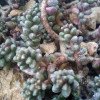
Sedum furfuraceum (Moran)
-
Sedum fuscum (Hemsl.)
-
Sedum fusiforme (Lowe)
-
Sedum gagei (Raym.-Hamet)
-
Sedum gattefossei (Batt. & Jahand.)
-
Sedum giajai (Raym.-Hamet)
-
Sedum glabrum (Praeger)
-
Sedum glaebosum (Fröd.)
-
Sedum glassii (Pérez-Calix)
-
Sedum glaucophyllum (R.T.Clausen)
-
Sedum globuliflorum (R.T.Clausen)
-
Sedum glomerifolium (M.G.Gilbert)
-
Sedum goldmanii ((Rose) Moran)
-
Sedum gracile (C.A.Mey.)
-
Sedum grammophyllum (Fröd.)
-
Sedum grandipetalum (Fröd.)
-
Sedum grandyi (Raym.-Hamet)
-
Sedum greggii (Hemsl.)
-
Sedum grisebachii (Boiss. & Heldr.)
-
Sedum griseum (Praeger)
-
Sedum guadalajaranum (S.Watson)
-
Sedum guatemalense (Hemsl.)
-
Sedum gypsicola (Boiss. & Reut.)
1 -
Sedum gypsophilum (B.L.Turner)
-
Sedum hakonense (Makino)
-
Sedum hangzhouense (K.T.Fu & G.Y.Rao)
-
Sedum havardii (Rose)
-
Sedum heckelii (Raym.-Hamet)
-
Sedum hemsleanum (Rose)
-
Sedum hemsleyanum (Rose)
-
Sedum hengduanense (K.T.Fu)
-
Sedum henrici-roberti (Raym.-Hamet)
-
Sedum hernandezii (J.Meyrán)
-
Sedum hierapetrae (Rech.f.)
-
Sedum hintonii (R.T.Clausen)
-
Sedum hintoniorum (B.L.Turner)
-
Sedum hirsutum (All.)
3 -
Sedum hispanicum (L.)
-
Sedum hoi (X.F.Jin & B.Y.Ding)
-
Sedum holei (Raym.-Hamet)
-
Sedum holopetalum (Fröd.)
-
Sedum hultenii (Fröd.)
-
Sedum humifusum (Rose)
-
Sedum hypogaeum (J.Reyes, Brachet & O.González)
-
Sedum incarum ((Ball) Pino)
-
Sedum ince ('t Hart & Alpınar)
-
Sedum inconspicum (Hand.-Mazz.)
-
Sedum integrifolium (A.Nelson in J.M.Coult. & A.Nelson)
-
Sedum ishidae (Miyabe & Kudô)
-
Sedum isidorum (Pino)
-
Sedum jaccardiana (Maire & Wilczek)
-
Sedum jaccardianum (Maire)
-
Sedum jahandiezii (Batt.)
-
Sedum jaliscanum (S.Watson)
-
Sedum japonicum (Siebold ex Miq.)
3 -
Sedum jarocho (P.Carrillo & Jimeno-Sevilla)
-
Sedum jerzedowskii (Pérez-Calix)
-
Sedum jiuhuashanense (P.S.Hsu & H.J.Wang)
-
Sedum jiulungshanense (Y.C.Ho)
-
Sedum jordanianum (Dobignard)
-
Sedum jujuyense (Zardini)
-
Sedum jurgensenii ((Hemsl.) Moran)
1 -
Sedum keniense (Y.D.Zhou, G.W.Hu & Q.F.Wang)
-
Sedum kiangnanense (D.Q.Wang & Z.F.Wu)
-
Sedum kiersteadiae (B.L.Wilson & R.E.Brainerd)
-
Sedum kimnachii (V.V.Byalt)
-
Sedum kingdonii (H.Ohba)
-
Sedum kotschyanum (Boiss.)
-
Sedum koyuncui (Yıld.)
-
Sedum kristenii (J.Reyes, O.González & Etter)
-
Sedum kuntsunianum (X.F.Jin, S.H.Jin & B.Y.Ding)
-
Sedum laconicum (Boiss. & Heldr.)
2 -
Sedum lagascae (Pau)
-
Sedum lahovarianum (Raym.-Hamet)
-
Sedum lampusae (Boiss.)
-
Sedum lanceolatum (Torr.)
2 -
Sedum lancerottense (R.P.Murray)
-
Sedum latentibulbosum (K.T.Fu & G.Y.Rao)
-
Sedum latifilamentum (R.T.Clausen)
-
Sedum laxum ((Britton) A.Berger)
1 -
Sedum leblancae (Raym.-Hamet)
-
Sedum leibergii (Britton)
-
Sedum lenkoranicum (Grossh.)
-
Sedum leptophyllum (Fröd.)
-
Sedum leucocarpum (Franch.)
-
Sedum liebmannianum (Hemsl.)
-
Sedum lineare (Thunb.)
-
Sedum litoreum (Guss.)
1 -
Sedum longifuniculatum (K.T.Fu)
-
Sedum longipes (Rose)
1 -
Sedum longuetae (Raym.-Hamet)
-
Sedum longyanense (K.T.Fu)
-
Sedum luchuanicum (K.T.Fu)
-
Sedum lucidum (R.T.Clausen)
-
Sedum ludlowii ((H.Ohba) Kozhevn.)
-
Sedum lumholtzii (B.L.Rob. & Fernald)
-
Sedum lungtsuanense (Fu)
-
Sedum luteoviride (R.T.Clausen)
-
Sedum lutzii (Raym.-Hamet)
1 -
Sedum lydium (Boiss.)
-
Sedum macdonaldii (G.L.Nesom)
-
Sedum macdougallii (Moran)
-
Sedum madrense (S.Watson)
-
Sedum magellense (Ten.)
-
Sedum magniflorum (K.T.Fu)
-
Sedum maireanum (Sennen)
-
Sedum majus ((Hemsl.) Migo)
-
Sedum makinoi (Maxim.)
-
Sedum melanantherum (DC.)
-
Sedum mellitulum (Rose)
-
Sedum mendozae ((Glass & Cházaro) V.V.Byalt)
-
Sedum mesoamericanum (P.Carrillo & Pérez-Farr.)
-
Sedum mexicanum (Britton)
-
Sedum meyeri-johannis (Engl.)
-
Sedum meyranianum (J.Metzg.)
-
Sedum microcarpum ((Sm.) Schönland)
-
Sedum microsepalum (Hayata)
-
Sedum microstachyum (Boiss.)
-
Sedum millspaughii (Raym.-Hamet)
-
Sedum minimum (Rose)
1 -
Sedum mocinianum (Pérez-Calix)
-
Sedum modestum (Ball)
-
Sedum moniliforme (I.García & Costea)
-
Sedum monregalense (Balb.)
-
Sedum mooneyi (M.G.Gilbert)
-
Sedum moranense (Kunth)
1 -
Sedum moranii (R.T.Clausen)
-
Sedum morganianum (E.Walther)
-
Sedum morrisonense (Hayata)
-
Sedum mucizonia ((Ortega) Raym.-Hamet)
1 -
Sedum multicaule (Wall. ex Lindl.)
1 -
Sedum multiceps (Coss. & Durieu)
-
Sedum multiflorum (R.T.Clausen)
-
Sedum muscoideum (Rose)
-
Sedum muyaicum (K.T.Fu)
-
Sedum nagasakianum ((Hara) H.Ohba)
-
Sedum nanchuanense (K.T.Fu & G.Y.Rao)
-
Sedum nanifolium (Fröd.)
-
Sedum nanum (Boiss.)
-
Sedum napiferum (Peyr.)
-
Sedum naviculare (Rose)
-
Sedum neovolcanicum (Pérez-Calix & I.García)
-
Sedum nepalicum (H.Ohba)
-
Sedum nevadense (Coss.)
-
Sedum nevii (A.Gray)
1 -
Sedum niveum (Davidson)
-
Sedum nokoense (Yamam.)
-
Sedum nothodugueyi (K.T.Fu)
-
Sedum nudum (Aiton)
-
Sedum nuttallii (Torr. & E.James ex Eaton)
-
Sedum oaxacanum (Rose)
-
Sedum obcordatum (R.T.Clausen)
-
Sedum oblanceolatum (R.T.Clausen)
-
Sedum obtrullatum (K.T.Fu)
-
Sedum obtusatum (A.Gray)
-
Sedum obtusipetalum (Franch.)
2 -
Sedum ocuilense (J.Meyrán)
-
Sedum oligocarpum (Fröd.)
-
Sedum oligospermum (Maire)
-
Sedum onychopetalum (Fröd.)
-
Sedum orbatum (Moran & J.Meyrán)
-
Sedum oreades (Raym.-Hamet)
-
Sedum oreganum (Nutt.)
1 -
Sedum oregonense ((S.Watson) M.Peck)
-
Sedum oteroi (Moran)
-
Sedum oxycoccoides (Rose)
-
Sedum oxypetalum (Kunth)
-
Sedum pacense (J.Meyrán)
-
Sedum pachucense (Praeger)
-
Sedum pachyclados (Aitch. ex Hemsl.)
-
Sedum pachyphyllum (Rose)
-
Sedum pagetodes (Fröd.)
-
Sedum pallidum (M.Bieb.)
-
Sedum palmeri (S.Watson)
-
Sedum pampaninii (Raym.-Hamet)
-
Sedum papillcaulum (G.L.Nesom)
-
Sedum paradisum ((Denton) Denton ex B.L.Wilson)
-
Sedum parvisepalum (Yamam.)
1 -
Sedum parvum (Hemsl.)
-
Sedum pedicellatum (Boiss. & Reut.)
1 -
Sedum pentapetalum (Boriss.)
-
Sedum pentastamineum (R.T.Clausen)
-
Sedum perezdelarosae (Jimeno-Sevilla)
-
Sedum perpusillum (Hook.f. & Thomson)
-
Sedum perrotii (Raym.-Hamet)
-
Sedum peruvianum (A.Gray)
-
Sedum phyllanthum (H.Lév. & Vaniot)
-
Sedum piaxtlaense (J.Reyes, Etter & Kristen)
-
Sedum piloshanense (Fröd.)
-
Sedum planifolium (K.T.Fu)
-
Sedum platysepalum (Franch.)
-
Sedum plumbizincicola (X.H.Guo & S.B.Zhou ex L.H.Wu)
-
Sedum polystriatum (R.T.Clausen)
-
Sedum polytrichoides (Hemsl.)
2 -
Sedum porphyranthes (J.Reyes, Brachet & O.González)
-
Sedum pososepalum (Fröd.)
-
Sedum potosinum (Rose)
-
Sedum praealtum (A.DC.)
-
Sedum praesidis (Runemark & Greuter)
-
Sedum prasinopetalum (Fröd.)
-
Sedum pratoalpinum (Fröd.)
-
Sedum pringlei (S.Watson)
-
Sedum przewalskii (Maxim.)
-
Sedum pseudomulticaule (H.Ohba)
-
Sedum pseudosubtile (Hara)
-
Sedum pubescens (Vahl)
-
Sedum pulchellum (Azn.)
-
Sedum pulvinatum (R.T.Clausen)
-
Sedum pumilum (Benth.)
-
Sedum purdomii (W.W.Sm.)
-
Sedum purpusi (Rose)
-
Sedum pusillum (Michx.)
-
Sedum pyriseminum (Pérez-Calix)
-
Sedum quadripetalum (R.T.Clausen)
-
Sedum quevae (Raym.-Hamet)
-
Sedum radiatum (S.Watson)
2 -
Sedum ramentaceum (K.T.Fu)
-
Sedum raramuri (J.Metzg.)
-
Sedum raymondi (Fröd.)
-
Sedum raymondii (Fröd.)
-
Sedum reniforme ((H.Jacobsen) Thiede & 't Hart)
-
Sedum renzopalmae (Pino)
-
Sedum reptans (R.T.Clausen)
-
Sedum retusum (Hemsl.)
-
Sedum rhodanthum (A.Gray)
-
Sedum rhodocarpum (Rose)
-
Sedum roberti (Veldkamp)
-
Sedum robertsianum (Alexander)
-
Sedum roborowskii (Maxim.)
-
Sedum rosthornianum (Diels)
-
Sedum rubens (L.)
-
Sedum rupicola (G.N.Jones)
-
Sedum rupifragum (Koidz.)
-
Sedum ruprechti (Omelcz.)
-
Sedum ruwenzoriense (Baker f.)
-
Sedum sagittipetalum (Fröd.)
-
Sedum salazarii (J.Reyes & O.González)
-
Sedum salvadorense (Standl.)
-
Sedum samium (Runemark & Greuter)
2 -
Sedum sanhedrinum (A.Berger)
-
Sedum sarmentosum (Bunge)
-
Sedum sasakii (Hayata)
-
Sedum saxifragoides (Fröd.)
-
Sedum schizolepis (Fröd.)
-
Sedum scopulinum ((Rose) Moran)
-
Sedum sedoides (Pau)
-
Sedum seelemanni (Raym.-Hamet)
-
Sedum sekiteiense (Yamam.)
-
Sedum semilunatum (K.T.Fu)
-
Sedum semiteres (Rose)
-
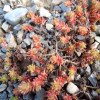
Sedum sexangulare (L.)
-
Sedum shigatsense (Fröd.)
-
Sedum shitaiense (Y.Zheng & D.C.Zhang)
-
Sedum sinoglaciale (K.T.Fu)
-
Sedum smallii ((Britton) H.E.Ahles)
-
Sedum someni (Raym.-Hamet ex H.Lév.)
-
Sedum sorgerae (Kit Tan & Chamberlain)
-
Sedum spathulifolium (Hook.)
1 -
Sedum spathulisepalum (R.T.Clausen)
-
Sedum spiralifolium (D.Q.Wang, D.M.Xie & Lu Q.Huang)
-
Sedum stahlii (Solms)
-
Sedum stamineum (Paulsen)
-
Sedum stefco (Stef.)
-
Sedum stellariifolium (Franch.)
-
Sedum stelliforme (S.Watson)
-
Sedum stenopetalum (Pursh)
1 -
Sedum stenophyllum (Fröd.)
-
Sedum stimulosum (K.T.Fu)
-
Sedum strobiliforme (Niederle)
-
Sedum suaveolens (Kimnach)
-
Sedum subgaleatum (K.T.Fu)
-
Sedum subtile (Miq.)
1 -
Sedum susannae (Raym.-Hamet)
1 -
Sedum tamaulipense (G.L.Nesom)
-
Sedum tamaulipensis (G.L.Nesom)
-
Sedum tarokoense (H.W.Lin & J.C.Wang)
-
Sedum tehuaztlense (Moran & J.Meyrán)
-
Sedum tenellum (M.Bieb.)
-
Sedum ternatum (Michx.)
-
Sedum tetractinum (Fröd.)
-
Sedum tianmushanense (Y.C.Ho & F.Chai)
-
Sedum tortuosum (Hemsl.)
-
Sedum torulosum (R.T.Clausen)
-
Sedum tosaense (Makino)
-
Sedum treleasei (Rose)
-
Sedum triactina (A.Berger)
1 -
Sedum tricarpum (Makino)
-
Sedum trichospermum (K.T.Fu)
-
Sedum trichromum (R.T.Clausen)
-
Sedum tristriatum (Boiss. & Heldr.)
-
Sedum tritelii (Raym.-Hamet)
-
Sedum trollii (Werderm.)
-
Sedum trullipetalum (Hook.f. & Thomson)
-
Sedum tsiangii (Fröd.)
1 -
Sedum tsinghaicum (K.T.Fu)
-
Sedum tsonanum (K.T.Fu)
-
Sedum tuberculatum (Rose)
-
Sedum tuberiferum (Stoj. & Stef.)
-
Sedum tuberosum (Coss. & Letourn.)
-
Sedum tymphaeum (Quézel & Contandr.)
-
Sedum ulricae (Fröd.)
-
Sedum uniflorum (Hook. & Arn.)
-
Sedum ursi ('t Hart)
-
Sedum urvillei (DC.)
-
Sedum valens (Björk)
-
Sedum versadense (C.H.Thomps.)
1 -
Sedum versicolor (Coss. ex Raym.-Hamet)
-
Sedum victorianum (C.-A.Jansson)
-
Sedum villosum (L.)
-
Sedum vinicolor (S.Watson)
-
Sedum wangii (Fu)
-
Sedum wannanense (X.H.Guo, X.P.Zhang & X.H.Chen)
-
Sedum weberbaueri ((Diels) Thiede & 't Hart)
-
Sedum wenchuanense (Fu)
-
Sedum wilczekianum (Font Quer)
-
Sedum wilsonii (Fröd.)
-
Sedum woronowii (Raym.-Hamet)
-
Sedum wrightii (A.Gray)
3 -
Sedum yildizianum (Sümbül)
-
Sedum yvesi (Raym.-Hamet)
-
Sedum zentaro-tashiroi (Makino)