
Genus Phedimus in Family Crassulaceae
In botanical taxonomy, a genus (plural genera) is a rank used to group closely related species within a family. In the hierarchy, genus sits below family and above species.
Genera are defined by shared morphological, anatomical, and genetic characteristics (for example, features of flowers, fruits, seeds, or leaves) that indicate a close evolutionary relationship among the species they contain.
Each genus can include one or more species. Examples include Rosa (roses) and Solanum (nightshades, including tomato and eggplant).
Do you wish to read more about plant taxonomy? Click here!
Genus Description
Suggest a correction!Phedimus (Raf.) is a genus of succulent herbs in Crassulaceae (POWO, 2024). Approximately twenty species range from low‑land steppe to alpine scree across temperate Eurasia, forming basal rosettes of fleshy leaves. The type species is Phedimus spurius (Raf.) (Ferguson & Piepenbring, 2016).
Diagnostic traits include a perennial, compact rosette habit; succulent, usually glaucous leaves; and a terminal, usually unbranched inflorescence of dense spikes or racemes bearing small, 5‑merous flowers (Thulin et al., 2021). Sepals are free, petals lanceolate and pinkish; the five free carpels each bear a terminal nectary, and the superior ovary shows axile placentation. The fruit consists of a cluster of elongated follicles that split along a seam, releasing dust‑like seeds.
The genus shows a disjunction with centers of diversity in the Himalaya–Qinghai–Tibet plateau and East Asia, where several narrow endemics occur (Olson et al., 2021). Phedimus aizoon and P. kamtschaticus occupy rocky slopes and alpine meadows up to 4 500 m, while P. spurius extends into temperate European grasslands and is occasionally naturalised in North America, reflecting a typical temperate Eurasian distribution with peripheral isolation.
Flowers attract generalist insects—bees, flies, small butterflies—providing nectar and pollen; fruit matures in late summer, and follicles split to release wind‑dispersed seeds that may be collected by ants (Ferguson & Piepenbring, 2016). Vegetative offsets from the rosette base are common, enabling persistence in harsh micro‑habitats.
Molecular phylogenies place Phedimus within Crassulaceae as sister to the Sedum lineages (Olson et al., 2021). The genus was resurrected from Sedum subgenus Phedimus in the 2000s and is accepted by major checklists (POWO, 2024), though some authors retain it as a subgenus of Sedum (Thulin et al., 2021). No formal sectional divisions are recognized, but data suggest two lineages matching the Himalayan and East‑Asian groups (Govaerts et al., 2022).
Several species, especially Phedimus aizoon and P. spurius, are cultivated in rock gardens for their low growth habit and colorful inflorescences (POWO, 2024). P. spurius has become locally invasive in parts of the United States, where it colonises disturbed sites and may out‑compete native forbs (Govaerts et al., 2022).
While most species are considered stable, many Himalayan endemics are threatened by climate‑driven glacier retreat and habitat degradation; targeted field surveys are needed to assess population trends (Olson et al., 2021). Continued integration of genomic data and ex situ conservation will be essential for preserving the genus’s ecological and horticultural value.
-
Phedimus aizoon ((L.) 't Hart)
-
Phedimus ellacombeanus ((Praeger) 't Hart)
-
Phedimus hybridus ((L.) 't Hart)
-
Phedimus kamtschaticus ((Fisch. & C.A.Mey.) 't Hart)
-
Phedimus litoralis ((Kom.) 't Hart)
-
Phedimus middendorffianus ((Maxim.) 't Hart)
-
Phedimus obtusifolius ((C.A.Mey.) 't Hart)
-
Phedimus odontophyllus ((Fröd.) 't Hart)
-
Phedimus selskanianus ((Regel & Maack) 't Hart)
-
Phedimus selskianus ((Regel & Maack) 't Hart)
-
Phedimus sikokianus ((Maxim.) 't Hart)
-
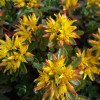
Phedimus spurius ((M.Bieb.) 't Hart)
-
Phedimus stellatus ((L.) Raf.)
-
Phedimus stevenianus ((Rouy & E.G.Camus) 't Hart)
-
Phedimus stolonifer ((S.G.Gmel.) 't Hart)
-
Phedimus stoloniferus ((S.G.Gmel.) 't Hart)