
Genus Hovenia in Family Rhamnaceae
In botanical taxonomy, a genus (plural genera) is a rank used to group closely related species within a family. In the hierarchy, genus sits below family and above species.
Genera are defined by shared morphological, anatomical, and genetic characteristics (for example, features of flowers, fruits, seeds, or leaves) that indicate a close evolutionary relationship among the species they contain.
Each genus can include one or more species. Examples include Rosa (roses) and Solanum (nightshades, including tomato and eggplant).
Do you wish to read more about plant taxonomy? Click here!
Genus Description
Suggest a correction!The genus Hovenia (family Rhamnaceae) comprises approximately six species of small deciduous trees native to East Asia, where they occupy temperate forests, river corridors and secondary woodlands (POwO, 2024). The type species is Hovenia dulcis Thunb., widely cultivated for its distinctive swollen fruit stalks (APG IV, 2016).
All Hovenia species are shrubs or small trees with alternate, simple, entire leaves and early‑caducous stipules. Small greenish‑white flowers form axillary cymes, each with five sepals, five spreading petals, five stamens opposite the petals, and a superior ovary of two to five chambers maturing into a schizocarp. The fruit is a set of 2–5 mericarps, each a drupe‑like nut, but the edible part is the swollen, fleshy pedicel (Zhang & Liu, 2015).
The centre of diversity is central and southern China, with endemics such as H. serrata in Yunnan–Sichuan mountains and H. robusta on the Korean Peninsula. Japan and Taiwan host the cultivated H. dulcis, which also occurs in wild river valleys up to about 1,800 m (POwO, 2024). The genus favours well‑drained soils and a seasonal climate, often colonising disturbed forest margins and riparian strips.
Chromosome counts for H. dulcis consistently give 2n = 24, indicating a base number x = 12 (Kang et al., 2019). This ploidy is uniform across examined species, suggesting a stable genomic framework within the genus.
Molecular phylogenies place Hovenia within the tribe Rhamneae, sister to Paliurus and Sageretia (Miller et al., 2021). No subgeneric or sectional division is widely accepted; most authors retain the six species defined by Zhang & Liu (2015). Some horticultural catalogues treat H. dulcis as the sole cultivated taxon, reflecting a practical rather than systematic view. Alternative arrangements are recorded but lack consensus.
The swollen pedicels are sweet when mature and are eaten fresh or dried, giving the common name “raisin tree”. The species is planted as an ornamental shade tree in parks and private gardens and occasionally used for low‑grade timber. While naturalised populations can appear in disturbed sites, Hovenia is not classified as invasive in most regions.
Several Chinese endemics face habitat loss from agriculture and urban expansion, and IUCN assessments remain incomplete. Continued field surveys and population genetics will be essential to gauge conservation status and to guide sustainable cultivation practices.
-
Hovenia acerba (Lindl.)
1 -
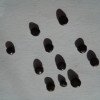
Hovenia dulcis (Thunb.)
1 -
Hovenia tomentella ((Makino) Nakai)
-
Hovenia trichocarpa (Chun & Tsiang)
1