
Genus Sempervivum in Family Crassulaceae
In botanical taxonomy, a genus (plural genera) is a rank used to group closely related species within a family. In the hierarchy, genus sits below family and above species.
Genera are defined by shared morphological, anatomical, and genetic characteristics (for example, features of flowers, fruits, seeds, or leaves) that indicate a close evolutionary relationship among the species they contain.
Each genus can include one or more species. Examples include Rosa (roses) and Solanum (nightshades, including tomato and eggplant).
Do you wish to read more about plant taxonomy? Click here!
Genus Description
Suggest a correction!Sempervivum L. belongs to Crassulaceae and comprises approximately 40 species, a small, rosette-forming perennial group distributed across mountains of southern and central Europe, the Caucasus, and the eastern Mediterranean. The type species is Sempervivum tectorum L., long used as a standard in European floristic accounts (POWO, 2024; WFO, 2024; Flora Europaea, 1976). The genus is characterized by tight, often asymmetrical leaf rosettes that produce offsets through stolons or basal division; leaves are fleshy, variably ciliate or glabrous, and typically bear persistent terminal awns. Stems are monocarpic rosettes that flower once then die, while offsets perpetuate the genet. Inflorescences are terminal thyrses or dense cymes; flowers are commonly 6–12‑merous with distinct sepals and petals that may be spreading or reflexed, and anthers that dehisce longitudinally. Carpels are free, the ovary superior, and fruits are clusters of follicular mericarps containing numerous tiny, wind‑dispersed seeds. The combination of monocarpic rosette habit, foliar awns, and pedicellate flowers distinguishes Sempervivum from most other Crassulaceae in the region (Berger, 1930).
Species richness peaks in the Balkans and the Caucasus, with notable endemism in alpine cliffs, rock outcrops, and open scree between 800 and 3000 m. Most taxa favor calcareous substrates and dry, well‑lit microhabitats; single populations often occupy very restricted rock faces or ledges (Flora Europaea, 1976; Aedo & García, 2016). Biogeographically, the genus shows a classic Mediterranean‑mountain pattern, with multiple disjunct occurrences in Pyrenean and Apennine massifs and a larger cluster of diversity around the Anatolian–Caucasian arc (Nikulin et al., 2016). The life history is dominated by monocarpic reproduction coupled with clonal propagation; seed dispersal is primarily by gravity and wind from dehiscent follicles (Berger, 1930). Chromosome numbers are diverse, and counts are available for many taxa, though comprehensive synthesis remains incomplete (Meszaros, 1973).
Taxonomically, Sempervivum has been subdivided into sections such as Sempervivum sect. Sempervivum and sect. Jovibarba (Hirsch, 1900; Meszaros, 1973). Some authors have treated Jovibarba as a separate genus; however, recent phylogenies confirm the paraphyly of Jovibarba when segregated and support its inclusion within Sempervivum, frequently as Sempervivum sect. Jovibarba (Nikulin et al., 2016). Regional floras maintain a broadly consistent species concept for Sempervivum, although synonymization of narrow endemics varies among treatments (Flora Europaea, 1976; Aedo & García, 2016). The family placement is stable within Crassulaceae, and the current circumscription includes the traditional Sempervivum species but excludes the Hylotelephium lineages that have sometimes been misapplied to some perennial Sedum relatives (POWO, 2024).
Sempervivum is widely cultivated for rock gardens and alpine displays, with long‑standing horticultural selection focused on rosette size, leaf coloration, and offset production; S. tectorum is a familiar ornamental that readily naturalizes on masonry and roofs in cool, well‑drained sites (International Crassulaceae Network, accessed 2024). It has no significant timber or crop use, and although individual species may become locally abundant on old walls, their total impact as weeds remains limited (GBIF, 2024).
Conservation attention is concentrated on narrow endemics occupying cliff and scree habitats, where stochastic events or stochastic changes in microclimate pose disproportionate threats. Quantitative assessments of population status are rare, and key data gaps persist for chromosome surveys, species limits in several Balkan–Anatolian groups, and standardized monitoring across the range. Prospects are strongest where conservation frames combine ex situ cultivation with targeted field surveys and verification of taxonomic boundaries (POWO, 2024; WFO, 2024).
-
Sempervivum × barbulatum (Schott)
-
Sempervivum × christii (F.O.Wolf)
-
Sempervivum × feigeanum (Neeff)
-
Sempervivum × fimbriatum (Schnittsp. & C.B.Lehm.)
-
Sempervivum × giuseppii (Wale)
-
Sempervivum × luisae (L.Gallo)
-
Sempervivum × praegeri (G.D.Rowley)
-
Sempervivum × vaccarii (Wilczek ex Vacc.)
-
Sempervivum acuminatum (Jacquem. ex Decne.)
-
Sempervivum alatum (Scheele)
-
Sempervivum altum (Turrill)
-
Sempervivum annae (Gurgen.)
-
Sempervivum arachnoideum (L.)
1 -
Sempervivum armenum (Boiss. & A.Huet)
1 -
Sempervivum artvinense (Muirhead)
-
Sempervivum atlanticum ((Hook.f.) Ball)
-
Sempervivum atropatanum (J.Parn.)
-
Sempervivum balcanicum (Stoj.)
-
Sempervivum barbulatum (Schott)
-
Sempervivum borissovae (Wale)
-
Sempervivum brevipilum (Muirhead)
-
Sempervivum calcareum (Jord.)
-
Sempervivum carpathicum (Wettst. ex Prodan)
1 -
Sempervivum caucasicum (Rupr. ex Boiss.)
-
Sempervivum cernochii (Niederle)
-
Sempervivum ciliosum (Craib)
2 -
Sempervivum comollii (Rota)
-
Sempervivum davisii (Muirhead)
1 -
Sempervivum dolomiticum (Facc.)
-
Sempervivum dzhavachischvilii (Gurgen.)
-
Sempervivum ekimii (Karaer)
-
Sempervivum ermanicum (Gurgen.)
-
Sempervivum erythraeum (Velen.)
-
Sempervivum funckii (F.Braun ex W.D.J.Koch)
-
Sempervivum gillianiae (Muirhead)
-
Sempervivum giuseppii (Wale)
-
Sempervivum glabrifolium (Boriss.)
-
Sempervivum globiferum (L.)
9 -
Sempervivum grandiflorum (Haw.)
-
Sempervivum herfriedianum (Neeff)
-
Sempervivum heuffelii (Schott)
-
Sempervivum ingwersenii (Wale)
-
Sempervivum iranicum (Bornm. & Gauba)
-
Sempervivum ispartae (Muirhead)
-
Sempervivum kosaninii (Praeger)
-
Sempervivum leucanthum (Pančić)
-
Sempervivum macedonicum (Praeger)
-
Sempervivum marmoreum (Griseb.)
3 -
Sempervivum minus (Turrill ex Wale)
-
Sempervivum minutum ((Kunze ex Willk.) Nyman ex C.Pau)
-
Sempervivum montanum (L.)
1 -
Sempervivum morelianum (Viviand-Morel)
-
Sempervivum ossetiense (Wale)
-
Sempervivum pisidicum (Peșmen & Güner)
-
Sempervivum pittonii (Schott, Nyman & Kotschy)
-
Sempervivum pumilum (M.Bieb.)
-
Sempervivum rupicola (Kern.)
-
Sempervivum ruthenicum (Schnittsp. & C.B.Lehm.)
-
Sempervivum soculense (D.Donati & G.Dumont)
-
Sempervivum sosnowskyi (Ter-Chatsch.)
-
Sempervivum staintonii (Muirhead)
-
Sempervivum stenopetalum (Schnittsp. & C.B.Lehm.)
-
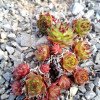
Sempervivum tectorum (L.)
1 -
Sempervivum thompsonianum (Wale)
-
Sempervivum transcaucasicum (Muirhead)
-
Sempervivum vicentei (Pau)
-
Sempervivum wulfenii (Hoppe ex Mert. & W.D.J.Koch)
1