
Genus Amelanchier in Family Rosaceae
In botanical taxonomy, a genus (plural genera) is a rank used to group closely related species within a family. In the hierarchy, genus sits below family and above species.
Genera are defined by shared morphological, anatomical, and genetic characteristics (for example, features of flowers, fruits, seeds, or leaves) that indicate a close evolutionary relationship among the species they contain.
Each genus can include one or more species. Examples include Rosa (roses) and Solanum (nightshades, including tomato and eggplant).
Do you wish to read more about plant taxonomy? Click here!
Genus Description
Suggest a correction!Amelanchier Medik. (Rosaceae: Amygdaloideae, tribe Maleae) comprises approximately 35–45 species of deciduous shrubs and small trees distributed across temperate North America, Europe, and eastern Asia (POWO, 2024; WFO, 2024). The type species, designated by Medikus, is Amelanchier ovalis Medik. (POWO, 2024). Members inhabit moist woodlands, stream banks, and open hillsides from low elevations to subalpine zones (WFO, 2024). The genus is diagnosed by alternate, simple leaves that are broadly ovate to lanceolate, serrate, with a finely tomentose lower surface; caducous stipules fall early. Inflorescences are terminal racemes of 5–30 actinomorphic flowers; each flower bears five white to pinkish petals, five sepals, and many (≈20–30) stamens inserted on a hypanthium. The ovary is superior and syncarpous, bearing 2–5 ovules per carpel; the fruit is a fleshy pome that darkens at maturity. The combination of persistent, reflexed sepals, a short pedicel joint, and a thin endocarp separates Amelanchier from related Rosaceae (Dickinson, 2018).
Centers of diversity lie in the Appalachian Mountains, the Pacific Northwest, and the Himalayas. Several species are narrow endemics, such as A. alnifolia in the Rocky Mountains and A. bartramiana in the eastern United States (Dickinson, 2018). Europe supports only A. ovalis on calcareous woods, while Asian taxa like A. asiatica and A. chinensis extend the range into China and Japan.
Pollination is primarily by dipteran and hymenopteran insects (Dickinson, 2018). Fruits are dispersed by birds, especially thrushes, and mammals. Base chromosome number is x = 17, with diploids consistently 2n = 34 (Warren et al., 2015).
Recent target‑enrichment phylogenomics recovered a single, well‑supported clade that includes traditional sections Alnifolia, Spicata, and Eulamanchier (Miller et al., 2021). Dickinson (2018) re‑circumscribed several taxa, merging A. spicata into A. alnifolia and treating A. canadensis and A. laevis as conspecific; these proposals remain contested in the World Flora Online (WFO, 2024).
Culturally, Amelanchier is widely cultivated for ornamental white flowers and the sweet, edible pomes of A. alnifolia (Saskatoon berry), which are harvested commercially. The genus does not provide significant timber and poses minimal invasive risk. Conservation assessments are uneven, but habitat loss and climate change threaten several narrow endemics (Dickinson, 2018). Integrating molecular phylogenetics with demographic studies will refine species limits and guide conservation priorities.
-
Amelanchier × intermedia (Spach)
-
Amelanchier × neglecta (Eggl. ex K.R.Cushman, M.B.Burgess, E.T.Doucette & C.S.Campb.)
-
Amelanchier × quinti\-martii (Louis-Marie)
-
Amelanchier alnifolia (Nutt.)
3 -
Amelanchier amabilis (Wiegand)
-
Amelanchier arborea ((F.Michx.) Fernald)
-
Amelanchier asiatica (Endl.)
-
Amelanchier bartramiana ((Tausch) M.Roem.)
-
Amelanchier canadensis ((L.) Medik.)
-
Amelanchier cretica ((Willd.) DC.)
-
Amelanchier cusickii (Fernald)
-
Amelanchier fernaldii (Wiegand)
-
Amelanchier gaspensis ((Wiegand) Fernald & Weatherby)
-
Amelanchier humilis (Wiegand)
-
Amelanchier interior (E.L.Nielsen)
-
Amelanchier intermedia (Spach)
-
Amelanchier laevis (Wiegand)
-
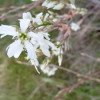
Amelanchier lamarckii (F.G.Schroed.)
-
Amelanchier nantucketensis (E.P.Bicknell)
-
Amelanchier obovalis ((Michx.) Ashe)
-
Amelanchier ovalis (Medik.)
2 -
Amelanchier pallida (Greene)
-
Amelanchier parviflora (Boiss.)
4 -
Amelanchier quinti-martii (Louis-Marie)
-
Amelanchier sanguinea ((Pursh) DC.)
-
Amelanchier sinica (Chun)
-
Amelanchier spicata ((Lam.) K.Koch)
-
Amelanchier stolonifera (Wiegand)
-
Amelanchier turkestanica (Litv.)
-
Amelanchier utahensis (Koehne)