
Genus Armeria in Tribe Limonieae
In botanical taxonomy, a genus (plural genera) is a rank used to group closely related species within a family. In the hierarchy, genus sits below family and above species.
Genera are defined by shared morphological, anatomical, and genetic characteristics (for example, features of flowers, fruits, seeds, or leaves) that indicate a close evolutionary relationship among the species they contain.
Each genus can include one or more species. Examples include Rosa (roses) and Solanum (nightshades, including tomato and eggplant).
Do you wish to read more about plant taxonomy? Click here!
Genus Description
Suggest a correction!Armeria Willd. is placed in Plumbaginaceae (subfamily Staticoideae), a cosmopolitan genus of rosette-forming, usually perennial herbs and subshrubs with a global coastal and montane distribution, centered in the Mediterranean Basin and western Eurasia with additional species in Macaronesia, Anatolia, and the Americas. About 230–260 species are accepted, and the type species is Armeria maritima (Willd.) Britton (POWO, 2024; WFO, 2024). Plants are acaulescent to caulescent with dense basal rosettes of linear to lanceolate, entire leaves, often with glabrous surfaces and persistent sheaths. The inflorescence is a compact head (anthodium) subtended by scarious involucral bracts; the scape is typically elongate, unbranched, and may be glabrous or pubescent. Flowers are pentamerous with basally fused, scarious, plicate sepals forming a tube, five free or basally fused petals, and usually five stamens attached to the petals. Carpels are united with a single, apical, 5-lobed stigma; the ovary is superior with a single ovule borne on a basal funiculus. Fruit is a small, 1-seeded capsule that dehisces by a transverse lid (circumscissile), and seeds have a mucilaginous testa.
Diversity is highest in the western Mediterranean and the Iberian Peninsula, where numerous narrow endemics occur along coastlines and in montane habitats from sea level to high elevations, often on rocky, sandy, or calcareous substrates. A secondary center of diversification is in southern and eastern Anatolia, with outliers in Macaronesia and temperate North America (Lledó et al., 2005; Külkamp et al., 2016). Pollination is predominantly by insects, and seed dispersal can involve myrmecochory associated with the mucilaginous seed coat, though direct documentation remains scarce in most taxa. Chromosome numbers are typically polyploid within a base number x=9; extensive euploidy and aneuploidy have been documented across the genus (Külkamp, 2016).
Molecular phylogenetic work supports monophyly of Armeria as broadly circumscribed but resolves several subclades corresponding to geographic and ecological groups (Lledó et al., 2005; Külkamp et al., 2016). Infrageneric ranks have long been used (e.g., Armeria subgenus Armeria and Armeria subgenus Pseudoarmeria), but sectional or subgeneric taxonomy remains unstable and unevenly applied across regions (The Plant List, 2013; WFO, 2024). Synonymy with Statice for many species persists in older literature, but current consensus, reflected in POWO (2024) and GBIF (2024), treats Armeria as distinct and species-rich.
Human relevance is primarily horticultural; A. maritima and related species are widely cultivated as ornamentals for rockeries, coastal gardens, and alpine plantings, with numerous cultivars and hybrid swarms. Some species are naturalized beyond native ranges and occasionally behave as ruderal weeds where conditions favor self-seeding. No significant timber or crop uses are reported.
Conservation status varies widely; many narrow endemics are data deficient or threatened by habitat loss, urbanization, and disturbance, though some widespread species are secure. Major research gaps include species-level phylogeny, systematic treatment of Iberian and Anatolian clades, and standardized chromosome surveys. The outlook depends on clarifying taxonomy and documenting regional extinctions to guide conservation actions (POWO, 2024; GBIF, 2024).
-
Armeria × intermedia (Szaf.)
-
Armeria × salmantica ((Bernis) Nieto Fel.)
-
Armeria alboi ((Bernis) Nieto Fel.)
-
Armeria alliacea ((Cav.) Hoffmanns. & Link)
2 -
Armeria alpina (Willd.)
4 -
Armeria alpinifolia (Pau & Font Quer)
-
Armeria apollinaris (Sennen & Mauricio)
-
Armeria arcuata (Welw. ex Boiss. & Reut.)
-
Armeria arenaria ((Pers.) F.Dietr.)
12 -
Armeria aspromontana (Brullo, Scelsi & Spamp.)
-
Armeria atlantica (Pomel)
-
Armeria australis (Boiss.)
-
Armeria beirana (Franco)
-
Armeria belgenciensis (Donad. ex Kerguélen)
-
Armeria berlengensis (Daveau)
-
Armeria bigerrensis ((Vicioso & Beltrán) Pau ex Rivas Mart.)
3 -
Armeria bourgaei (Boiss. ex Nyman)
3 -
Armeria brutia (Brullo, Gangale & Uzunov)
-
Armeria caballeroi ((Bernis) P.Donadille)
-
Armeria caespitosa (Boiss.)
-
Armeria canescens ((Host) Boiss.)
2 -
Armeria cantabrica (Boiss. & Reut. ex Willk. & Lange)
-
Armeria capitella (Pau)
-
Armeria cariensis (Boiss.)
3 -
Armeria carnotana (Blanco-Dios)
-
Armeria castellana (Boiss. & Reut. ex Leresche)
-
Armeria castrovalnerana (Alejandre, Barredo & M.J.Escal.)
-
Armeria castroviejoi (Nieto Fel.)
-
Armeria choulettiana (Pomel)
-
Armeria ciliata ((Lange) Nieto Fel.)
-
Armeria cintrana (Taul.Gomes)
-
Armeria colorata (Pau)
-
Armeria curvifolia (Bertero)
-
Armeria daveaui ((Cout.) P.Silva)
-
Armeria denticulata ((Bertol.) DC.)
-
Armeria duriaei (Boiss.)
-
Armeria ebracteata (Pomel)
-
Armeria eriophylla (Willk.)
-
Armeria euscadiensis (P.Donadille & Vivant)
-
Armeria filicaulis (Boiss.)
5 -
Armeria fontqueri (Pau)
-
Armeria gaditiana (Boiss.)
-
Armeria genesiana (Nieto Fel.)
2 -
Armeria girardii ((Bernis) Litard.)
-
Armeria godayana (Font Quer)
-
Armeria gracilis (Ten.)
2 -
Armeria grajoana (Casim.-Sor.Solanas & Cabezudo)
-
Armeria helodes (F.Martini & Poldini)
-
Armeria hirta (Willd.)
2 -
Armeria hispalensis (Pau)
-
Armeria humilis ((Link) Schult.)
2 -
Armeria icarica (J.R.Edm.)
-
Armeria johnsenii (Papan. & Kokkini)
-
Armeria langei (Boiss. ex Lange)
-
Armeria leonis (Sennen)
-
Armeria leucocephala (W.D.J.Koch)
-
Armeria linkiana (Nieto Fel.)
-
Armeria littoralis (Willd.)
-
Armeria macrophylla (Boiss. & Reut.)
-
Armeria macropoda (Boiss.)
-
Armeria maderensis (Lowe)
-
Armeria malacitana (Nieto Fel.)
-
Armeria malinvaudii (H.J.Coste & Soulié)
-
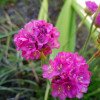
Armeria maritima ((Mill.) Willd.)
15 -
Armeria masguindalii ((Pau) Nieto Fel.)
-
Armeria mauritanica (Wallr.)
-
Armeria merinoi ((Bernis) Nieto Fel. & Silva Pando)
-
Armeria montiberica (García Cardo, Fabado & Mateo)
-
Armeria morisii (Boiss.)
-
Armeria mulleri (A.Huet)
-
Armeria pauana ((Bernis) Nieto Fel.)
-
Armeria pilariae (Sánchez Gullón, Muñoz Rodr. & Polo Ávila)
-
Armeria pinifolia (Hoffmanns. & Link)
-
Armeria platyphylla ((Daveau) Franco)
-
Armeria pocutica (Pawł.)
-
Armeria pseudoarmeria ((Murray) Mansf.)
4 -
Armeria pubigera (Boiss.)
-
Armeria pubinervis (Boiss.)
-
Armeria pungens (Hoffmanns. & Link)
3 -
Armeria quichiotis ((Gonz.Albo) A.W.Hill)
-
Armeria rivasmartinezii (Sard.Rosc. & Nieto Fel.)
-
Armeria rothmaleri (Nieto Fel.)
-
Armeria rouyana (Daveau)
2 -
Armeria ruscinonensis (Girard)
2 -
Armeria sampaioi ((Bernis) Nieto Fel.)
-
Armeria sancta (Janka)
-
Armeria sardoa (Spreng.)
-
Armeria saviana (Selvi)
-
Armeria seticeps (Rchb.)
-
Armeria simplex (Pomel)
-
Armeria soleirolii (Duby)
-
Armeria spinulosa (Boiss.)
-
Armeria splendens ((Lag. & Rodr.) Webb)
-
Armeria sulcitana (Arrigoni)
-
Armeria tingitana (Boiss. & Reut.)
-
Armeria trachyphylla (Lange.)
-
Armeria transmontana ((Samp.) LawrenceapudPinto da Silva & Sobr.)
2 -
Armeria trianoi (Nieto Fel.)
-
Armeria trojana (Bokhari & Quézel)
-
Armeria undulata (Boiss.)
-
Armeria vandasii (Hayek)
-
Armeria velutina (Welw. ex Boiss. & Reut.)
-
Armeria villosa (Girard)
8 -
Armeria welwitschii (Boiss.)