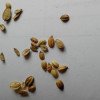
Genus Crithmum in Family Apiaceae
In botanical taxonomy, a genus (plural genera) is a rank used to group closely related species within a family. In the hierarchy, genus sits below family and above species.
Genera are defined by shared morphological, anatomical, and genetic characteristics (for example, features of flowers, fruits, seeds, or leaves) that indicate a close evolutionary relationship among the species they contain.
Each genus can include one or more species. Examples include Rosa (roses) and Solanum (nightshades, including tomato and eggplant).
Do you wish to read more about plant taxonomy? Click here!
Genus Description
Suggest a correction!Crithmum (family Apiaceae) is a small monospecific genus with the single, widely recognized species Crithmum maritimum, the type. It occurs on rocky shores and cliffs around the Mediterranean basin and along adjacent Atlantic coasts of Europe, with scattered coastal populations into Macaronesia; its primary biomes are maritime rock communities and coastal grasslands. The generic name is conserved, and the accepted basionym is Crithmum maritimum L., reflecting its long-standing taxonomic recognition (POWO, 2024; WFO, 2024).
A glaucous, hairless perennial with a stout taproot, Crithmum forms clumps of erect, somewhat succulent stems. Leaves are once- or twice-pinnately compound to deeply dissected, with linear, terete, grey-green to yellow-green segments that impart a fleshy, almost jointed appearance; stipules are absent. The compact, globose inflorescences are terminal, compound umbels (typically 10–25 rays) bearing bracts and bracteoles; flowers are small, with yellowish petals that are inflexed at the apex. The ovary is inferior; fruits are dorsally compressed schizocarps with prominent lateral ribs forming thin wings—features long highlighted in Apiaceae keys (Drude, 1898; Schwarzbach, 2004). Seed embryos are small relative to the endosperm, a condition noted in many coastal umbels (Cannon, 1978).
Species richness is essentially one, with regional variation in vigor rather than recognized taxa (POWO, 2024). Centers of endemism lie within the Mediterranean basin, while Atlantic outliers occur in Portugal, Spain, and the Macaronesian archipelagoes; it is characteristic of rocky littoral habitats from sea level to low elevations where salt spray and drought are frequent. Colonization of cracks in limestone and basalt has produced disjunct populations that maintain morphological coherence.
Pollination and dispersal are typical for a maritime umbel: entomophily is implied by floral structure, and schizocarpic fruits split into winged mericarps that likely aid hydrochorous and anemochorous movement along coasts; in practice, seeds often drift or are deposited by wave action (Roth, 1977). The base chromosome number is frequently reported as x = 11 within Apiaceae, though consistent counts for C. maritimum should be verified against cytological sources (Schwarzbach, 2004).
Modern phylogenetic work places Crithmum within the subfamily Apioideae, broadly aligned with other Mediterranean coastal umbels such as Daucus, but morphological boundaries and higher-level tribal limits continue to evolve with molecular data (Downie et al., 2001; Banasiak et al., 2013). Historical treatments occasionally synonymized Crithmum under Petroselinum (Schwarzbach, 2004), and some floras retain that placement; current consensus favors generic distinctness with Crithmum as accepted (POWO, 2024; WFO, 2024). Subgeneric sections are not widely used, and the circumscription appears stable relative to Apiaceae’ broader re-circumscriptions.
In horticulture, C. maritimum is valued as an ornamental and edible halophyte with aromatic, fernlike foliage suitable for coastal gardens; in agriculture it is occasionally cultivated for its crisp, salty stems and used as a condiment (biological background per Kew/POWO and standard floras). It is not a major timber source or invasive weed.
Threats are local—habitat loss through coastal development and trampling—but many populations persist on protected cliffs. Integrated phylogenies and phylogeographies continue to refine relationships among Mediterranean coastal umbels, including Crithmum’s placement and historical biogeography (Downie et al., 2001; Banasiak et al., 2013).