
Genus Dicksonia in Family Dicksoniaceae
In botanical taxonomy, a genus (plural genera) is a rank used to group closely related species within a family. In the hierarchy, genus sits below family and above species.
Genera are defined by shared morphological, anatomical, and genetic characteristics (for example, features of flowers, fruits, seeds, or leaves) that indicate a close evolutionary relationship among the species they contain.
Each genus can include one or more species. Examples include Rosa (roses) and Solanum (nightshades, including tomato and eggplant).
Do you wish to read more about plant taxonomy? Click here!
Genus Description
Suggest a correction!The genus Dicksonia L’Hér., family Dicksoniaceae (order Cyatheales), comprises about 25–30 accepted species (POWO, 2024; WFO, 2024). Its type species is Dicksonia antarctica Labill. The trees occur in temperate and subtropical rainforests of Australia, New Zealand, New Guinea, the Pacific islands and southern South America, reflecting a classic Gondwanan distribution.
Dicksonia are robust tree ferns with an unbranched trunk up to 20 m tall that is sheathed in a dense mantle of adventitious roots. The crown bears large, pendent fronds (2–4 m) that are bipinnate to tripinnate with glossy, glabrous pinnae. Sori are round and positioned near the margin; they are protected by a reflexed indusium or a cup‑shaped false indusium, a character distinguishing them from the scaly‑trunked Cyatheaceae (Large & Braggins, 2004).
Species richness concentrates in the Australasian realm. D. antarctica and D. fraserii dominate Tasmania and southwestern Australia, D. sellowiana is endemic to the southern Andes and adjacent lowlands, and several narrow endemics occur in the highlands of New Guinea, Fiji and the Solomon Islands. Most taxa inhabit moist low‑elevation to montane rainforest, with some extending to sub‑alpine peatlands at 2 000–3 000 m (Brownsey & Perrie, 2020).
Reproduction is solely spore‑based; spores are released into the wind during the growing season. Chromosome studies reveal a base number of x = 40, with most examined species being diploid (2n = 80) (Large & Braggins, 2004). Seedling development is slow, often requiring several years before the first frond appears, a trait that heightens susceptibility to habitat disturbance.
Modern phylogenies based on plastid and nuclear markers place Dicksonia as monophyletic within the Dicksoniaceae, but they also show that the former segregate genus Calochlaena is embedded within the clade. Korall et al. (2006) maintain Calochlaena as a separate lineage, citing differences in indusium morphology and rhizome architecture, while Large & Braggins (2004) treat it as a synonym of Dicksonia. Consequently, the generic circumscription remains unsettled, and subgeneric ranks are not widely applied.
Dicksonia antarctica is a popular ornamental tree fern in temperate gardens, prized for its towering trunk and graceful fronds, while D. sellowiana is occasionally cultivated in South‑American landscaping. Commercial timber use is limited because of slow growth and the fibrous nature of the trunk.
Several taxa are listed as threatened due to deforestation, selective logging, and climate change. Continued field monitoring and ex situ propagation will be essential to preserve Dicksonia diversity as environmental pressures intensify across its range.
-
Dicksonia amorosoana (Lehnert & Coritico)
-
Dicksonia antarctica (Labill.)
-
Dicksonia arborescens (L'Hér.)
-
Dicksonia archboldii (Copel.)
-
Dicksonia baudouinii (E.Fourn.)
-
Dicksonia berteroana ((Colla) Hook.)
-
Dicksonia blumei ((Kunze) T.Moore)
-
Dicksonia brackenridgei (Mett.)
-
Dicksonia celebica (Lehnert)
-
Dicksonia ceramica (Lehnert)
-
Dicksonia externa (Skottsb.)
-
Dicksonia fibrosia (Col.)
-
Dicksonia grandis (Rosenst.)
-
Dicksonia herbertii (W.Hill)
-
Dicksonia hieronymi (Brause)
-
Dicksonia karsteniana ((Klotzsch) T.Moore)
2 -
Dicksonia lanata (Colenso)
2 -
Dicksonia lanigera (Holttum)
-
Dicksonia lehnertiana (Noben, F.Giraldo, W.D.Rodr. & A.Tejedor)
-
Dicksonia mollis (Holttum)
-
Dicksonia munzingeri (Noben & Lehnert)
-
Dicksonia navarrensis (Christ)
-
Dicksonia perriei (Noben & Lehnert)
-
Dicksonia schlechteri (Brause)
-
Dicksonia sciurus (C.Chr.)
-
Dicksonia sellowiana (Hook.)
-
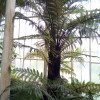
Dicksonia squarrosa ((G.Forst.) Sw.)
-
Dicksonia stubelii (Hieron.)
-
Dicksonia stuebelii (Hieron.)
-
Dicksonia thyrsopteroides (Mett.)
-
Dicksonia timorensis (Adjie)
-
Dicksonia utteridgei (Lehnert & Cámara-Leret)
-
Dicksonia youngiae (C.Moore; Moore)