
Genus Abies in Family Pinaceae
In botanical taxonomy, a genus (plural genera) is a rank used to group closely related species within a family. In the hierarchy, genus sits below family and above species.
Genera are defined by shared morphological, anatomical, and genetic characteristics (for example, features of flowers, fruits, seeds, or leaves) that indicate a close evolutionary relationship among the species they contain.
Each genus can include one or more species. Examples include Rosa (roses) and Solanum (nightshades, including tomato and eggplant).
Do you wish to read more about plant taxonomy? Click here!
Genus Description
Suggest a correction!Abies, the fir genus, belongs to Pinaceae (POWO, 2024). About 48–51 species are recognized, making it among the larger conifer genera (POWO, 2024; WFO, 2024). The genus ranges across the Northern Hemisphere from boreal forests to high‑elevation mountain forests in the Himalayas, Japan, Mexico and the Pacific Northwest (Farjon, 2017). The type species is Abies alba Mill., the European silver fir (Farjon, 2017).
Abies are evergreen trees with a straight trunk, smooth resinous bark that becomes scaly, and a conical to columnar crown (Farjon, 2017). Flattened needles are borne singly, each with two stomatal bands and a single resin duct, lacking a basal sheath (Farjon, 2017). Male cones are small and pendant; female cones are upright, dehisce to release winged seeds, and the ovary is reduced with solitary ovules (Farjon, 2017).
Richness is highest in the western Cordillera of North America, the Sino‑Himalayan region and temperate East Asian forests, where many taxa are narrow mountain endemics (WFO, 2024). Abies grows on moist, well‑drained soils from lowland temperate rainforests to subalpine krummholz (Farjon, 2017).
Abies are wind‑pollinated and disperse seeds by wind, winged seeds aiding long‑distance travel (Farjon, 2017). Many species are shade‑tolerant, with seedlings persisting under closed canopies and individuals living centuries (Farjon, 2017). The base chromosome number is x = 12, most taxa are diploid (2n = 24) (Farjon, 2017).
Molecular phylogenies (Wang et al., 2000; Xiang et al., 2015) identify two major clades corresponding to subgenus Balsamea (mostly Eurasian) and subgenus Abies (mostly North American) (Xiang et al., 2015). Sections such as sect. Grandis, sect. Bracteata and sect. Balsamea have been proposed but remain partially unresolved (Farjon, 2017). Taxonomic treatments diverge on several taxa; for example, Abies alba and Abies cephalonica are treated as conspecific by some sources (WFO, 2024) but kept distinct by others (Farjon, 2017).
Several Abies species have economic value. Abies balsamea and Abies nordmanniana are major Christmas‑tree crops, and Abies alba and Abies grandis provide timber for construction, furniture and pulp (Farjon, 2017). Their symmetrical form and fragrant foliage make them popular ornamentals (Farjon, 2017). While some species naturalize beyond their native ranges, they are not generally invasive (Farjon, 2017).
Habitat loss, over‑exploitation and climate‑driven range shifts threaten many narrow‑endemic firs; several are critically endangered. Protecting fragmented populations and adopting climate‑adapted management will be essential for the long‑term persistence of the genus.
-
Abies × borisii\-regis (Mattf.)
-
Abies × insignis (Carrière ex Bailly)
-
Abies × masjoannis (D.Soto, J.I.García Viñas & E.P.Bujarrabal)
-
Abies × speciosa (Voss)
-
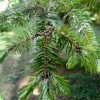
Abies alba (Mill.)
-
Abies amabilis (Douglas ex J.Forbes)
-
Abies balsamea ((L.) Mill.)
2 -
Abies beshanzuensis (M.H.Wu)
-
Abies bracteata ((D.Don) Poit.)
-
Abies cephalonica (Loudon)
-
Abies chensiensis (Tiegh.)
3 -
Abies cilicica ((Antoine & Kotschy) Carrière)
2 -
Abies concolor ((Gordon & Glend.) Lindl. ex Hildebr.)
-
Abies delavayi (Franch.)
4 -
Abies densa (Griff.)
-
Abies durangensis (Martínez)
2 -
Abies fabri ((Mast.) Craib)
2 -
Abies fanjingshanensis (W.L.Huang, Y.L.Tu & S.Z.Fang)
-
Abies fargesii (Franch.)
4 -
Abies firma (Siebold & Zucc.)
-
Abies flinckii (Rushforth)
-
Abies forrestii (Coltm.-Rog.)
4 -
Abies fraseri ((Pursh) Poir.)
-
Abies grandis ((Douglas ex D.Don) Lindl.)
-
Abies guatemalensis (Rehder)
-
Abies hickelii (Flous & Gaussen)
3 -
Abies hidalgensis (Debreczy, I.Rácz & Guízar)
-
Abies holophylla (Maxim.)
-
Abies homolepis (Siebold & Zucc.)
2 -
Abies jaliscana ((Martínez) Mantilla, Shalisko & A.Vázquez)
-
Abies kawakamii ((Hayata) T.Itô)
-
Abies koreana (E.H.Wilson)
-
Abies lasiocarpa ((Hook.) Nutt.)
2 -
Abies magnifica (A.Murray bis)
3 -
Abies mariesii (Mast.)
-
Abies marocana (Trab.)
-
Abies nebrodensis ((Lojac.) Mattei)
-
Abies nephrolepis (Maxim.)
-
Abies nordmanniana ((Steven) Spach)
2 -
Abies numidica (de Lannoy ex Carrière)
-
Abies pindrow (Royle)
2 -
Abies pinsapo (Boiss.)
1 -
Abies procera (Rehder)
-
Abies recurvata (Masters)
2 -
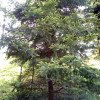
Abies religiosa ((Kunth) Schltdl. & Cham.)
2 -
Abies sachalinensis ((F.Schmidt) Mast.)
4 -
Abies sibirica (Ledeb.)
2 -
Abies spectabilis ((D.Don) Mirb.)
-
Abies squamata (Masters)
-
Abies veitchii (Lindl.)
2 -
Abies vejarii (Martínez)
3 -
Abies yuanbaoshanensis (Y.J.Lu & L.K.Fu)
-
Abies ziyuanensis (L.K.Fu & S.L.Mo)