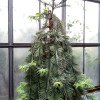
Genus Wollemia in Family Araucariaceae
In botanical taxonomy, a genus (plural genera) is a rank used to group closely related species within a family. In the hierarchy, genus sits below family and above species.
Genera are defined by shared morphological, anatomical, and genetic characteristics (for example, features of flowers, fruits, seeds, or leaves) that indicate a close evolutionary relationship among the species they contain.
Each genus can include one or more species. Examples include Rosa (roses) and Solanum (nightshades, including tomato and eggplant).
Do you wish to read more about plant taxonomy? Click here!
Genus Description
Suggest a correction!Wollemia is a monotypic conifer in the family Araucariaceae (POWO, 2024; WFO, 2024). The single species, Wollemia nobilis, was described by Jones, K.D. Hill & J.M. Allen in 1995 (Jones et al., 1995) and designated the type species of the genus at that time. It is endemic to a few sites in Wollemi National Park, New South Wales, Australia, where it grows on sandstone cliffs and fire‑prone sclerophyll forest at elevations of roughly 200–800 m (Hill, 2000).
Morphologically, Wollemia is a dioecious evergreen that reaches about 40 m in height with a narrow, often forked trunk. Leaves are whorled, sharply pointed, thick‑cuticled, and dimorphic: juvenile leaves are broader (≈2 cm) while adult leaves may reach 6 cm. Male cones are terminal, cylindrical, and release wind‑dispersed pollen in early spring; female cones develop into large woody structures 10–20 cm long bearing solitary, winged seeds that mature over two years (Crisp et al., 2015). The seed coat is thin, the embryo possesses two cotyledons, and the wing is narrow but sufficient for short‑distance wind dispersal.
Because the genus contains only one extant species, its diversity is confined to the living populations, estimated at fewer than one hundred individuals (POWO, 2024). These are a relict Gondwanan lineage, with fossils dating to the Jurassic. The species occupies shallow soils on sandstone, is fire‑adapted, and grows slowly; individuals may exceed four centuries (Jones et al., 1995). Pollination is exclusively anemophilous, and seed dispersal is assisted by the winged seeds (Crisp et al., 2015). Cytological studies report a chromosome number of 2n = 22, indicating a base number x = 11 consistent with other Araucariaceae (Hill, 2000). No subgeneric divisions have been proposed; molecular phylogenies consistently place Wollemia as sister to the clade comprising Araucaria and Agathis (Crisp et al., 2015). Earlier taxonomic treatments sometimes placed the species within Araucaria, but modern consensus follows Jones et al., 1995 and is accepted by major databases (POWO, 2024; WFO, 2024).
While Wollemia is not used for timber, it is widely cultivated as an ornamental in botanical gardens and is propagated by cuttings and tissue culture for education and conservation (Jones et al., 1995). The species is listed as endangered; primary threats include illegal collection, habitat fragmentation, and altered fire regimes (POWO, 2024). Continued ex situ cultivation and protection are essential, yet detailed genomic assessments and long‑term population monitoring remain critical gaps.