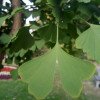
Genus Ginkgo in Family Ginkgoaceae
In botanical taxonomy, a genus (plural genera) is a rank used to group closely related species within a family. In the hierarchy, genus sits below family and above species.
Genera are defined by shared morphological, anatomical, and genetic characteristics (for example, features of flowers, fruits, seeds, or leaves) that indicate a close evolutionary relationship among the species they contain.
Each genus can include one or more species. Examples include Rosa (roses) and Solanum (nightshades, including tomato and eggplant).
Do you wish to read more about plant taxonomy? Click here!
Genus Description
Suggest a correction!Ginkgo, with the sole living species Ginkgo biloba L., is the sole genus of the family Ginkgoaceae within the order Ginkgoales, a lineage sister to all other seed plants and widely treated as an “orphan” lineage of gymnosperms (PPG I, 2016; Crane, 2013). The genus contains about one species, with G. biloba as the accepted name; any infrageneric ranks historically applied in Ginkgo are not in contemporary use and no widely accepted sections or subgenera are recognized (Trécul, 1945; Florin, 1949). Ginkgo is native to eastern China and is nearly extinct in the wild due to millennia of cultivation, though feral and cultivated trees occur on most continents (Christenhusz et al., 2011; WFO, 2024). It is typical of temperate mixed forests but thrives in urban environments, where individuals can persist for centuries.
Diagnostic characters distinguish Ginkgo clearly from other gymnosperms. The deciduous habit and fan-shaped leaves with dichotomous venation, a petiole, and a waxy cuticle are unique (Florin, 1949; Trécul, 1945). The species is dioecious: male trees produce catkin-like microsporangia; female trees bear two ovules per peduncle that develop into seeds with fleshy sarcotesta and hard sclerotesta (Rushforth, 1999; Christenhusz et al., 2011). Inflorescences are inconspicuous; ovules are terminal and erect. Seeds are drupaceous in appearance, and the ovules attach basally. Embryos are notable for early development and cotyledon fusion (Trécul, 1945). Ginkgo produces resin ducts throughout vegetative tissues, and fossil relatives are numerous (Crane, 2013).
The center of diversity and native occurrence lies in eastern China, with a few wild-like populations documented; long-term cultivation means true wild populations remain ambiguous (Christenhusz et al., 2011). Ginkgo inhabits diverse temperate habitats and elevations and establishes in parks, campuses, and streetscapes worldwide, where males are preferred to avoid odorous seeds (Rushforth, 1999).
Pollination is anemophilous; ovule and pollen morphology reflect wind adaptation (Christenhusz et al., 2011; Zhou & Zheng, 2008). Seeds are dispersed over short distances by gravity and small mammals; megafaunal dispersal is inferred for fossil forms but not confirmed for extant populations (Crane, 2013). Sexual maturity may take decades; male trees typically flower earlier than females (Rushforth, 1999). Chromosome counts are 2n=24 (n=12), with this number consistently reported in cytological surveys (Ghosh, 1954; Mehra & Sareen, 1967).
No recognized subgeneric structure is applied in contemporary taxonomy; major clades or re-circumscriptions focus on congeneric species, which lack living representatives (Trécul, 1945; Florin, 1949). Alternative treatments emphasize the genus’s monotypic status, with historical distinctions among fossil species not relevant to the living flora (Crane, 2013).园艺ally and ecologically, Ginkgo is a long-lived ornamental street and shade tree valued for foliage color and resilience in urban conditions; it is not a major timber species and is rarely invasive (Christenhusz et al., 2011; Rushforth, 1999).
IUCN assessments categorize Ginkgo biloba as Critically Endangered in the wild due to its restricted native distribution and heavy reliance on cultivation (IUCN, 2023; POWO, 2024). Threats include habitat loss and limited genetic diversity in remnant wild-like stands; further population genetics and historical demography work are priorities. Pending long-term monitoring of cultivated versus wild lineages, Ginkgo will likely remain a cultural symbol with significant ecological and horticultural value (Christenhusz et al., 2011).