
Genus Zamia in Family Zamiaceae
In botanical taxonomy, a genus (plural genera) is a rank used to group closely related species within a family. In the hierarchy, genus sits below family and above species.
Genera are defined by shared morphological, anatomical, and genetic characteristics (for example, features of flowers, fruits, seeds, or leaves) that indicate a close evolutionary relationship among the species they contain.
Each genus can include one or more species. Examples include Rosa (roses) and Solanum (nightshades, including tomato and eggplant).
Do you wish to read more about plant taxonomy? Click here!
Genus Description
Suggest a correction!Zamia, a genus of the cycad family Zamiaceae, comprises roughly 70–80 species distributed throughout the neotropics from the southeastern United States to northern Bolivia and the Caribbean (Stevenson, 1992; POWO, 2024). The type species is Zamia pumila L., traditionally referenced in taxonomic treatments of the group. Plants are typically small, with a subterranean to short caudex bearing a rosette of glossy, pinnate leaves that are usually glabrous, although some taxa display a fine indumentum on the petiole or young fronds. Reproductive structures are dioecious: male cones produce copious pollen, while female cones bear ovules on modified sporophylls; pollination is primarily by beetles, with wind playing a secondary role (Stevenson, 1992; Chaw et al., 2000). Seeds are covered by a fleshy sarcotesta that attracts animal dispersers, and the base chromosome number is consistently x = 8 (Stevenson, 1992; Whitelock, 1999).
The greatest diversity of Zamia is concentrated in Central America, the northern Andes, and the Greater Antilles, where numerous narrow endemics occupy humid lowland forest, moist montane habitats, and even seasonally dry scrub from sea level to elevations of about 1,500 m (Nagalingum et al., 2011). Island endemics such as Zamia roezlii in the Dominican Republic illustrate the strong regional specialization within the genus.
Intrinsic biological features include a nitrogen‑fixing symbiosis with cyanobacteria hosted in coralloid roots, a trait common to all cycads but particularly evident in many Zamia species (Whitelock, 1999). The pollination system, dominated by obligate beetles that emerge from male cones at night, underscores a long co‑evolutionary history with specialized pollinators (Chaw et al., 2000). Seed dispersal is primarily biotic, with birds and small mammals ingesting the fleshy seed coat and facilitating movement across fragmented habitats.
Taxonomically, recent molecular phylogenies support the monophyly of Zamia, placing it as sister to a clade comprising Macrozamia and Encephalartos within Zamiaceae (Nagalingum et al., 2011). No universally adopted infrageneric rank is currently applied, although some authors have historically recognized sectional divisions (Stevenson, 1992). Alternative broader species concepts have been proposed, for instance by Hill (1995) who synonymized several Central American taxa under Zamia integrifolia, but these treatments remain contested and are not reflected in the most current checklists (WFO, 2024; POWO, 2024).
Zamia species are widely cultivated as ornamental plants; Zamia furfuracea and Zamia roezlii are popular in horticulture for their tolerance of low light and periodic drought. Their timber is generally not of commercial importance, and most taxa are not considered invasive, though escaped cultivated individuals occasionally naturalize in suitable habitats.
Conservation concerns are significant: over‑collection for the ornamental trade, habitat loss, and limited dispersal capabilities have placed many Zamia species on the IUCN Red List and under CITES Appendix II (POWO, 2024). Targeted ex situ conservation, continued taxonomic clarification, and expanded field surveys are needed to secure the long‑term viability of the genus.
-
Zamia acuminata (Oerst. ex Dyer)
-
Zamia amazonum (D.W.Stev.)
-
Zamia amplifolia (W.Bull ex Mast.)
-
Zamia angustifolia (Jacq.)
-
Zamia boliviana (A.DC.)
-
Zamia brasiliensis (Calonje & Segalla)
-
Zamia chigua (Seem.)
-
Zamia cremnophila (Vovides, Schutzman & Dehgan)
-
Zamia cunaria (Dressler & D.W.Stev.)
-
Zamia decumbens (Calonje, Meerman, M.P.Griff. & Hoese)
-
Zamia disodon (D.W.Stev. & Sabato)
-
Zamia dressleri (D.W.Stev.)
-
Zamia elegantissima (Schutzman, Vovides & R.S.Adams)
-
Zamia encephalartoides (D.W.Stev.)
-
Zamia erosa (O.F.Cook & G.N.Collins)
-
Zamia fairchildiana (L.D.Gómez)
-
Zamia fischeri (Miq. ex Lem.)
-
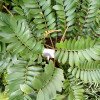
Zamia furfuracea (L.f.)
-
Zamia gentryi (Dodson)
-
Zamia gomeziana (R.H.Acuña)
-
Zamia grijalvensis (Pérez-Farr., Vovides & Mart.-Camilo)
-
Zamia hamannii (A.S.Taylor, J.L.Haynes & Holzman)
-
Zamia herrerae (S.Calderón & Standl.)
-
Zamia huilensis (Calonje, H.E.Esquivel & D.W.Stev.)
-
Zamia hymenophyllidia (D.W.Stev.)
-
Zamia imbricata (Calonje & J.Castro)
-
Zamia imperialis (A.S.Taylor, J.L.Haynes & Holzman)
-
Zamia incognita (A.Lindstr. & Idarraga)
-
Zamia inermis (Vovides, J.D.Rees & Vázq.Torres)
-
Zamia integrifolia (L.f.)
2 -
Zamia ipetiensis (D.W.Stev.)
-
Zamia katzeriana ((Regel) E.Rettig)
-
Zamia lacandona (Schutzman & Vovides)
-
Zamia lawsoniana (Dyer)
-
Zamia lecointei (Ducke)
-
Zamia lindenii (Regel ex André)
-
Zamia lindleyi (Warsz.)
-
Zamia lindosensis (D.W.Stev., D.Cárdenas & N.Castaño)
-
Zamia loddigesii (Miq.)
-
Zamia lucayana (Britton)
-
Zamia macrochiera (D.W.Stev.)
-
Zamia magnifica (Pérez-Farr., Gut.Ortega & Calonje)
-
Zamia manicata (Linden ex Regel)
-
Zamia meermanii (Calonje)
-
Zamia melanorrhachis (D.W.Stev.)
-
Zamia montana (A.Braun)
-
Zamia monticola (Chamb.)
-
Zamia multidentata (Calonje, Segalla & R.S.Pimenta)
-
Zamia muricata (Willd.)
-
Zamia nana (A.Lindstr., Calonje, D.W.Stev. & A.S.Taylor)
-
Zamia nesophila (A.S.Taylor, J.L.Haynes & Holzman)
-
Zamia neurophyllidia (D.W.Stev.)
-
Zamia noeffiana (Linden ex Wittm.)
-
Zamia obliqua (A.Braun)
-
Zamia oligodonta (E.Calderón & D.W.Stev.)
-
Zamia onan-reyesii (C.Nelson & Sandoval)
-
Zamia oreillyi (C.Nelson)
-
Zamia orinoquiensis (Calonje, Betancur & A.Lindstr.)
-
Zamia paucifoliolata (Calonje)
-
Zamia paucijuga (Wieland)
-
Zamia poeppigiana (Mart. & Eichler)
-
Zamia portoricensis (Urb.)
-
Zamia potemkinii (hort. ex Miq.)
-
Zamia prasina (W.Bull)
-
Zamia pseudomonticola (L.D.Gómez ex D.W.Stev. & Sabato)
-
Zamia pseudoparasitica (J.Yates)
-
Zamia pumila (L.)
-
Zamia purpurea (Vovides, J.D.Rees & Vázq.Torres)
-
Zamia pygmaea (Sims)
-
Zamia pyrophylla (Calonje, D.W.Stev. & A.Lindstr.)
-
Zamia restrepoi ((D.W.Stev.) A.Lindstr.)
-
Zamia roezlii (Regel)
-
Zamia sandovalii (C.Nelson)
-
Zamia sinuensis (Calonje & J.Castro)
-
Zamia skinneri (Warsz.)
-
Zamia soconuscensis (Schutzman, Vovides & Dehgan)
-
Zamia spartea (A.DC.)
-
Zamia splendens (Schutzman)
-
Zamia standleyi (Schutzman)
-
Zamia stenophyllidia (Nic.-Mor., Mart.-Domínguez & D.W.Stev.)
-
Zamia stevensonii (A.S.Taylor & Holzman)
-
Zamia stricta (Miq.)
-
Zamia tolimensis (Calonje, H.E.Esquivel & D.W.Stev.)
-
Zamia tuerckheimii (Donn.Sm.)
-
Zamia ulei (Dammer)
-
Zamia urep (B.Walln.)
-
Zamia variegata (Warsz.)
-
Zamia vazquezii (D.W.Stev., Sabato & De Luca)
-
Zamia verschaffeltii (Miq.)
-
Zamia wallisii (A.Braun)