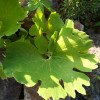
Genus Sanguinaria in Tribe Chelidonieae
In botanical taxonomy, a genus (plural genera) is a rank used to group closely related species within a family. In the hierarchy, genus sits below family and above species.
Genera are defined by shared morphological, anatomical, and genetic characteristics (for example, features of flowers, fruits, seeds, or leaves) that indicate a close evolutionary relationship among the species they contain.
Each genus can include one or more species. Examples include Rosa (roses) and Solanum (nightshades, including tomato and eggplant).
Do you wish to read more about plant taxonomy? Click here!
Genus Description
Suggest a correction!The genus Sanguinaria (family Papaveraceae) is monotypic, represented by S. canadensis L., the type species. It occurs throughout eastern North America, from Nova Scotia and Manitoba south to the Gulf Coast, inhabiting deciduous woodlands, forest margins, and shaded slopes up to 1200 m elevation. The rhizomatous habit, red latex, and solitary white flowers make the taxon readily identifiable (POWO, 2024; WFO, 2024).
Morphologically Sanguinaria is a herbaceous perennial emerging from a fleshy rhizome. Basal leaves are glaucous, palmately 5‑7‑lobed, and possess a short indumentum on the lower surface. The latex that exudes from injured tissue is bright orange‑red. Flowering scapes are 5–30 cm tall, each bearing a single flower with eight to twelve white petals, two falling sepals, and numerous stamens (≈20–30). The ovary is superior, bicarpellary and syncarpous with parietal placentation; the fruit is a dehiscent capsule bearing many seeds each equipped with an aril that promotes ant dispersal (Hoot, 1991; Stace, 1997).
The centre of diversity lies in the Appalachian‑Atlantic region, where populations occupy a range of moist, humus‑rich soils. Though widespread, many occurrences are confined to undisturbed forest patches, and regional endemism is limited. Typical habitats include riparian corridors, mixed hardwood stands, and early‑successional canopy gaps (APG IV, 2016). Elevational records extend from sea level to about 1300 m in the southern Appalachians.
Intrinsic biological traits include early‑spring anthesis, facilitating pollination by bees, flies and beetles seeking nectar. Seed dispersal is mediated by the aril, rendering the fruits attractive to ants (myrmecochory), a strategy documented in observations. Cytogenetic work reports a chromosome count of 2n = 18 (base x = 9) for S. canadensis (Hoot, 1991; Stace, 1997).
Taxonomically, no subgeneric sections are presently recognized. Historical treatments placed Sanguinaria in Berberidaceae, but molecular phylogenetic analyses consistently resolve it within Papaveraceae (APG IV, 2016; Hoot, 1991). Some authors have proposed varietal rank (e.g., S. canadensis var. praecox), yet most modern checklists retain a single species (WFO, 2024; POWO, 2024).
The plant is chiefly valued horticulturally for its striking early bloom and shade tolerance, often featured in woodland gardens and restoration plantings; it provides no significant timber or crop uses and is not considered invasive.
While S. canadensis is listed as secure in many jurisdictions, continued habitat loss and shifting climate envelopes pose threats to peripheral populations. Continued monitoring of genetic connectivity across its range will be essential to ensure its persistence in a changing environment.