
Genus Syringa in Family Oleaceae
In botanical taxonomy, a genus (plural genera) is a rank used to group closely related species within a family. In the hierarchy, genus sits below family and above species.
Genera are defined by shared morphological, anatomical, and genetic characteristics (for example, features of flowers, fruits, seeds, or leaves) that indicate a close evolutionary relationship among the species they contain.
Each genus can include one or more species. Examples include Rosa (roses) and Solanum (nightshades, including tomato and eggplant).
Do you wish to read more about plant taxonomy? Click here!
Genus Description
Suggest a correction!Syringa L. (Oleaceae) comprises shrubs and small trees, with about 20–28 accepted species depending on source, native from southeastern Europe across temperate Asia and naturalized elsewhere. Its most widespread representative is S. vulgaris L., the standard type for the genus. The species frequently inhabit forest edges, scrub, rocky slopes and river corridors from low to montane elevations (roughly sea level to 3000 m).
The plants are typically deciduous with opposite, simple leaves lacking stipules. Inflorescences are terminal, compound thyrses bearing many 4‑merous flowers with a narrow, often oblique corolla tube that flares into spreading lobes; the 2 stamens are attached within the tube and the superior ovary has two anatropous ovules per locule (placentation axile). The fruit is a dry, 2‑valved, dehiscent capsule bearing 2 flattened seeds with narrow wings. These characters, especially the terminal thyrse and obliquely funnellform corollas, distinguish Syringa from its close relatives such as Forsythia, whose spring flowers have a much wider tube and are not in terminal thyrses.
Species richness concentrates in East Asia, with notable centers in the Himalayas, northern and western China, and the Caucasus. Several taxa are narrowly endemic to mountain islands and foothills. The genus commonly occupies temperate woodland margins, scrub and rocky sites. Chromosome number is base x = 23 (2n = 46, 70, 72, 74, 92) across the group (Kumar and Sharma, 1999).
Bees are the principal pollinators (Macior, 1968), and capsules open at maturity to release wind‑dispersed seeds. Flowering is triggered by chilling, a key cue for cultivated forms that accounts for their variable performance in warmer regions. No evidence supports toxicity in foliage or flowers, consistent with its long use in public plantings.
Classical infrageneric systems (Lingelsheim, 1920; Rehder, 1940) divided Syringa into subgenera and sections (including S. subg. Ligustrina and S. subg. Syringa sect. Vulgaris), but phylogenomic results (Li et al., 2012) indicate only S. sect. Ligustrina is monophyletic and distinct, supporting its treatment at subgeneric rank (S. subg. Ligustrina Li), while the remainder of the genus forms a large, poorly resolved clade. Whether S. reticulata (subg. Ligustrina) belongs within Syringa has been debated; recent analyses maintain it in Syringa and it is the only Asian lilac with prominent lenticels (Kim and Jansen, 1996; Li et al., 2012).
Humans value Syringa for ornamental horticulture, especially S. vulgaris and its named cultivars; it is widely planted in temperate cities and gardens. Some Asian species (e.g., S. pubescens, S. josikaea) are cultivated regionally, and hybrids such as S. × hyacinthiflora extend bloom seasons. Self‑seeded populations occasionally establish on roadsides or woodland edges in cooler climates but are not considered aggressively invasive.
Climate warming threatens low‑elevation populations and cultivars dependent on sufficient winter chilling, while taxonomic ambiguity persists for several Sino‑Himalayan taxa (Fuentes et al., 2012; POWO, 2024). Continued integration of phylogenomics with improved regional treatments will refine species limits and conservation priorities. POWO, 2024; WFO, 2024; Kim and Jansen, 1996; Li et al., 2012; Macior, 1968.
-
Syringa emodi (Wall. ex Royle)
-
Syringa josikaea (J.Jacq. ex Rchb.)
-
Syringa komarowii (C.K.Schneid.)
-
Syringa oblata (Lindl.)
2 -
Syringa persica (L.)
-
Syringa pinetorum (W.W.Sm.)
-
Syringa pinnatifolia (Hemsl.)
-
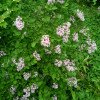
Syringa pubescens (Turcz.)
3 -
Syringa reticulata ((Blume) H.Hara)
3 -
Syringa tomentella (Bureau & Franch.)
3 -
Syringa villosa (Vahl)
2 -
Syringa vulgaris (L.)