
Genus Gunnera in Family Gunneraceae
In botanical taxonomy, a genus (plural genera) is a rank used to group closely related species within a family. In the hierarchy, genus sits below family and above species.
Genera are defined by shared morphological, anatomical, and genetic characteristics (for example, features of flowers, fruits, seeds, or leaves) that indicate a close evolutionary relationship among the species they contain.
Each genus can include one or more species. Examples include Rosa (roses) and Solanum (nightshades, including tomato and eggplant).
Do you wish to read more about plant taxonomy? Click here!
Genus Description
Suggest a correction!Gunnera L. belongs to the family Gunneraceae and comprises about 60 species of robust, herbaceous megaphylls. The genus is largely Southern Hemisphere in distribution, with strong concentrations in the Andes and southern South America, New Zealand and Tasmania, the Pacific (notably Juan Fernández and Hawaii), Madagascar and southern Africa, and southern Asia as far north as Taiwan. The type species of the genus is Gunnera manicata L.E.Matthews, an Andean taxon that typifies the genus in vegetative morphology. The genus is consistently defined by extremely large, long-petioled leaves with conspicuous peltate glands on the lamina and petiole, involucral structures termed “pseudostipules” that surround the young stem, minute unisexual flowers organized in paniculate inflorescences, and a drupaceous fruit with a small, orthotropic seed. These features, together with a distinct cotyledon type and wood anatomy, provide a reliable suite of characters that separates Gunnera from related lineages (von Balthazar et al., 2016).
Species richness and geographic structure reflect multiple dispersal and in situ diversification events. Centers of diversity include the Andes, New Zealand and Tasmania, and the Pacific islands, with several narrow endemics on islands such as Juan Fernández and Tristan da Cunha. Habitats range from lowland wet forest and subalpine stream banks to maritime bogs and high-elevation alpine meadows; many species occur in persistently moist sites at mid- to high elevations, although some occupy lowland wetlands or coastal habitats. The genus exemplifies disjunct Gondwanan distributions and intercontinental long-distance dispersal, patterns reconstructed by contemporary phylogenies and diversification analyses (Diazgranados & Barber, 2017).
Gunnera hosts symbiotic, atmospheric nitrogen-fixing cyanobacteria within specialized, shoot-borne glands—an obligate mutualism in at least some lineages that likely contributes to ecological success in nutrient-poor, wet habitats (Bergman et al., 1992). Pollination is primarily by wind, consistent with the reduction of perianth parts in unisexual flowers. Fruit are drupes dispersed by birds and other vertebrates in several regions, facilitating island colonization. Chromosome counts remain scarce, but the base number x = 19 is widely reported for taxa such as G. manicata, indicating substantial polyploidy and structural changes within the genus (Poelt, 1985; WFO, 2024).
Taxonomically, the genus has traditionally been divided into sections keyed to inflorescence and fruit morphology, and recent molecular work corroborates several of these major clades (Diazgranados & Barber, 2017; Skottsberg, 1912). The circumscription is stable, and no alternative major treatments dispute the placement of Gunnera in its own monogeneric family Gunneraceae, formerly allied within Gunnerales and now supported within the core eudicot grade following APG IV (APG, 2016; von Balthazar et al., 2016). Species limits in certain complexes, notably the G. tinctoria–G. herbacea group in the Southern Hemisphere, remain unsettled (Matthews, 1993; WFO, 2024), and comprehensive, phylogeographically informed revisions are needed.
Several species are widely cultivated ornamentals—most famously G. manicata—and some species, including G. tinctoria in parts of Australasia, naturalize and can become locally invasive (POWO, 2024). Elsewhere, large-leaved taxa supply ornamental foliage and occasionally timber for posts and construction. There are no medicinal claims presented here. In conservation terms, many island and narrow-range endemics face threats from habitat conversion and climate-driven range shifts, while the exact IUCN statuses for numerous taxa remain poorly known or dynamic (IUCN, 2024; WFO, 2024). Ongoing integrative taxonomic work and island-focused field surveys will be essential to document diversity and guide conservation priorities.
References: APG (2016); Bergman et al. (1992); Diazgranados & Barber (2017); IUCN (2024); Matthews (1993); Poelt (1985); POWO (2024); Skottsberg (1912); von Balthazar et al. (2016); WFO (2024).
-
Gunnera × cryptica (J.M.H.Shaw)
-
Gunnera × katherine\-wilsoniae (L.D.Gómez)
-
Gunnera aequatoriensis (L.E.Mora)
-
Gunnera albocarpa (Cockayne)
-
Gunnera annae (Schindl.)
-
Gunnera antioquensis (L.E.Mora)
-
Gunnera apiculata (Schindl.)
-
Gunnera arenaria (Cheeseman ex Kirk)
-
Gunnera atropurpurea (L.E.Mora)
5 -
Gunnera berteroi (Phil.)
-
Gunnera bogotana (L.E.Mora)
-
Gunnera bolivari (J.F.Macbr.)
-
Gunnera boliviana (Rusby)
-
Gunnera bracteata (Steud. ex Benn.)
-
Gunnera brephogea (Linden & André)
-
Gunnera caucana (L.E.Mora)
-
Gunnera colombiana (L.E.Mora)
-
Gunnera cordifolia (Hook.f.)
-
Gunnera cuatrecasasii (L.E.Mora)
-
Gunnera cuatrecasii (L.E.Mora)
-
Gunnera densiflora (Hook.f.)
-
Gunnera dentata (Kirk)
-
Gunnera diazii (L.E.Mora)
-
Gunnera flavida (Colenso)
-
Gunnera garciae-barrigae (L.E.Mora)
-
Gunnera hamiltonii (Kirk ex W.Ham.)
-
Gunnera hernandezii (L.E.Mora)
-
Gunnera herteri (Osten)
-
Gunnera insignis (Oerst.)
-
Gunnera kauaiensis (Rock)
-
Gunnera killipiana (Lundell)
-
Gunnera lobata (Hook.f.)
-
Gunnera lozanoi (L.E.Mora)
-
Gunnera macrophylla (Blume)
-
Gunnera magellanica (Lam.)
-
Gunnera magnifica (St.John)
-
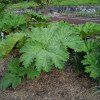
Gunnera manicata (Linden ex Delchev.)
-
Gunnera margaretae (Schindl.)
-
Gunnera masafuerae (Skottsb.)
-
Gunnera mexicana (Brandegee)
-
Gunnera mixta (Kirk)
-
Gunnera monoica (Raoul)
-
Gunnera morae (L.Wanntorp & Klack.)
-
Gunnera peltata (Phil.)
-
Gunnera perpensa (L.)
1 -
Gunnera peruviana (J.F.Macbr.)
-
Gunnera petaloidea (Gaudich.)
-
Gunnera pilosa (Kunth)
-
Gunnera pittieriana (V.M.Badillo & Steyerm.)
-
Gunnera prorepens (Hook.f.)
-
Gunnera quitoensis (L.E.Mora)
-
Gunnera reniformis (Ridl.)
-
Gunnera saint-johnii ((L.E.Mora) L.E.Mora)
-
Gunnera sanctae-marthae (L.E.Mora)
-
Gunnera schindleri (L.E.Mora)
-
Gunnera schultesii (L.E.Mora)
-
Gunnera silvioana (L.E.Mora)
-
Gunnera steyermarkii (L.E.Mora)
-
Gunnera strigosa (Colenso)
-
Gunnera tacueyana (L.E.Mora)
-
Gunnera tajumbina (L.E.Mora)
-
Gunnera talamancana (H.Weber & L.E.Mora)
-
Gunnera tamanensis (L.E.Mora)
-
Gunnera tayrona (L.E.Mora)
-
Gunnera tinctoria ((Molina) Mirb.)
3 -
Gunnera venezolana (L.E.Mora)
2