
Genus Spatholobus in Subfamily Papilionoideae
In botanical taxonomy, a genus (plural genera) is a rank used to group closely related species within a family. In the hierarchy, genus sits below family and above species.
Genera are defined by shared morphological, anatomical, and genetic characteristics (for example, features of flowers, fruits, seeds, or leaves) that indicate a close evolutionary relationship among the species they contain.
Each genus can include one or more species. Examples include Rosa (roses) and Solanum (nightshades, including tomato and eggplant).
Do you wish to read more about plant taxonomy? Click here!
Genus Description
Suggest a correction!Spatholobus is a genus of climbing or scrambling lianas and woody vines in the Fabaceae (legume family, subfamily Faboideae), with about sixty species distributed across tropical Asia from the Himalayas to Southeast Asia and southern China, extending to Malesia (Flora of China, 2010; Sun et al., 2021; Plants of the World Online, 2024). The type species is Spatholobus roxburghii (Legume Phylogeny Working Group, 2017). Its members commonly occur in lowland to submontane forests, forest margins, secondary thickets, and limestone habitats, ranging from near sea level to over 2000 meters.
The genus is recognized by its usually woody, twining habit; trifoliolate leaves with entire margins and a pair of persistent or early-deciduous stipules; and axillary or terminal pseudoracemes or racemes bearing dense, velutinous indumentum. Flowers are papilionaceous with a reflexed standard, a well-developed claw, and a thickened, often conspicuously upturned keel; the calyx has teeth that are usually unequal. The ovary is stipitate, uniloculate, and bears several ovules on a marginal placenta; the fruit is a flat, thin, often distinctly winged, indehiscent legume that may be twisted, containing one to several compressed seeds (Sun et al., 2021).
Species richness is highest in Indochina and Borneo, with numerous endemics restricted to karst or limestone formations and seasonal tropical forests (Flora of China, 2010; Sun et al., 2021). Biogeographically, Spatholobus shows a Malesian–Southwest Chinese pattern, with repeated regional differentiation, and occupies ecological gradients from lowland dipterocarp to lower montane communities.
Pollination is typically melittophilous, and dispersal appears to be anemochorous via the winged pods (Sun et al., 2021). A base chromosome number of n=11 has been reported from India (Kumar and Kumari, 1979), but chromosome counts are otherwise sparse. Vegetatively, most taxa exhibit twining or scandent stems with lenticellate bark and conspicuous tendrils that are derived from reduced leaflets or inflorescence axes.
Recent treatments treat Spatholobus without formal subgenera or sections (Sun et al., 2021; Liu et al., 2020). Molecular phylogenetic work places Spatholobus within the phaseoloid/milletioid clade, and some studies suggest that Whitiodermis may be nested within Spatholobus, but this synonymization has not been consistently adopted (The Legume Phylogeny Working Group, 2017; Liu et al., 2020). Alternative circumscriptions and generic boundaries, especially relative to Butea and Milletia, remain discussed but unsettled.
Human relevance is minor: a few species are cultivated as ornamentals or for their showy inflorescences, and some yield minor craft or dye materials, but none are major crops, timber sources, or invasive weeds of concern. Conservation concerns center on habitat loss across rapidly deforested regions, and research gaps include targeted phylogenomics to refine species limits and relationships among Malesian and Sino-Himalayan taxa (Plants of the World Online, 2024; World Flora Online, 2024).
-
Spatholobus acuminatus (Benth.)
-
Spatholobus albus (Wiriad. & Ridd.-Num.)
-
Spatholobus apoensis (Elmer)
-
Spatholobus auricomus (Ridd.-Num.)
-
Spatholobus auritus (Ridd.-Num.)
-
Spatholobus biauritus (Wei)
-
Spatholobus bracteolatus (Prain)
-
Spatholobus crassifolius (Benth.)
-
Spatholobus discolor (Wei)
-
Spatholobus dubius (Prain)
-
Spatholobus ferrugineus ((Zoll. & Moritzi) Benth.)
3 -
Spatholobus gengmaensis (Wei)
-
Spatholobus gyrocarpus (Benth.)
-
Spatholobus harmandii (Gagnep.)
-
Spatholobus hirsutus (Wiriad. & Ridd.-Num.)
-
Spatholobus latibractea (Ridd.-Num.)
-
Spatholobus latistipulus (Merr.)
-
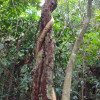
Spatholobus littoralis (Hassk.)
-
Spatholobus macropterus (Miq.)
-
Spatholobus maingayi (Prain)
-
Spatholobus merguensis (Prain)
-
Spatholobus multiflorus (Wiriad. & Ridd.-Num.)
-
Spatholobus oblongifolius (Merr.)
-
Spatholobus parviflorus ((Roxb. ex G.Don) Kuntze)
-
Spatholobus persicinus (Ridl.)
-
Spatholobus pottingeri (Prain)
-
Spatholobus pulcher (Dunn)
-
Spatholobus purpureus (Benth. ex Baker)
-
Spatholobus ridleyi (Prain)
-
Spatholobus sanguineus (Elmer)
-
Spatholobus sinensis (Chun & H.Y.Chen)
-
Spatholobus suberectus (Dunn)
-
Spatholobus uniauritus (Wei)
-
Spatholobus varians (Dunn)
-
Spatholobus viridis (Wiriad. & Ridd.-Num.)