
Genus Sophora in Subfamily Papilionoideae
In botanical taxonomy, a genus (plural genera) is a rank used to group closely related species within a family. In the hierarchy, genus sits below family and above species.
Genera are defined by shared morphological, anatomical, and genetic characteristics (for example, features of flowers, fruits, seeds, or leaves) that indicate a close evolutionary relationship among the species they contain.
Each genus can include one or more species. Examples include Rosa (roses) and Solanum (nightshades, including tomato and eggplant).
Do you wish to read more about plant taxonomy? Click here!
Genus Description
Suggest a correction!Sophora L. (family Fabaceae, subfamily Faboideae) comprises approximately 40–80 species of shrubs and trees with a pantropical and temperate distribution spanning the Americas, Asia, Australasia, and the Pacific (WFO, 2024; POWO, 2024; Bragina, 1994). The lectotype species is Sophora tomentosa L. The genus is placed in tribe Sophoreae and forms part of a wider “Sophoreae s.l.” clade whose circumscription has been clarified by molecular phylogenetic studies (Bruneau et al., 2008; Lewis et al., 2005).
Morphologically, Sophora is distinguished by its typically arborescent or shrubby habit and alternate, usually imparipinnate leaves. Stipules are present, often caducous. Flowers are papilionaceous, borne in racemes or panicles; the calyx is often campanulate, the banner suborbicular to ovate, and the keel petals are usually apically coherent. Stamens are diadelphous (9 + 1), and the ovary is stipitate with several ovules. Fruit is a many-seeded, sometimes torulose, usually indehiscent or tardily dehiscent legume; seeds vary from compressed to globose and are often hard-coated. The frequent combination of a shrubby or arborescent habit with diadelphous stamens and indehiscent legumes helps separate Sophora from related genera (Allen & Allen, 1981; Lock & Simpson, 1991).
Diversity centers in East Asia (China–Japan–Korea) and the Pacific (New Zealand–Hawaii), with additional species in the Americas; numerous taxa exhibit regional endemism (Mabberley, 2017). Typical habitats range from coastal sand dunes and scrub to forest edges and mountain slopes, with elevation tolerances documented for particular taxa; biomes encompass temperate and tropical settings, including island floras (POWO, 2024; Lock & Simpson, 1991). Phylogenetic analyses have prompted taxonomic revisions, notably the segregation of Styphnolobium (with S. japonicum as Styphnolobium japonicum) and Ammothamnus from Sophora (Bruneau et al., 2008; Lewis et al., 2005). Former sectional treatments have been superseded by molecular delimitation; some authors retain informal groups, but overall infrageneric classification remains under revision (WFO, 2024).
Sophora species are prominent in horticulture and urban forestry, especially S. microphylla and S. prostrata in New Zealand cultivation and S. davidii in temperate gardens. The genus provides valuable timber and ornamentals; some taxa have become naturalized or locally invasive in certain regions, reflecting both desirable garden attributes and potential weediness. Chromosome counts indicate a base number of x = 9 in several species (Lewis et al., 2005).
Human relevance focuses on ornamental and timber uses; medicinal claims are excluded here. Conservation status is unevenly documented; data are particularly sparse for island and coastal taxa. Continued application of integrative taxonomy and standardized checklists will refine species delimitation and inform conservation planning (WFO, 2024; POWO, 2024; Bragina, 1994).
-
Sophora albescens ((Rehder) C.Y.Ma)
-
Sophora albo-petiolulata (Leonard)
-
Sophora albopetiolulata (Leonard)
-
Sophora alopecuroides (L.)
2 -
Sophora bakeri (C.B.Clarke ex Prain)
-
Sophora benthamii (Steenis)
-
Sophora brachygyna (C.Y.Ma)
-
Sophora cassioides ((F.Phil.) Sparre)
-
Sophora chathamica (Cockayne)
-
Sophora chrysophylla ((Salisb.) Seem.)
-
Sophora conollyi ((Bunge ex Boiss.) M.Liao & Bo Xu)
-
Sophora davidii ((Franch.) Pavol.)
-
Sophora denudata (Bory)
-
Sophora dunii (Prain)
-
Sophora dunnii (Craib)
-
Sophora exigua (Craib)
2 -
Sophora fernandeziana (Skottsb.)
-
Sophora flavescens (Aiton)
3 -
Sophora franchetiana (Dunn)
-
Sophora fraseri (Benth.)
-
Sophora fulvida ((Allan) Heenan & de Lange)
-
Sophora gibbosa ((DC.) Yakovlev)
-
Sophora godleyi (Heenan & de Lange)
-
Sophora howinsula ((W.R.B.Oliv.) P.S.Green)
-
Sophora huamotensis (Mattapha, Suddee & Rueangr.)
-
Sophora inhambanensis (Klotzsch)
-
Sophora interrupta (Bedd.)
-
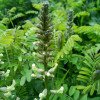
Sophora jaubertii (Spach)
-
Sophora koreensis (Nakai)
-
Sophora leachiana (M.E.Peck)
-
Sophora lehmannii ((Bunge) Yakovlev)
-
Sophora linearifolia (Griseb.)
-
Sophora longicarinata (G.Simpson & J.S.Thomson)
-
Sophora longipes (Merr.)
-
Sophora macnabiana ((Graham) Skottsb.)
-
Sophora macrocarpa (Sm.)
-
Sophora mangarevaensis (H.St.John)
-
Sophora masafuerana (Skottsb.)
-
Sophora microcarpa (C.Y.Ma)
-
Sophora microphylla (Aiton)
-
Sophora mollis ((Royle) Graham ex Baker)
4 -
Sophora molloyi (Heenan & de Lange)
-
Sophora moorcroftiana ((Benth.) Baker)
-
Sophora nuttalliana (B.L.Turner)
-
Sophora oblongata (P.C.Tsoong)
-
Sophora pachycarpa (Schrenk ex C.A.Mey.)
-
Sophora praetorulosa (P.T.Li)
-
Sophora prostrata (Buchanan)
-
Sophora raivavaeensis (H.St.John)
-
Sophora rapaensis (H.St.John)
-
Sophora reediana ((Phil.) Yakovlev)
-
Sophora rhynchocarpa (Griseb.)
-
Sophora saxicola (Proctor)
-
Sophora songarica (Schrenk)
-
Sophora stenophylla (A.Gray)
-
Sophora tetraptera (L.f.)
-
Sophora tomentosa (L.)
6 -
Sophora tonkinensis (Gagnep.)
3 -
Sophora toromiro (Skottsb.)
-
Sophora velutina (Lindl.)
6 -
Sophora violacea (Thwaites)
-
Sophora wightii (Baker)
-
Sophora xanthantha (C.Y.Ma)
-
Sophora xanthoantha (C.Y.Ma)
-
Sophora yunnanensis (C.Y.Ma)
-
Sophora zeylanica (Trimen)