
Genus Clethra in Family Clethraceae
In botanical taxonomy, a genus (plural genera) is a rank used to group closely related species within a family. In the hierarchy, genus sits below family and above species.
Genera are defined by shared morphological, anatomical, and genetic characteristics (for example, features of flowers, fruits, seeds, or leaves) that indicate a close evolutionary relationship among the species they contain.
Each genus can include one or more species. Examples include Rosa (roses) and Solanum (nightshades, including tomato and eggplant).
Do you wish to read more about plant taxonomy? Click here!
Genus Description
Suggest a correction!The summer‑sweet genus Clethra L., belonging to family Clethraceae, includes about 70 species of shrubs and small trees across temperate–subtropical forests of the Northern Hemisphere. Its centre of diversity lies in East Asia, with secondary clusters in Central America and the Caribbean. The type species, Clethra alnifolia L., was described by Linnaeus (POWO, 2024; WFO, 2024).
Morphologically Clethra bears alternate, simple, serrate leaves that are often densely tomentose beneath. Stipules are absent. Flowers are borne in terminal or axillary racemes or panicles; they are five‑merous with white to pinkish corollas and five stamens bearing terminal pores. The ovary is superior (or partly inferior) with five carpels and axile placentation; the fruit is a globose, dehiscent capsule containing many small, winged seeds.
Asian taxa dominate, with more than half of the species occurring in China, Japan, the Philippines and Thailand. Only a few species extend to eastern North America, while Central America and the Caribbean host modest endemics. Populations occupy moist understorey, stream margins and secondary forest from sea level to about 2500 m (Liu et al., 2020).
Pollination is mainly entomophilous, involving bees and flies, and seed dispersal is wind‑assisted by the winged capsule. Cytological studies report a base chromosome number x = 13 (Anderberg, 1997), with diploid counts of 2n = 26 common.
Molecular phylogenies (Liu et al., 2020) place Clethra in a well‑supported clade within Clethraceae, sister to the core Ericaceae–Sarraceniaceae clade (APG IV, 2016). The analysis recovers three major lineages: temperate Asian, tropical Asian and American. Tropical Asian taxa have traditionally been treated as subg. Pachycapsa (e.g., Anderberg, 1997), but a comprehensive revision integrating morphology and molecules remains unpublished. Recent checklists (POWO, 2024; WFO, 2024) list these sectional treatments, reflecting ongoing uncertainty.
Several Clethra species, notably C. alnifolia and C. barbinervis, are popular ornamentals for fragrant summer blooms. Timber of some larger species is used locally for small‑scale construction, but the genus has no major economic crops and is not recorded as invasive.
Many narrow endemics, especially in the mountains of East Asia and the Caribbean, are threatened by habitat loss and climate change; detailed red‑list assessments are scarce, highlighting the need for expanded field surveys and ex‑situ conservation. Continued integrative research will be essential to resolve species limits and guide protection measures.
-
Clethra acuminata (Michx.)
-
Clethra albertinae (L.M.González)
-
Clethra alcoceri (Greenm.)
-
Clethra alexandri (Griseb.)
-
Clethra alnifolia (L.)
-
Clethra arborea (Aiton)
-
Clethra arfakana (Sleumer)
-
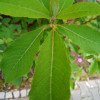
Clethra barbinervis (Siebold & Zucc.)
-
Clethra bodinieri (H.Lév.)
-
Clethra canescens (Herb.Reinw. ex Blume)
5 -
Clethra cardenasii (Sleumer)
-
Clethra castaneifolia (Meisn.)
-
Clethra chiapensis (L.M.González)
-
Clethra concordia (D.A.Neill, H.Beltrán & Quizhpe)
-
Clethra consimilis (Sleumer)
-
Clethra conzattiana (L.M.González)
-
Clethra costaricensis (Britton)
-
Clethra crispa (C.Gust.)
-
Clethra cubensis (A.Rich.)
-
Clethra cuneata (Rusby)
-
Clethra delavayi (Franch.)
-
Clethra elongata (Rusby)
-
Clethra fabri (Hance)
-
Clethra fagifolia (Kunth)
2 -
Clethra fargesii (Franch.)
-
Clethra ferruginea (Link)
-
Clethra fimbriata (Kunth)
-
Clethra formosa (E.Alfaro & J.F.Morales)
-
Clethra fragrans (L.M.González & R.Delgad.)
-
Clethra galeottiana (Briq.)
-
Clethra gelida (Standl.)
-
Clethra guyanensis (Klotzsch ex Meisn.)
-
Clethra hartwegii (Britton)
-
Clethra hendersonii (Sleumer)
-
Clethra hirsutovillosa (S.Valencia & Cruz Durán)
-
Clethra hondurensis (Britton)
-
Clethra javanica (Turcz.)
2 -
Clethra kaipoensis (H.Lév.)
-
Clethra kebarensis (Sleumer)
-
Clethra lanata (M.Martens & Galeotti)
-
Clethra licanioides (Standl. & Steyerm.)
-
Clethra longispicata (J.J.Sm.)
-
Clethra luzmariae (L.M.González)
-
Clethra macrophylla (M.Martens & Galeotti)
-
Clethra mexicana (DC.)
-
Clethra motozintlana (L.M.González)
-
Clethra oaxacana (C.W.Ham.)
-
Clethra obovata (Ruiz & Pav.)
-
Clethra occidentalis (Kuntze)
-
Clethra oleoides (L.O.Williams)
-
Clethra ovalifolia (Turcz.)
-
Clethra pachecoana (Standl. & Steyerm.)
-
Clethra pachyphylla (Merr.)
-
Clethra papuana (J.J.Sm.)
2 -
Clethra parallelinervia (C.Gust.)
-
Clethra parvifolia (Lundell)
-
Clethra pedicellaris (Turcz.)
-
Clethra peruviana (Szyszył.)
-
Clethra petelotii (Dop & Y.Troch.)
-
Clethra poilanei (Gagnep. ex Dop)
-
Clethra pringlei (S.Watson)
-
Clethra pulgarensis (Elmer)
-
Clethra purpusii (L.M.González)
-
Clethra pyrogena (Sleumer)
-
Clethra repanda (Turcz.)
-
Clethra retivenia (Sleumer)
-
Clethra revoluta (Ruiz & Pav.)
-
Clethra rosei (Britton)
-
Clethra rugosa (Steyerm.)
-
Clethra scabra (Pers.)
-
Clethra secazu (J.F.Morales)
-
Clethra skutchii (Standl. & Steyerm.)
-
Clethra sleumeriana (K.S.Hao)
-
Clethra standleyana (L.M.González)
-
Clethra suaveolens (Turcz.)
-
Clethra sumatrana (J.J.Sm.)
-
Clethra sumbawaensis (Sleumer)
-
Clethra symingtonii (Sleumer)
-
Clethra tacanensis (Lundell ex L.M.González)
-
Clethra talamancana (C.W.Ham.)
-
Clethra tomentella (Rolfe ex Dunn)
-
Clethra tomentosa (Lam.)
-
Clethra tutensis (C.W.Ham.)
-
Clethra tuxtlensis (L.M.González)
-
Clethra uleana (Sleumer)
-
Clethra vicentina (Standl.)
-
Clethra zunila (L.M.González)