
Genus Delosperma in Subfamily Ruschioideae
In botanical taxonomy, a genus (plural genera) is a rank used to group closely related species within a family. In the hierarchy, genus sits below family and above species.
Genera are defined by shared morphological, anatomical, and genetic characteristics (for example, features of flowers, fruits, seeds, or leaves) that indicate a close evolutionary relationship among the species they contain.
Each genus can include one or more species. Examples include Rosa (roses) and Solanum (nightshades, including tomato and eggplant).
Do you wish to read more about plant taxonomy? Click here!
Genus Description
Suggest a correction!Delosperma N.E.Br. is a genus of succulent herbs in the family Aizoaceae, comprising about 200 species that are predominantly endemic to southern Africa, especially the Cape Floristic Region, with additional representatives in Namibia, Botswana, Zimbabwe, Madagascar, and the Arabian Peninsula. The type species is Delosperma spathulatum (N.E.Br.), and the genus is recognized for its rosette habit and fleshy, often lanceolate leaves that may bear marginal teeth or a fine indumentum of trichomes. Flowers are typically solitary or in small cymes, with five petals, ten stamens, and a superior ovary that is usually 2‑3‑locular; the fruit is a dry capsule that dehisces to release numerous small seeds. These morphological features distinguish Delosperma from other Aizoaceae genera such as Mesembryanthemum and Aloe, which differ in leaf arrangement, inflorescence type, and fruit dehiscence (POWO, 2024; WFO, 2024).
The genus exhibits remarkable ecological diversity, occupying rocky slopes, dunes, grasslands, fynbos, and succulent karoo habitats from sea level to elevations of about 1,500 m. Centers of diversity are concentrated in the Cape Floristic Region, where many species are highly localized and exhibit narrow ecological tolerances. In Madagascar, a few species have adapted to xeric limestone outcrops, while the Arabian species occupy desert wadis. The distribution pattern reflects both ancient vicariance and recent long‑distance dispersal events, as suggested by recent phylogenetic analyses (van der Merwe et al., 2018).
Pollination is largely insect‑mediated, with bees and other generalist visitors attracted to the brightly colored, nectar‑producing flowers. Seed dispersal is primarily abiotic, with wind and water facilitating the spread of the small, lightweight seeds; some species also exhibit epizoochorous dispersal via attachment to animal fur. The base chromosome number for Delosperma is consistently reported as x = 10, a value shared with many other Aizoaceae taxa (Smith et al., 2022).
Taxonomically, Delosperma is divided into several subgenera and sections, the most widely accepted being subgenera Delosperma and Aizoanthemum. Recent revisions have synonymized some previously separate genera and clarified species boundaries, but unresolved polyphyly in certain clades remains a topic of debate (van der Merwe et al., 2018; APG IV, 2016). Alternative treatments that treat Delosperma as a single, broadly circumscribed genus are also documented, underscoring the need for further phylogenomic work.
Delosperma species are popular ornamental succulents, prized for their drought tolerance and vibrant inflorescences; they are widely cultivated in rock gardens, xeriscapes, and container horticulture. While not known for medicinal uses, some species are occasionally harvested for ornamental trade, raising concerns about overcollection. Invasive potential is low, but local introductions can threaten native succulent communities.
Conservation assessments indicate that many Delosperma species face habitat loss, overcollection, and climate change, with several species listed as vulnerable or endangered. Targeted research on species delimitation, population genetics, and ecological niche modeling will be essential to guide effective conservation strategies and to refine our understanding of this diverse and ecologically significant genus.
-
Delosperma abbottii (van Jaarsv.)
-
Delosperma aberdeenense ((L.Bolus) L.Bolus)
-
Delosperma abyssinicum ((Regel) Schwantes)
-
Delosperma acocksii (L.Bolus)
-
Delosperma acuminatum (L.Bolus)
-
Delosperma adamantinum (Niederle)
-
Delosperma adelaidense (Lavis)
-
Delosperma aereum ((L.Bolus) L.Bolus)
-
Delosperma affine (Lavis)
-
Delosperma aliwalense (L.Bolus)
-
Delosperma alticola (L.Bolus)
-
Delosperma annulare (L.Bolus)
-
Delosperma ashtonii (L.Bolus)
-
Delosperma badspoortense ((Van Jaarsv.) Klak)
-
Delosperma basuticum (L.Bolus)
-
Delosperma bosseranum (Marais)
-
Delosperma brevipetalum (L.Bolus)
-
Delosperma brevisepalum (L.Bolus)
-
Delosperma brunnthaleri ((A.Berger) Schwantes ex H.Jacobsen)
-
Delosperma caespitosum (L.Bolus)
-
Delosperma calitzdorpense (L.Bolus)
-
Delosperma calycinum (L.Bolus)
-
Delosperma carolinense (N.E.Br.)
-
Delosperma carterae (L.Bolus)
-
Delosperma clavipes (Lavis)
-
Delosperma cloeteae (Lavis)
-
Delosperma concavum (L.Bolus)
-
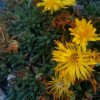
Delosperma congestum (L.Bolus)
-
Delosperma cooperi ((Hook.f.) L.Bolus)
-
Delosperma crassuloides ((Haw.) L.Bolus)
-
Delosperma crassum (L.Bolus)
-
Delosperma cronemeyerianum ((A.Berger) H.Jacobsen ex H.E.K.Hartmann)
-
Delosperma davyi (N.E.Br.)
-
Delosperma deilanthoides (S.A.Hammer)
-
Delosperma deleeuwiae (Lavis)
-
Delosperma denticulatum (L.Bolus)
-
Delosperma dolomitica (van Jaarsv. & A.E.van Wyk)
-
Delosperma dunense (L.Bolus)
-
Delosperma dyeri (L.Bolus)
-
Delosperma echinatum ((Lam.) Schwantes)
-
Delosperma ecklonis ((Salm-Dyck) Schwantes)
-
Delosperma erectum (L.Bolus)
-
Delosperma esterhuyseniae (L.Bolus)
-
Delosperma ficksbergense (Lavis)
-
Delosperma floribundum (L.Bolus)
-
Delosperma fredericii (Lavis)
-
Delosperma frutescens (L.Bolus)
-
Delosperma galpinii (L.Bolus)
-
Delosperma gautengense (H.E.K.Hartmann)
-
Delosperma gerstneri (L.Bolus)
-
Delosperma giffenii (Lavis)
-
Delosperma gracile (L.Bolus)
-
Delosperma gramineum (L.Bolus)
-
Delosperma grantiae (L.Bolus)
-
Delosperma gratiae (L.Bolus)
-
Delosperma guthriei (Lavis)
-
Delosperma harazianum ((Deflers) Poppend. & Ihlenf.)
-
Delosperma herbeum ((N.E.Br.) N.E.Br.)
-
Delosperma hirtum ((N.E.Br.) Schwantes)
-
Delosperma hollandii (L.Bolus)
-
Delosperma holzbecherorum (Niederle)
-
Delosperma imbricatum (L.Bolus)
-
Delosperma inaequale (L.Bolus)
-
Delosperma incomptum ((Haw.) L.Bolus)
-
Delosperma inconspicuum (L.Bolus)
-
Delosperma intonsum (L.Bolus)
-
Delosperma invalidum ((N.E.Br.) H.E.K.Hartmann)
-
Delosperma jansei (N.E.Br.)
-
Delosperma karrooicum (L.Bolus)
-
Delosperma katbergense (L.Bolus)
-
Delosperma klinghardtianum ((Dinter) Dinter & Schwantes)
-
Delosperma knox-daviesii (Lavis)
-
Delosperma kofleri (Lavis)
-
Delosperma lavisiae (L.Bolus)
-
Delosperma laxipetalum (L.Bolus)
-
Delosperma lebomboense ((L.Bolus) Lavis)
-
Delosperma leendertziae (N.E.Br.)
-
Delosperma leightoniae (Lavis)
-
Delosperma liebenbergii (L.Bolus)
-
Delosperma lineare (L.Bolus)
-
Delosperma litorale ((Kensit) L.Bolus)
-
Delosperma lootsbergense (Lavis)
-
Delosperma luckhoffii (L.Bolus)
-
Delosperma luteum (L.Bolus)
-
Delosperma lydenburgense (L.Bolus)
-
Delosperma macellum ((N.E.Br.) N.E.Br.)
-
Delosperma macrostigma (L.Bolus)
-
Delosperma mahonii ((N.E.Br.) N.E.Br.)
-
Delosperma mariae (L.Bolus)
-
Delosperma maxwellii (L.Bolus)
-
Delosperma monanthemum (Lavis)
-
Delosperma muirii (L.Bolus)
-
Delosperma multiflorum (L.Bolus)
-
Delosperma nakurense ((Engl.) A.G.J.Herre)
-
Delosperma napiforme ((N.E.Br.) Schwantes)
-
Delosperma neethlingiae ((L.Bolus) Schwantes)
-
Delosperma nelii (L.Bolus)
-
Delosperma nubigenum ((Schltr.) L.Bolus)
-
Delosperma obtusum (L.Bolus)
-
Delosperma oehleri ((Engl.) A.G.J.Herre)
-
Delosperma ornatulum (N.E.Br. ex Stapf)
-
Delosperma pachyrhizum (L.Bolus)
-
Delosperma pageanum ((L.Bolus) Schwantes)
-
Delosperma pallidum (L.Bolus)
-
Delosperma parentum (Niederle)
-
Delosperma parviflorum (L.Bolus)
-
Delosperma patersoniae ((L.Bolus) L.Bolus)
-
Delosperma peersii (Lavis)
-
Delosperma peglerae (L.Bolus)
-
Delosperma pilosulum (L.Bolus)
-
Delosperma platysepalum (L.Bolus)
-
Delosperma pondoense (L.Bolus)
-
Delosperma pontii (L.Bolus)
-
Delosperma pottsii ((L.Bolus) L.Bolus)
-
Delosperma prasinum (L.Bolus)
-
Delosperma purpureum (H.E.K.Hartmann)
-
Delosperma repens (L.Bolus)
-
Delosperma reynoldsii (Lavis)
-
Delosperma rileyi (L.Bolus)
-
Delosperma robustum (L.Bolus)
-
Delosperma rogersii ((Schönland & A.Berger) L.Bolus)
-
Delosperma roseopurpureum (Lavis)
-
Delosperma saturatum (L.Bolus)
-
Delosperma sawdahense (H.E.K.Hartmann)
-
Delosperma saxicola (Lavis)
-
Delosperma scabripes (L.Bolus)
-
Delosperma schimperi ((Engl.) H.E.K.Hartmann & Niesler)
-
Delosperma smytheae (L.Bolus)
-
Delosperma sphalmanthoides (S.A.Hammer)
-
Delosperma stenandrum (L.Bolus)
-
Delosperma steytlerae (L.Bolus)
-
Delosperma subclavatum (L.Bolus)
-
Delosperma subincanum ((Haw.) Schwantes)
-
Delosperma subpetiolatum (L.Bolus)
-
Delosperma sulcatum (L.Bolus)
-
Delosperma sutherlandii ((Hook.f.) N.E.Br.)
-
Delosperma suttoniae (Lavis)
-
Delosperma testaceum ((Haw.) Schwantes)
-
Delosperma tradescantioides ((A.Berger) L.Bolus)
-
Delosperma truteri (Lavis)
-
Delosperma uitenhagense (L.Bolus)
-
Delosperma uncinatum (L.Bolus)
-
Delosperma uniflorum (L.Bolus)
-
Delosperma vandermerwei (L.Bolus)
-
Delosperma velutinum (L.Bolus)
-
Delosperma verecundum (L.Bolus)
-
Delosperma vernicolor (L.Bolus)
-
Delosperma versicolor (L.Bolus)
-
Delosperma vinaceum ((L.Bolus) L.Bolus)
-
Delosperma virens (L.Bolus)
-
Delosperma waterbergense (L.Bolus)
-
Delosperma wethamae (L.Bolus)
-
Delosperma wilmaniae (Lavis)
-
Delosperma wiumii (Lavis)
-
Delosperma zeederbergii (L.Bolus)
-
Delosperma zoeae (L.Bolus)
-
Delosperma zoutpansbergense (L.Bolus)