
Genus Artemisia in Tribe Anthemideae
In botanical taxonomy, a genus (plural genera) is a rank used to group closely related species within a family. In the hierarchy, genus sits below family and above species.
Genera are defined by shared morphological, anatomical, and genetic characteristics (for example, features of flowers, fruits, seeds, or leaves) that indicate a close evolutionary relationship among the species they contain.
Each genus can include one or more species. Examples include Rosa (roses) and Solanum (nightshades, including tomato and eggplant).
Do you wish to read more about plant taxonomy? Click here!
Genus Description
Suggest a correction!The genus Artemisia (authority: L.) belongs to the Asteraceae family and comprises approximately 500 species of herbaceous perennials and subshrubs, with occasional annuals and shrubs. The genus has a cosmopolitan distribution primarily across temperate and arid regions of the Northern Hemisphere, extending into some subtropical and tropical montane areas. The type species is Artemisia vulgaris L., commonly known as mugwort. Species typically occupy dry grasslands, steppes, deserts, alpine meadows, and forest margins, with several taxa adapted to high elevations.
Artemisia exhibits several diagnostic morphological features that distinguish it within Asteraceae. Plants typically possess aromatic foliage with pinnately to ternately divided leaves, often covered with a distinctive tomentose indumentum that gives many species their characteristic silvery-gray appearance. The inflorescences are paniculate or racemose heads composed predominantly of discoid florets, with female florets usually present at the outer margins and bisexual florets centrally arranged. The achenes possess a pappus that may be absent or reduced, and they are typically compressed or somewhat trigonal.
Species diversity shows distinct centers of distribution, with the highest richness occurring in temperate Asia, particularly China and Central Asia, where numerous endemic species are found. Additional diversification centers include the Mediterranean Basin, North America, particularly in sagebrush habitats, and parts of Africa. Some species exhibit narrow endemism, while others, such as A. dracunculus (tarragon) and A. annua (sweet wormwood), have become widely naturalized across multiple continents.
Intrinsic biological characteristics include adaptation to drought through xerophytic leaf modifications and specialized root systems. Reproductive strategies vary from wind-pollination in many North American species to insect-mediated pollination in Eurasian taxa. Documented chromosome base numbers include x=9 and x=18, with polyploidy common across the genus.
Taxonomic organization follows a sectional classification with major groups including Artemisia section Artemisia and Artemisia section Dracunculus, though recent molecular phylogenetic studies (Vallès et al., 2003; García et al., 2017) have prompted taxonomic revisions. Alternative treatments recognize the segregate genus Seriphidium for many woody species previously classified within Artemisia (Poljakov, 1961), though this circumscription remains controversial and not universally accepted (Bremer & Humphries, 1993; WFO, 2024).
Human relevance encompasses significant horticultural importance with A. tridentata (big sagebrush) serving as a keystone species in western North American ecosystems, and A. dracunculus providing culinary value as French tarragon. Several species function as invasive weeds, including A. annua in parts of Asia and Artemisia spp. in disturbed habitats worldwide. The genus also provides essential habitat and forage for wildlife across its range.
Conservation concerns center on habitat degradation in some regions, particularly for endemic mountain species facing climate change pressures (POWO, 2024). Continued taxonomic clarification and comprehensive phylogenetic studies remain priorities for understanding this morphologically variable genus.
-
Artemisia × wurzellii (C.M.James & Stace)
-
Artemisia abaensis (Y.R.Ling & S.Y.Zhao)
-
Artemisia abbreviata ((Krasch. ex Korobkov) Krasnob.)
-
Artemisia abrotanum (L.)
-
Artemisia absinthium (L.)
-
Artemisia abyssinica (Sch.Bip. ex A.Rich.)
-
Artemisia adamsii (Besser)
-
Artemisia afghanica (Rech.f. & Köie)
-
Artemisia aflatunensis (Poljakov ex U.P.Pratov & Bakanova)
-
Artemisia afra (Jacq.)
-
Artemisia aksaiensis (Y.R.Ling)
-
Artemisia alaskana (Rydb.)
-
Artemisia alba (Turra)
4 -
Artemisia albicans (Sòn.Garcia, Garnatje, McArthur, Pellicer, S.C.Sand. & Vallès-Xirau)
-
Artemisia albicaulis (Nevski)
-
Artemisia albicerata (Krasch.)
-
Artemisia alcockii (Pamp.)
-
Artemisia aleutica (Hultén)
-
Artemisia algeriensis (Filatova)
-
Artemisia alpina (Pall. ex Willd.)
-
Artemisia ammaniana (Besser)
-
Artemisia amoena (Poljakov)
-
Artemisia amygdalina (Decne.)
-
Artemisia andersiana (Podlech)
-
Artemisia anethifolia (Poljakov)
-
Artemisia anethoides (Mattf.)
-
Artemisia angustissima (Nakai)
-
Artemisia annua (L.)
-
Artemisia anomala (S.Moore)
2 -
Artemisia apiacea (Hance)
-
Artemisia aralensis (Krasch.)
-
Artemisia araxina (Takht.)
-
Artemisia arborescens (L.)
-
Artemisia arbuscula (Nutt.)
3 -
Artemisia arctica ((Besser) Leonova)
-
Artemisia arctisibirica (Korobkov)
-
Artemisia arenaria (DC.)
-
Artemisia argentea (L'Hér.)
-
Artemisia argyi (H.Lév. & Vaniot)
1 -
Artemisia argyrophylla (Ledeb.)
3 -
Artemisia armeniaca (Lam.)
-
Artemisia arschantinica (Darijma)
-
Artemisia aschurbajewi (C.Winkl.)
-
Artemisia atlantica (Coss. & Durieu)
-
Artemisia atrata (Lam.)
-
Artemisia atrovirens (Hand.-Mazz.)
-
Artemisia aucheri (Boiss.)
-
Artemisia aurata (Komarov)
-
Artemisia austisibirica ()
-
Artemisia australis (Less.)
-
Artemisia austriaca (Jacq.)
-
Artemisia austrohimalayana (Y.R.Ling & Puri)
-
Artemisia austroyunnanensis (Ling & Y.R.Ling)
-
Artemisia avarica (Minatul.)
-
Artemisia badghysi (Krasch. & Lincz. ex Poljakov)
-
Artemisia baimaensis (Y.R.Ling & Z.C.Chuo)
-
Artemisia balchanorum (Krasch.)
-
Artemisia banihalensis (M.K.Kaul & S.K.Bakshi)
-
Artemisia bargusinensis (Spreng.)
-
Artemisia barrelieri (Besser)
-
Artemisia bashkalensis (Kurşat & Civelek)
-
Artemisia baxoiensis (B.H.Jiao & T.G.Gao)
-
Artemisia bejdemaniae (Leonova)
-
Artemisia bhutanica (Grierson & Spring.)
-
Artemisia biennis (Willd.)
-
Artemisia bigelovii (A.Gray)
-
Artemisia blepharolepis (Bunge)
-
Artemisia borealisiamensis (Y.R.Ling & Humphries)
-
Artemisia botschantzevii (Filatova)
-
Artemisia bottnica (Lundstr. ex Kindb.)
-
Artemisia brachyloba (Franch.)
-
Artemisia brachyphylla (Kitam.)
-
Artemisia burnatii (F.O.Wolf)
-
Artemisia caerulescens (L.)
1 -
Artemisia caespitosa (Ledeb.)
-
Artemisia californica (Less.)
-
Artemisia calophylla (Pamp.)
-
Artemisia camelorum (Krasch.)
-
Artemisia campbellii (Hook.f. & Thomson ex C.B.Clarke)
-
Artemisia campestris (L.)
11 -
Artemisia cana (Pursh)
3 -
Artemisia capillaris (Thunb.)
-
Artemisia capitata ((Nutt.) Sòn.Garcia, Garnatje, McArthur, Pellicer, S.C.Sand. & Vallès-Xirau)
-
Artemisia carruthii (Alph.Wood ex J.H.Carruth)
-
Artemisia carvifolia (Besser)
1 -
Artemisia cashemirica (M.K.Kaul & S.K.Bakshi)
-
Artemisia chamaemelifolia (Vill.)
2 -
Artemisia chamissoniana (Besser ex Hook.)
-
Artemisia chingii (Pamp.)
-
Artemisia chrysostachya (Rech.f. & Köie)
-
Artemisia cina (Berg ex Poljakov)
-
Artemisia ciniformis (Krasch. & Popov ex Poljakov)
-
Artemisia codonocephala (Diels)
-
Artemisia comaiensis (Ling & Y.R.Ling)
-
Artemisia commutata (Besser)
-
Artemisia compacta (Fisch. ex DC.)
-
Artemisia conaensis (Ling & Y.R.Ling)
-
Artemisia congesta (Kitam.)
-
Artemisia constricta (Sòn.Garcia, Garnatje, McArthur, Pellicer, S.C.Sand. & Vallès-Xirau)
-
Artemisia copa (Phil.)
2 -
Artemisia cuspidata (Krasch.)
-
Artemisia daghestanica (Krasch. & Poretzky)
-
Artemisia dahurica ((Turcz.) Poljakov)
-
Artemisia dalai-lamae (Krasch.)
-
Artemisia davazamczii (Darijma & Kamelin)
-
Artemisia debilis (Kitam.)
-
Artemisia demissa (Krasch.)
-
Artemisia densifolia (Filatova)
-
Artemisia depauperata (Krasch.)
-
Artemisia deserti (Krasch.)
-
Artemisia desertorum (Spreng.)
2 -
Artemisia deversa (Diels)
-
Artemisia dimoana (Popov)
-
Artemisia disjuncta (Krasch.)
-
Artemisia divaricata ((Pamp.) Pamp.)
-
Artemisia dolosa (Krasch.)
-
Artemisia domingensis (Urb.)
-
Artemisia douglasiana (Besser)
-
Artemisia dracunculiformis (Krasch.)
-
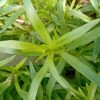
Artemisia dracunculus (L.)
-
Artemisia dubia (Wall. ex Besser)
-
Artemisia dumosa (Poljakov)
-
Artemisia duthreuil-de-rhinsi (Krasch.)
-
Artemisia echegarayi (Hieron.)
-
Artemisia eldarica (Rzazade)
-
Artemisia elenae (Kupr.)
-
Artemisia emeiensis (Y.R.Ling)
-
Artemisia eriopoda (Bunge)
3 -
Artemisia erlangshanensis (Ling & Y.R.Ling)
-
Artemisia fauriei (Nakai)
-
Artemisia feddei (H.Lév. & Vaniot)
1 -
Artemisia ferganensis (Krasch. ex Poljakov)
-
Artemisia filatovae (Kupr.)
-
Artemisia filifolia (Torr.)
-
Artemisia filiformilobulata (Y.R.Ling & Puri)
-
Artemisia finita (Kitag.)
-
Artemisia flaccida (Hand.-Mazz.)
2 -
Artemisia flahaultii (Emb. & Maire)
-
Artemisia fontanesiana (Besser)
-
Artemisia forrestii (W.W.Sm.)
-
Artemisia fragrans (Willd.)
-
Artemisia franserioides (Greene)
-
Artemisia freyniana ((Pamp.) Krasch.)
-
Artemisia frigida (Willd.)
1 -
Artemisia fukudo (Makino)
-
Artemisia fulgens (Pamp.)
-
Artemisia furcata (M.Bieb.)
1 -
Artemisia galinae (Ikonn.)
-
Artemisia gansuensis (Ling & Y.R.Ling)
1 -
Artemisia genipi (Stechm.)
1 -
Artemisia gilvescens (Miq.)
-
Artemisia giraldii (Pamp.)
2 -
Artemisia glabella (Kar. & Kir.)
-
Artemisia glacialis (L.)
-
Artemisia glanduligera (Krasch. ex Poljakov)
-
Artemisia glauca (Forbes & Hemsl.)
-
Artemisia globosa (Krasch.)
-
Artemisia globosoides (Ling & Y.R.Ling)
-
Artemisia globularia (Cham. ex Besser)
-
Artemisia glomerata (Ledeb.)
-
Artemisia gmelinii (Weber ex Stechm.)
2 -
Artemisia gobica ((Krasch.) Grubov)
-
Artemisia gongshanensis (Y.R.Ling & Humphries)
-
Artemisia gorgonum (Webb)
-
Artemisia gracilescens (Krasch. & Iljin)
-
Artemisia granatensis (Boiss.)
1 -
Artemisia grubovii (Filatova)
-
Artemisia gurganica ((Krasch.) Filatova)
-
Artemisia gyangzeensis (Ling & Y.R.Ling)
-
Artemisia gyitangensis (Ling & Y.R.Ling)
-
Artemisia gypsacea (Krasch., Popov & Lincz. ex Poljakov)
-
Artemisia hallaisanensis (Nakai)
-
Artemisia halodendron (Turcz. ex Besser)
-
Artemisia halophila (Krasch.)
-
Artemisia hancei ((Pamp.) Ling & Y.R.Ling)
-
Artemisia haussknechtii (Boiss.)
-
Artemisia hedinii (Ostenf.)
-
Artemisia henriettae (Krasch.)
-
Artemisia herba-alba (Asso)
-
Artemisia hippolyti (A.Butkov)
-
Artemisia hololeuca (M.Bieb. ex Besser)
-
Artemisia huguetii (Caball.)
-
Artemisia hulteniana (Vorosch.)
-
Artemisia ifranensis (J.Didier)
-
Artemisia igniaria (Maxim.)
-
Artemisia implicata (T.G.Leonova)
-
Artemisia imponens (Pamp.)
-
Artemisia inaequifolia (Sòn.Garcia, Garnatje, McArthur, Pellicer, S.C.Sand. & Vallès-Xirau)
-
Artemisia incana (Druce)
-
Artemisia incisa (Pamp.)
1 -
Artemisia inculta (Delile)
-
Artemisia indica (Willd.)
5 -
Artemisia insipida (Vill.)
-
Artemisia insulana (Krasch.)
-
Artemisia insularis (Kitam.)
-
Artemisia integrifolia (Nakai)
-
Artemisia iskenderiana (Rzazade)
-
Artemisia issaevii (Rzazade)
-
Artemisia issykkulensis (Poljakov)
-
Artemisia jacutica (Drobow)
-
Artemisia japonica (Lauener)
1 -
Artemisia javanica (Pamp.)
-
Artemisia jaxartica (Poljakov)
-
Artemisia jilongensis (Y.R.Ling & Humphries)
-
Artemisia jordanica (Danin)
-
Artemisia judaica (L.)
3 -
Artemisia junatovii (Filatova)
-
Artemisia juncea (Kar. & Kir.)
-
Artemisia kanashiroi (Kitam.)
-
Artemisia kangmarensis (Ling & Y.R.Ling)
-
Artemisia karavajevii (Leonova)
-
Artemisia kasakorum ((Krasch.) Pavlov)
-
Artemisia kaschgarica (Krasch.)
-
Artemisia kauaiensis ((Skottsb.) Skottsb.)
-
Artemisia kawakamii (Hayata)
-
Artemisia keiskeana (Miq.)
-
Artemisia kelleri (Krasch.)
-
Artemisia kemrudica (Krasch.)
-
Artemisia kitadakensis (Hara & Kitam.)
-
Artemisia klementzae (Krasch.)
-
Artemisia klotzschiana (Besser)
-
Artemisia knorringiana (Krasch.)
-
Artemisia kochiiformis (Krasch. & Lincz. ex Poljakov)
-
Artemisia koidzumii (Nakai)
1 -
Artemisia kopetdaghensis (Krasch., Popov & Lincz. ex Poljakov)
-
Artemisia korovinii (Poljakov)
-
Artemisia kotuchovii (Kupr.)
-
Artemisia kruhsiana (Besser)
1 -
Artemisia kuschakewiczii (C.Winkl.)
-
Artemisia laciniata (Willd.)
2 -
Artemisia lactiflora (Wall. ex DC.)
1 -
Artemisia lagocephala ((Fisch. ex Bess.) DC.)
1 -
Artemisia lagopus (Fisch. ex Besser)
2 -
Artemisia lancea (Vaniot)
-
Artemisia latifolia (Ledeb.)
-
Artemisia ledebouriana (Besser)
-
Artemisia lehmaniana (Hook.f.)
-
Artemisia lehmanniana (Bunge)
-
Artemisia lercheana (Weber ex Stechm.)
-
Artemisia lerchiana (Weber)
-
Artemisia lessingiana (Besser)
-
Artemisia leucodes (Schrenk)
-
Artemisia leucophylla (Turcz. ex C.B.Clarke)
-
Artemisia liaotungensis (Kitagatoa)
-
Artemisia limosa (Koidz.)
-
Artemisia lingyeouruennii (L.M.Shultz & Boufford)
-
Artemisia lipskyi (Poljakov)
-
Artemisia littoricola (Kitam.)
-
Artemisia liukiuensis (Kitam.)
-
Artemisia lobulifolia (Boiss.)
-
Artemisia longifolia (Nutt.)
-
Artemisia loureiroi (Kostel.)
-
Artemisia lucentica (O.Bolòs, Vallès & Vigo)
-
Artemisia ludoviciana (Nutt.)
7 -
Artemisia luxurians (Ghesq. ex Cavaco & Keraudr.)
-
Artemisia macilenta ((Maxim.) Krasch.)
-
Artemisia macivarae (Hutch. & Dalziel)
-
Artemisia macrantha (Ledeb.)
-
Artemisia macrocephala (Jacquem. ex Besser)
-
Artemisia macrorhiza (Turcz.)
-
Artemisia magellanica (Sch.Bip.)
-
Artemisia mairei (H.Lév.)
-
Artemisia mandschurica ((Kom.) Kom.)
-
Artemisia mangolica (Fisch. ex Bess.)
-
Artemisia manshurica ((Kom.) Kom.)
-
Artemisia marcelli (Pamp.)
-
Artemisia maritima (L.)
-
Artemisia maroccana (Coss.)
-
Artemisia marschalliana (Spreng.)
1 -
Artemisia martirensis ((Wiggins) C.R.Hobbs & B.G.Baldwin)
-
Artemisia mattfeldii (Pamp.)
1 -
Artemisia mauiensis (Skottsb.)
-
Artemisia maximovicziana (Krasch. ex Poljakov)
-
Artemisia medioxima (Krasch. ex Poljakov)
-
Artemisia mendozana (DC.)
-
Artemisia mesatlantica (Maire)
-
Artemisia messerschmidtiana (Besser)
-
Artemisia mexicana (Willd.)
-
Artemisia michauxiana (Besser)
-
Artemisia minor (Jacquem. ex Besser)
-
Artemisia molinieri (Quézel, Barbero & R.J.Loisel)
-
Artemisia mollis (J.Gay ex DC.)
-
Artemisia mollissima (D.Don)
-
Artemisia molluccana (Roxb.)
-
Artemisia mongolica (Chang)
-
Artemisia monophylla (Kitam.)
-
Artemisia monosperma (Delile)
-
Artemisia montana (Pamp.)
-
Artemisia moorcroftiana (Mattf.)
-
Artemisia morrisonensis (Hayata)
-
Artemisia multiflora (Trevir.)
-
Artemisia multisecta (Leonova)
-
Artemisia mustangensis (Yonek.)
-
Artemisia myriantha (Y.R.Ling)
-
Artemisia nachitscevanica (Rzazade)
-
Artemisia nakaii (Pamp.)
-
Artemisia namanganica (Poljakov)
-
Artemisia nanschanica (Krasch.)
-
Artemisia negrei (A.Ouyahya)
-
Artemisia nepalensis (Nees)
-
Artemisia nepalica (Yonek.)
-
Artemisia nesiotica (P.H.Raven)
-
Artemisia niitakayamense (Hayata)
-
Artemisia niitakayamensis (Hayata)
-
Artemisia nilagirica ((C.B.Clarke) Pamp.)
-
Artemisia nitida (Bertol.)
-
Artemisia nitrosa (Weber ex Stechm.)
-
Artemisia nivalis (Braun-Blanq.)
-
Artemisia nortonii (Pamp.)
-
Artemisia norvegica (Fr.)
2 -
Artemisia nova (A.Nelson)
-
Artemisia nujianensis ((Ling & Y.R.Ling) Y.R.Ling)
-
Artemisia nutans (Willd.)
-
Artemisia nuttallii ((Torr. & A.Gray) Mosyakin, L.M.Shultz & G.V.Boiko)
-
Artemisia obtusiloba (Ledeb.)
5 -
Artemisia occidentalisichuanensis (Y.R.Ling & S.Y.Zhao)
-
Artemisia occidentalisinensis (Y.R.Ling)
1 -
Artemisia oelandica ((Besser) Krasch.)
-
Artemisia olchonensis (Leonova)
-
Artemisia olgensis ((Vorobiev) Vorosch.)
-
Artemisia oligocarpa (Hayata)
-
Artemisia olivieri (J.Gay ex DC.)
-
Artemisia oranensis (Deb. ex Filatova)
-
Artemisia ordosica (Krasch.)
-
Artemisia orientalihengduangensis (Ling & Y.R.Ling)
-
Artemisia orientalixizangensis (Y.R.Ling & Humphries)
-
Artemisia orientaliyunnanensis (Y.R.Ling)
-
Artemisia oxycephala (Kitag.)
-
Artemisia packardiae (J.W.Grimes & Ertter)
-
Artemisia pallens (Wall. ex DC.)
-
Artemisia palmeri (A.Gray)
-
Artemisia palustris (L.)
-
Artemisia pamirica (C.Winkl.)
-
Artemisia pancicii (Ronniger ex Danihelka & Marhold)
-
Artemisia pannosa (Krasch.)
-
Artemisia papposa (S.F.Blake & Cronquist)
-
Artemisia parviflora (Aitch.)
-
Artemisia pattersonii (A.Gray)
-
Artemisia pauciflora (Weber ex Stechmann)
-
Artemisia pedatifida (Nutt.)
-
Artemisia pedemontana (Balb. ex Loisel.)
1 -
Artemisia pedunculosa (Miq.)
-
Artemisia pengchuoensis (Y.R.Ling & S.Y.Zhao)
-
Artemisia persica (Boiss.)
2 -
Artemisia pewzowi (C.Winkl.)
-
Artemisia pewzowii (C.Winkl.)
-
Artemisia phaeolepis (Krasch.)
-
Artemisia phyllobotrys ((Hand.-Mazz.) Ling & Y.R.Ling)
-
Artemisia pineticola (Kupr.)
-
Artemisia poljakovii (Filatova)
-
Artemisia polybotryoidea (Y.R.Ling)
-
Artemisia polysticha (Poljakov)
-
Artemisia pontica (L.)
-
Artemisia porrecta (Krasch. ex Poljakov)
-
Artemisia porteri (Cronquist)
-
Artemisia potentillifolia (H.Lév.)
-
Artemisia prasina (Krasch. ex Poljakov)
-
Artemisia prattii ((Pamp.) Ling & Y.R.Ling)
-
Artemisia prilipkoana (Rzazade)
-
Artemisia princeps (Pamp.)
-
Artemisia pringlei (Greenm.)
-
Artemisia prolixa (Krasch. ex Poljakov)
-
Artemisia przewalskii (Krasch.)
-
Artemisia pubescens (Ledeb.)
-
Artemisia punctigera (Krasch. ex Poljakov)
-
Artemisia pycnocephala (DC.)
-
Artemisia pycnorhiza (Ledeb.)
-
Artemisia pygmaea (A.Gray)
-
Artemisia qinlingensis (Ling & Y.R.Ling)
-
Artemisia quinqueloba (Trautv.)
-
Artemisia radicans (Kupr.)
-
Artemisia ramosa (Buch)
-
Artemisia remotiloba (Krasch.)
-
Artemisia reptans (C.Sm.)
-
Artemisia rhodantha (Rupr.)
-
Artemisia richardsoniana (Besser)
1 -
Artemisia rigida (A.Gray)
-
Artemisia robusta ((Pamp.) Ling & Y.R.Ling)
-
Artemisia rosthornii (Pamp.)
-
Artemisia rothrockii (A.Gray in W.H.Brewer & S.Watson)
-
Artemisia roxburghiana (Wall.)
1 -
Artemisia rubripes (Kitag.)
-
Artemisia rupestris (L.)
1 -
Artemisia ruthiae ((A.H.Holmgren, L.M.Shultz & Lowrey) Sòn.Garcia, Garnatje, McArthur, Pellicer, S.C.Sand. & Vallès-Xirau)
-
Artemisia rutifolia (Steph. ex Spreng.)
1 -
Artemisia saharae (Pomel)
-
Artemisia saissanica ((Krasch.) Filatova)
-
Artemisia saitoana (Kitam.)
-
Artemisia salsoloides (Pamp.)
-
Artemisia samoiedorum (Pamp.)
-
Artemisia santolina (Schrenk)
-
Artemisia santolinifolia (Turcz. ex Krasch.)
-
Artemisia santonicum (L.)
1 -
Artemisia saposhnikovii (Krasch. ex Poljakov)
-
Artemisia sarawschanica (C.Winkl.)
-
Artemisia saxicola (Rydb.)
-
Artemisia schimperi (Sch.Bip. ex Schweinf.)
-
Artemisia schischkinii (Krasch.)
-
Artemisia schlagintweitiana (Klatt)
-
Artemisia schmidtiana (Maxim.)
-
Artemisia schrenkiana (Ledeb.)
-
Artemisia scoparia (Waldst. & Kitam.)
-
Artemisia scopiformis (Ledeb.)
-
Artemisia scopulorum (A.Gray)
-
Artemisia scotina (Nevski)
-
Artemisia selengensis (Turcz. ex Besser)
-
Artemisia senjavinensis (Bess)
-
Artemisia sericea (Weber ex Stechm.)
-
Artemisia serotina (Bunge)
-
Artemisia serrata (Nutt.)
-
Artemisia shangnanensis (Ling & Y.R.Ling)
-
Artemisia shennongjiaensis (Ling & Y.R.Ling)
-
Artemisia shikotaensis (Kitam.)
-
Artemisia sichuanensis (Ling & Y.R.Ling)
2 -
Artemisia sieberi (Besser)
1 -
Artemisia sieversiana (Ehrh. ex Willd.)
-
Artemisia simplex ((A.Nelson) Sòn.Garcia, Garnatje, McArthur, Pellicer, S.C.Sand. & Vallès-Xirau)
-
Artemisia simulans (Pamp.)
-
Artemisia sinanensis (Y.Yabe)
-
Artemisia sinensis ((Pamp.) Ling & Y.R.Ling)
-
Artemisia siversiana (Ehrh. ex Willd.)
-
Artemisia smithii (Mattf.)
-
Artemisia sodiroi (Hieron. ex Sodiro)
-
Artemisia sogdiana (Bunge)
-
Artemisia somai (Hayata)
2 -
Artemisia songarica (Schrenk ex Fisch. & C.A.Mey.)
-
Artemisia speciosa ((Pamp.) Ling & Y.R.Ling)
-
Artemisia sphaerocephala (Krasch.)
-
Artemisia spiciformis (Osterh.)
-
Artemisia spicigera (K.Koch)
-
Artemisia splendens (Willd.)
-
Artemisia stelleriana (Besser)
-
Artemisia stenocephala (Krasch. ex Poljakov)
-
Artemisia stipularis (Urb. & Ekman)
-
Artemisia stolonifera ((Maxim.) Kom.)
-
Artemisia stricta (Edgew.)
-
Artemisia subarctica (Krasch.)
-
Artemisia subdigitata (Mattf.)
-
Artemisia subsalsa (Filatova)
-
Artemisia subsericea (Rouy)
-
Artemisia subulata (Nakai)
-
Artemisia succulenta (Ledeb.)
-
Artemisia succulentoides (Ling & Y.R.Ling)
-
Artemisia suksdorfii (Piper)
-
Artemisia swatensis (Podlech)
-
Artemisia sylvatica (Maxim.)
-
Artemisia sylviana (F.O.Wolf)
-
Artemisia szowitziana ((Besser) Grossh.)
-
Artemisia tafelii (Mattf.)
-
Artemisia taibaishanensis (Y.R.Ling & Humphries)
-
Artemisia tainingensis (Hand.-Mazz.)
1 -
Artemisia tanacetifolia (L.)
-
Artemisia tanacetoides (Less.)
-
Artemisia tangutica (Pamp.)
1 -
Artemisia taurica (Willd.)
-
Artemisia tenuis (Rydb.)
-
Artemisia tenuisecta (Nevski)
-
Artemisia terrae-albae (Krasch.)
-
Artemisia thellungiana (Pamp.)
-
Artemisia thuscula (Cav.)
-
Artemisia tilesii (Ledeb.)
-
Artemisia tilhoana (Quézel)
-
Artemisia togusbulakensis (Fedtsch.)
-
Artemisia tomentella (Trautv.)
-
Artemisia tournefortiana (Rchb.)
-
Artemisia transbaicalensis (Leonova)
-
Artemisia transiliensis (Poljakov)
-
Artemisia trautvetteriana (Besser)
-
Artemisia tridactyla (Hand.-Mazz.)
2 -
Artemisia tridentata (Nutt.)
4 -
Artemisia triniana (Besser)
-
Artemisia tripartita (Rydb.)
2 -
Artemisia tsugitakaensis ((Kitam.) Ling & Y.R.Ling)
-
Artemisia tsuneoi (Tatew. & Kitam.)
-
Artemisia tukuchaensis (Kitam.)
-
Artemisia turanica (Krasch.)
-
Artemisia turkestanica (Franch.)
-
Artemisia umbelliformis (Lam.)
2 -
Artemisia umbrosa ((Turcz. ex Besser) Turcz. ex A.DC.)
-
Artemisia vachanica (Krasch. ex Poljakov)
-
Artemisia vahliana (Kostel.)
-
Artemisia valentina (Lam.)
-
Artemisia valida (Krasch. ex Poljakov)
-
Artemisia vallesiaca (All.)
-
Artemisia velutina (Pamp.)
-
Artemisia verbenacea ((Komarov) Kitag.)
-
Artemisia verlotiorum (Lamotte)
-
Artemisia vestica (Wall.)
-
Artemisia vestita (Wall. ex Besser)
-
Artemisia vexans (Pamp.)
-
Artemisia viridis (Willd.)
-
Artemisia viridisquama (Kitam.)
-
Artemisia viridissima (Pamp.)
-
Artemisia viscida (Pamp.)
-
Artemisia viscidissima (Ling & Y.R.Ling)
-
Artemisia vulgaris (L.)
2 -
Artemisia waltonii (J.R.Drumm. ex Pamp.)
2 -
Artemisia wellbyi (Hemsl. & H.Pearson)
-
Artemisia woodii ((Neilson) C.W.Riggins)
-
Artemisia wudanica (Liou & W.Wang)
-
Artemisia xanthochroa (Krasch.)
-
Artemisia xerophytica (Krasch.)
-
Artemisia xigazeensis (Ling & Y.R.Ling)
-
Artemisia yadongensis (Ling & Y.R.Ling)
-
Artemisia yongii (Y.R.Ling)
-
Artemisia younghusbandii (J.R.Drumm. ex Pamp.)
-
Artemisia yunnanensis (Jeffrey)
-
Artemisia zayuensis (Ling & Y.R.Ling)
2 -
Artemisia zhongdianensis (Y.R.Ling)