
Genus Osmoxylon in Family Araliaceae
In botanical taxonomy, a genus (plural genera) is a rank used to group closely related species within a family. In the hierarchy, genus sits below family and above species.
Genera are defined by shared morphological, anatomical, and genetic characteristics (for example, features of flowers, fruits, seeds, or leaves) that indicate a close evolutionary relationship among the species they contain.
Each genus can include one or more species. Examples include Rosa (roses) and Solanum (nightshades, including tomato and eggplant).
Do you wish to read more about plant taxonomy? Click here!
Genus Description
Suggest a correction!Osmoxylon (Miq.) is a genus of trees and shrubs in Araliaceae comprising approximately 55 species distributed across Malesia, the western Pacific, and Micronesia. The type species is Osmoxylon truncatum (Miq.) Philipson, established through standard nomenclatural conventions (Philipson, 1970).
Morphologically, Osmoxylon species are characterized by their simple, usually palmately or ternately lobed leaves with prominent stipules, and by their distinctive inflorescences that are typically paniculate or thyrsoid with well-developed bracts. Flowers are small, bisexual or unisexual, with 5-lobed calyx and 5 free or slightly cohering petals. The inferior ovary has axile or apical placentation, and fruits are drupes or berries with well-developed endocarp layers (Philipson, 1970; Plunkett et al., 2004).
Species diversity concentrates in New Guinea, the Moluccas, and the Philippines, with several endemic taxa in island archipelagoes. Plants typically occur in tropical rainforests from sea level to approximately 1000 meters elevation, with some species adapted to montane forest conditions (Frodin et al., 2004).
Pollination biology remains incompletely documented, though the small, inconspicuous flowers suggest generalist insect vectors. Seed dispersal appears to involve birds or mammals attracted to fleshy fruits. Chromosome counts are documented as x=12 for several species, though comprehensive cytogenetic surveys remain lacking (Philipson, 1970).
Phylogenetically, Osmoxylon belongs to the Schefflera complex within Araliaceae, where molecular analyses have prompted re-circumscription of formerly broader Schefflera concepts (Plunkett et al., 2004; Plunkett et al., 2020). Some authors have alternatively treated certain species within Heptapleurum (Deng et al., 2023), though current consensus favors retaining Osmoxylon as a distinct genus.
Several species possess horticultural potential due to attractive foliage and growth habit, though limited cultivation history exists. No species are of major economic importance as timber crops. Osmoxylon species show no significant weedy or invasive characteristics (Frodin et al., 2004).
Conservation status varies by locality, with island endemics facing habitat loss pressure. Research gaps include comprehensive phylogenetic relationships and complete species-level taxonomic treatments across the genus (WFO, 2024; POWO, 2024).
-
Osmoxylon arrhenicum (B.J.Conn & Frodin)
-
Osmoxylon articulatum (Philipson)
-
Osmoxylon barbatum (Becc.)
-
Osmoxylon boerlagei ((Warb.) Philipson)
-
Osmoxylon borneense (Seem.)
-
Osmoxylon camiguinense ((Merr.) Philipson)
-
Osmoxylon catanduanense ((Merr.) Philipson)
-
Osmoxylon caudatum ((Merr.) Philipson)
-
Osmoxylon celebicum (Philipson)
-
Osmoxylon chrysanthum (B.J.Conn & Frodin)
-
Osmoxylon confertiflorum (B.J.Conn & Frodin)
-
Osmoxylon corneri (B.J.Conn & Frodin)
-
Osmoxylon dinagatense ((Merr.) Philipson)
-
Osmoxylon ellipsoideum (B.J.Conn & Frodin)
-
Osmoxylon eminens ((W.Bull) Philipson)
-
Osmoxylon fenicis ((Merr.) Philipson)
-
Osmoxylon geelvinkianum (Becc.)
-
Osmoxylon globulare (Philipson)
-
Osmoxylon heterophyllum ((Merr.) Philipson)
-
Osmoxylon humile ((Elmer) Philipson)
-
Osmoxylon insidiator (Becc.)
-
Osmoxylon insigne ((Miq.) Becc.)
-
Osmoxylon kostermansii (Philipson)
-
Osmoxylon lanceolatum (Philipson)
-
Osmoxylon leidichii (Costion)
-
Osmoxylon lineare ((Merr.) Philipson)
-
Osmoxylon luzoniense ((Merr.) Philipson)
-
Osmoxylon mariannense ((Kaneh.) Fosberg & Sachet)
-
Osmoxylon masarangense (Philipson)
-
Osmoxylon micranthum ((Harms) Philipson)
-
Osmoxylon miquelii (Boerl.)
-
Osmoxylon ngardokense (Costion)
-
Osmoxylon novoguineense ((Scheff.) Becc.)
-
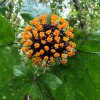
Osmoxylon oblongifolium (Philipson)
-
Osmoxylon orientale ((Guillaumin) B.C.Stone)
-
Osmoxylon pachyphyllum ((Kaneh.) Fosberg & Sachet)
-
Osmoxylon palmatum ((Lam.) Philipson)
-
Osmoxylon pectinatum ((Merr.) Philipson)
-
Osmoxylon pfeilii ((Warb.) Philipson)
-
Osmoxylon pseudofoliatum (B.J.Conn & Frodin)
-
Osmoxylon pulcherrimum (Vidal ex Fern.-Vill.)
-
Osmoxylon puniceopolleniferum ((B.C.Stone) B.C.Stone)
-
Osmoxylon ramosii ((Merr.) Philipson)
-
Osmoxylon reburrum ((B.C.Stone) B.C.Stone)
-
Osmoxylon rectibrachiatum (B.J.Conn & Frodin)
-
Osmoxylon russellense ((Philipson) B.C.Stone)
-
Osmoxylon serratifolium ((Elmer) Philipson)
-
Osmoxylon sessiliflorum ((Lauterb. ex Harms) Philipson)
-
Osmoxylon simplicifolia ((Elmer) Philipson)
-
Osmoxylon soelaense (Philipson)
-
Osmoxylon spathipedunculatum ((Philipson) Philipson)
-
Osmoxylon striatifructum (B.J.Conn & Frodin)
-
Osmoxylon superantiflorum (B.J.Conn & Frodin)
-
Osmoxylon talaudense (Philipson)
-
Osmoxylon tetrandrum ((C.T.White) B.C.Stone)
-
Osmoxylon teysmannii ((Boerl.) Philipson)
-
Osmoxylon trilobatum ((Merr.) Philipson)
-
Osmoxylon truncatum ((Kaneh.) Fosberg & Sachet)
-
Osmoxylon umbelliferum ((Lam.) Merr.)
-
Osmoxylon whitmorei (B.J.Conn & Frodin)
-
Osmoxylon yatesii ((Merr.) Philipson)