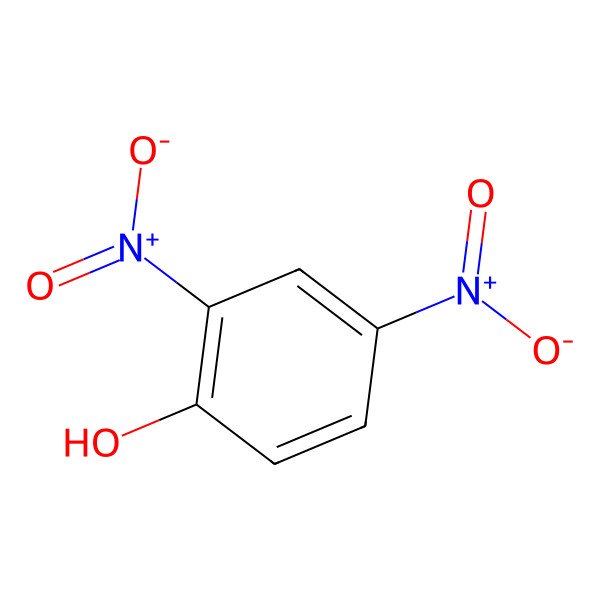
| 51-28-5 |
| Aldifen |
| Nitrophene |
| Dinofan |
| Phenol, 2,4-dinitro- |
| Fenoxyl carbon N |
| Solfo Black B |
| Tertrosulphur PBR |
| alpha-Dinitrophenol |
| Solfo Black G |
| Nitro kleenup |
| 1-Hydroxy-2,4-dinitrobenzene |
| Chemox PE |
| Solfo Black BB |
| Solfo Black SB |
| Dinitrofenolo |
| 2,4-Dnp |
| Tertrosulphur Black PB |
| Solfo Black 2B Supra |
| 2,4-Dinitrofenol |
| Maroxol-50 |
| Osmoplastic-R |
| Osmotox-Plus |
| Chemox |
| Mitcal |
| Camello mosquito coils |
| Caswell No. 392 |
| NSC 1532 |
| Phenol, alpha-dinitro- |
| EK 102 |
| 1'alpha-2,4-Dinitrophenol |
| Shirakiku brand mosquito coils |
| DTXSID0020523 |
| NSC-1532 |
| Q13SKS21MN |
| Fenoxyl |
| CHEBI:42017 |
| DTXCID80523 |
| 2,4 Dinitrophenol |
| phenol, 2,4-dinitro |
| RefChem:82580 |
| 200-087-7 |
| Nitrophen |
| DINITROPHENOL |
| .alpha.-Dinitrophenol |
| RCRA waste number P048 |
| 2,4-dinitro-phenol |
| X 32 |
| MFCD00007115 |
| Tertrosulfur pbr |
| Phenol, .alpha.-dinitro- |
| 1,3-DINITRO-4-HYDROXYBENZENE |
| 2,4-dinitrophenol (h2o w/w 18% max) |
| Tertrosulfur black pb |
| Nitrophen (VAN) |
| DNF |
| Nitrophene (VAN) |
| PHEN-2,3,5-D3-OL,4,6-DINITRO- (9CI) |
| 2,4-Dinitrophenol (Wetted with up to 20per cent water) |
| tatephosphate |
| Dinitrofenolo [Italian] |
| CAS-51-28-5 |
| 2,4-Dinitrofenol [Dutch] |
| CCRIS 3102 |
| HSDB 529 |
| 2,4-Dinitrophenol (wetted with water >15%) |
| EINECS 200-087-7 |
| RCRA waste no. P048 |
| UNII-Q13SKS21MN |
| EPA Pesticide Chemical Code 037509 |
| AI3-01535 |
| Spectrum_001934 |
| SpecPlus_000938 |
| Spectrum2_000673 |
| Spectrum3_001694 |
| Spectrum4_000913 |
| Spectrum5_001670 |
| WLN: WNR BQ ENW |
| Epitope ID:112424 |
| EC 200-087-7 |
| 2,4-Dinitrophenol, wetted |
| DINITROPHENOL, WETTED |
| SCHEMBL77643 |
| BSPBio_003248 |
| KBioGR_001406 |
| KBioSS_002480 |
| SPECTRUM330008 |
| MLS001066358 |
| BIDD:ER0505 |
| DINITROPHENOL [MART.] |
| DivK1c_007034 |
| SCHEMBL612437 |
| SPBio_000765 |
| DINITROPHENOL [WHO-DD] |
| CHEMBL273386 |
| SCHEMBL3036984 |
| SCHEMBL6045077 |
| SR-1C5 |
| SCHEMBL13973810 |
| SCHEMBL29361027 |
| KBio1_001978 |
| KBio2_002473 |
| KBio2_005041 |
| KBio2_007609 |
| KBio3_002468 |
| 2,4-DINITROPHENOL [MI] |
| NSC1532 |
| HMS1923K21 |
| HMS2233H07 |
| HMS3372P06 |
| HMS3867N13 |
| 2,4-DINITROPHENOL [HSDB] |
| Tox21_201462 |
| Tox21_300030 |
| CCG-39730 |
| EBC-50133 |
| NSC791780 |
| STK397797 |
| AKOS000118988 |
| AKOS015912556 |
| DB04528 |
| FD70443 |
| NSC-791780 |
| MP-101 (2,4-DINITROPHENOL) |
| NCGC00091778-01 |
| NCGC00091778-02 |
| NCGC00091778-03 |
| NCGC00091778-04 |
| NCGC00091778-05 |
| NCGC00091778-06 |
| NCGC00254114-01 |
| NCGC00259013-01 |
| AS-39888 |
| PD001942 |
| SMR000471854 |
| D0109 |
| NS00010496 |
| 2,4-Dinitrophenol (wetted with 15 % water) |
| EN300-19295 |
| C02496 |
| AB00053210_08 |
| 2,4-Dinitrophenol stabilised with 30-35% water |
| 2,4-Dinitrophenol, SAJ special grade, >=98.0% |
| Q209226 |
| 2,4-Dinitrophenol, moistened with water, >=98.0% |
| 2,4-Dinitrophenol, 96%, stab. with min. 15% water |
| 2,4-Dinitrophenol, PESTANAL(R), analytical standard |
| BRD-K21910317-001-02-4 |
| BRD-K21910317-001-06-5 |
| BRD-K21910317-001-12-3 |
| 2,4-Dinitrophenol, wetted with not less than 15% water |
| Z104473446 |
| 2,4-Dinitrophenol, technical, moistened with water, >=97.0% (HPLC) |
| InChI=1/C6H4N2O5/c9-6-2-1-4(7(10)11)3-5(6)8(12)13/h1-3,9 |
|
There are more than 10 synonyms. If you wish to see them all click here.
|